


Lipids are a diverse group of organic compounds primarily composed of carbon, hydrogen, and oxygen. While they are often referred to collectively as "fats," they actually encompass a wide range of substances, including oils (which are liquid at room temperature) and fats (which are solid at room temperature). Because lipids do not dissolve in water, they play unique roles in how our bodies store energy, build structures, and communicate signals.
Understanding lipids is essential for grasping how our bodies manage energy and maintain cardiovascular health. They are categorized into three primary types: triglycerides, phospholipids, and sterols.
Triglycerides: The Body's Primary Energy Store
Triglycerides are the most common form of lipids found in both the food we eat and the structures of our bodies. They serve as a major source of fuel; in fact, about half of the energy used by the body at rest or during light activity is derived from fatty acids.
Structure of a Triglyceride
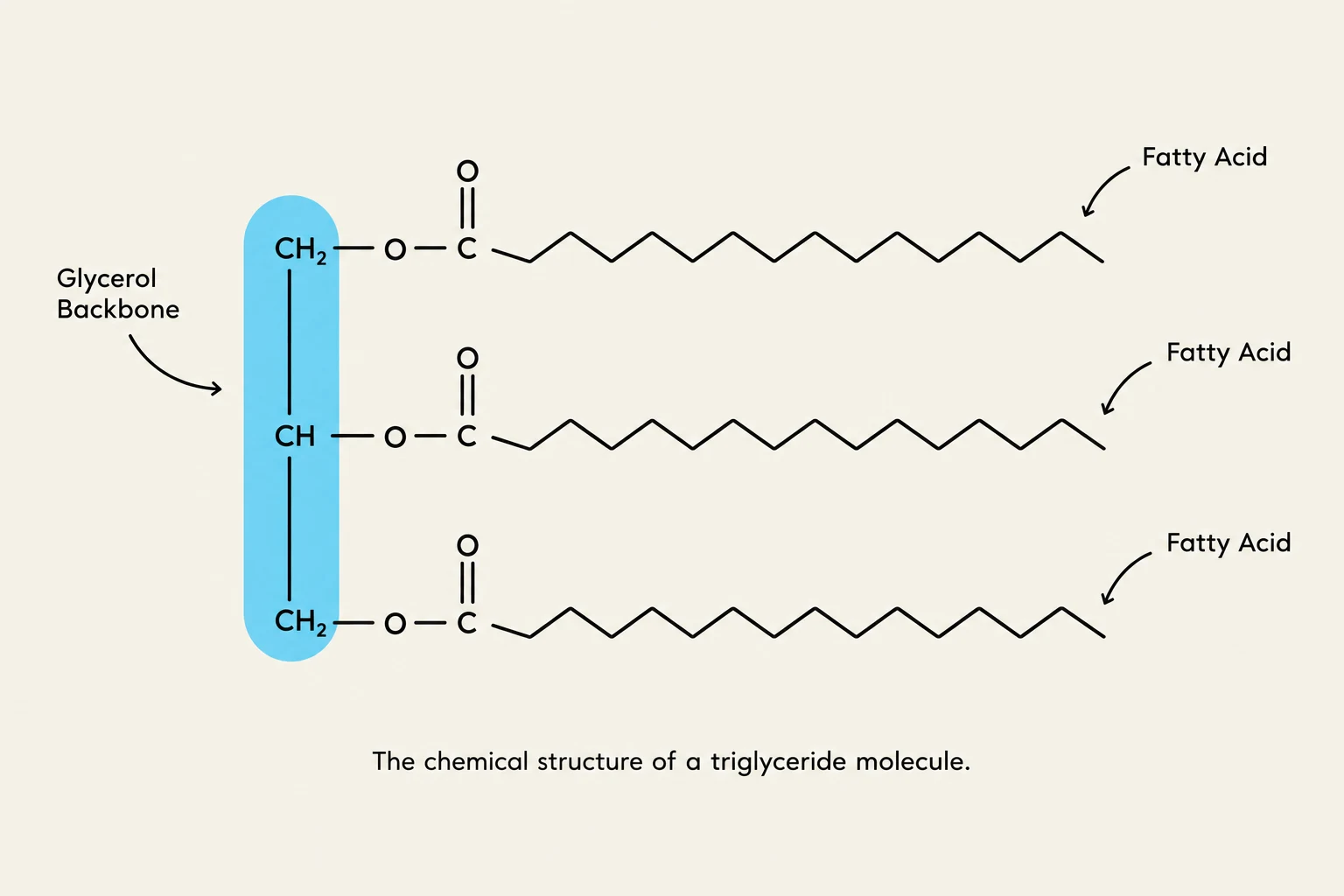
- A Glycerol Backbone: A three-carbon molecule that acts as the structural base.
- Three Fatty Acids: Long chains of carbon and hydrogen atoms attached to the glycerol.
The chemical formation of a triglyceride occurs when one glycerol molecule combines with three fatty acid molecules. This process is a dehydration synthesis reaction, meaning it releases three water molecules:
Triglycerides are stored in specialized cells called adipose cells. If the amount of fat consumed exceeds the body's immediate needs, it is stored in these cells for later use.
Keep reading for free.
Create an account to finish this reading and make it part of your study routine.
Continue reading freeAlready have an account? Log in
Updated