Two-Way In-Building Emergency Communications Systems
Explains the purpose and components of two-way in-building emergency communication systems, which are crucial for maintaining contact during building emergencies when standard radios may fail due to structural barriers or network congestion.
In the high-stakes environment of a building fire or emergency, clear communication is the difference between a controlled response and a chaotic one. While modern responders rely heavily on wireless technology, certain structural and environmental factors can render standard radios ineffective. To mitigate this risk, specialized networks known as Two-Way In-Building Emergency Communications Systems are integrated into the building's infrastructure.
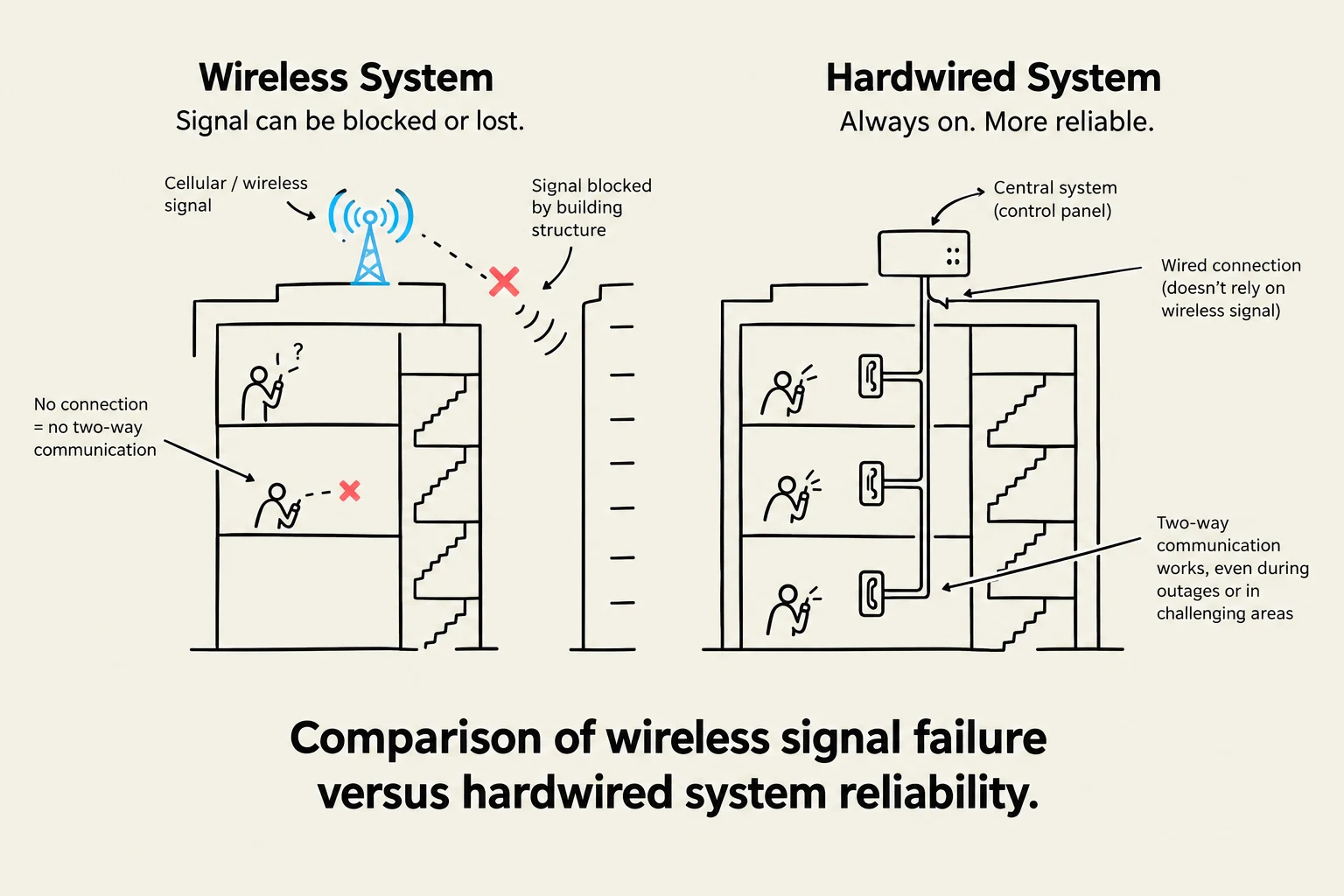
Comparison of wireless signal failure versus hardwired system reliability.
Understanding the System
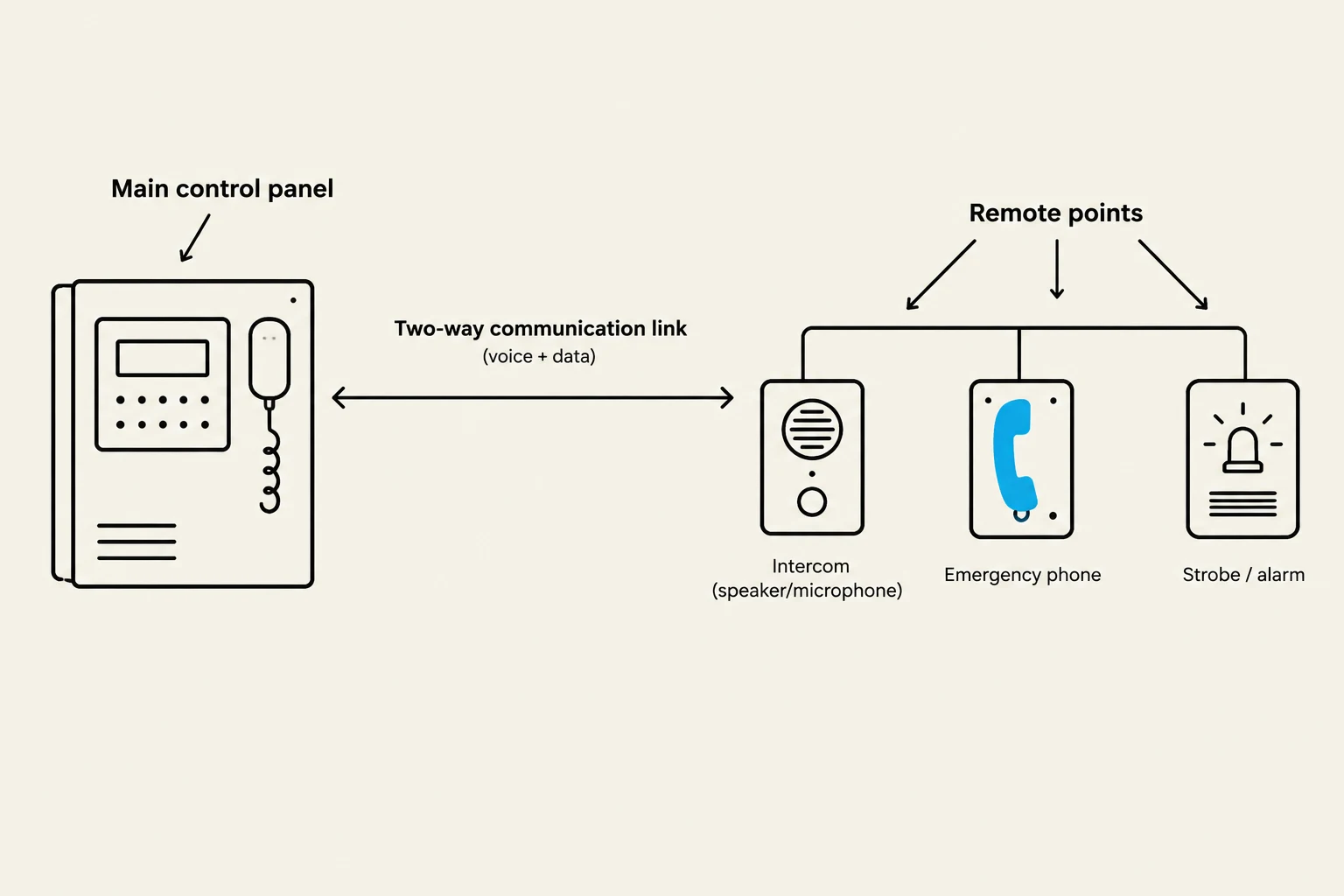
Diagram illustrating a two-way communication system with a main control panel connected to remote points including an intercom, emergency phone, and strobe/alarm.
Formerly referred to as "firefighters' telephones," these systems are specialized communication networks designed to facilitate vital contact during emergency scenarios. Rather than relying on external cellular or radio signals that may be blocked by thick concrete, steel, or heavy shielding, these systems provide a dedicated, hardwired link between the main control panel and various remote points throughout the structure.
These systems are generally integrated with the broader fire alarm systems and existing system controls, ensuring they function as a cohesive part of the building's emergency management infrastructure.
Why is this system necessary?
Standard wireless or radio equipment may fail due to:
Radio Traffic Congestion: Heavy traffic from responder departments can impede clear communication.
Physical Barriers: The building's physical structure or environmental factors may prevent effective wireless signal penetration.
Hardware and Installation
Diagram illustrating a building communication system with two-way devices, a central network, and a security team for emergency response.
To ensure that emergency personnel can access these communication paths quickly and reliably, the hardware is strategically placed in high-priority areas of the building.
The physical interface for these systems typically consists of telephone jacks or handset cabinets. These components are installed in locations where responders are most likely to operate or need to coordinate efforts, such as:
Stairwells
Elevator lobbies
Fire pump rooms
Elevator machine rooms
white, wall-mounted communication device or telephone jack unit
By providing these dedicated communication paths, the system ensures that responders can coordinate their movements and tactical decisions from within the building, regardless of external signal interference.
Keep reading for free.
Create an account to finish this reading and make it part of your study routine.