


Tuberculosis (TB) is a significant infectious disease of the respiratory system caused by Mycobacterium tuberculosis. It is transmitted through airborne droplets when an infected person coughs or sneezes; these droplets can remain suspended in the air for several hours. Understanding the distinction between latent infection and active disease is critical for clinical management, as the presentation, contagiousness, and diagnostic requirements differ significantly between the two states.
Latent TB Infection (LTBI) vs. Active TB Disease
The progression from infection to disease depends on various host factors, including age, gender, nutritional status, and comorbidities.
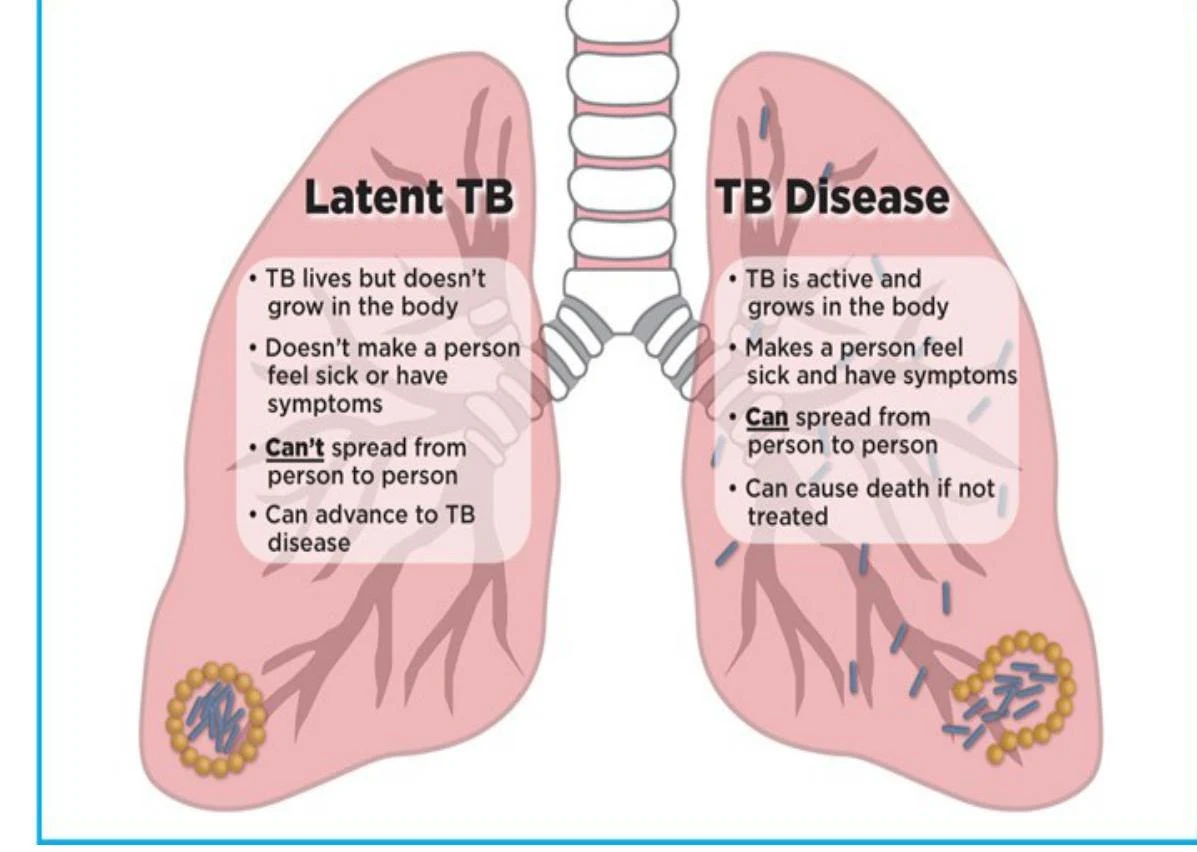
Latent TB Infection (LTBI)
In LTBI, the immune system attempts to "wall off" the bacteria, often forming a granuloma or tubercle.
- Clinical Presentation: Patients are asymptomatic and show no physical findings indicative of TB.
- Imaging: Chest X-rays (CXR) are typically normal or may show evidence of a healed infection, such as lung calcification or hilar lymph nodes.
- Contagiousness: Individuals with LTBI are not infectious.
Active TB Disease
If the immune system fails to contain the bacilli, active TB disease develops.
- Clinical Presentation: Common symptoms include a persistent cough, chest tightness, and hemoptysis (coughing up blood). Systemic symptoms include malaise, fever, night sweats, chills, anorexia, and weight loss.
- Pediatric Considerations: Children under 5 years old are at a higher risk of progressing to severe forms of TB. In infants, symptoms may include failure to thrive, wheezing, and anemia.
- Progression: As the disease advances, patients may exhibit tachypnea, reduced breath sounds, and crackles.
Keep reading for free.
Create an account to finish this reading and make it part of your study routine.
Continue reading freeAlready have an account? Log in
Updated