


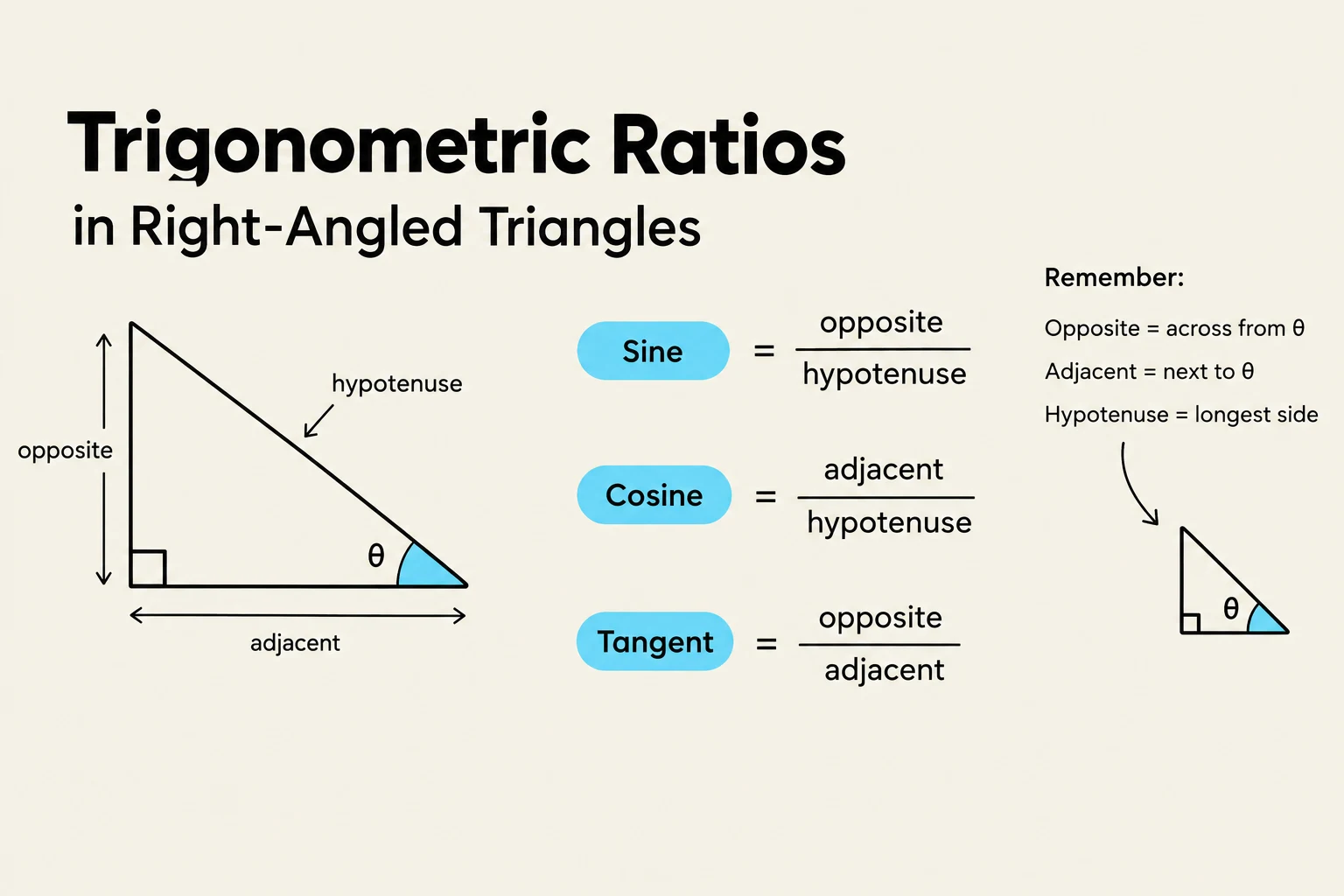
Trigonometry might sound like a complex term, but at its heart, it is simply the study of how the sides and angles of a triangle relate to one another. When we focus specifically on a right-angled triangle—a triangle where one angle is exactly —these relationships become very predictable and follow specific mathematical rules. By understanding these rules, we can calculate unknown distances or angles using nothing more than a few basic ratios.
Understanding the Right-Angled Triangle
Before we can apply any formulas, we must first learn the "language" of the right-angled triangle. Every side of the triangle has a specific name based on its position relative to the angle we are studying (often labeled as ).
The three sides are categorized as follows:
- The Hypotenuse: This is the longest side of the triangle and is always located directly across from the right angle.
- The Opposite Side: This is the side that is directly across from our chosen angle . It does not touch the angle at all.
- The Adjacent Side: The word "adjacent" means "next to." This is the side that sits next to our angle , helping to form the angle alongside the hypotenuse.
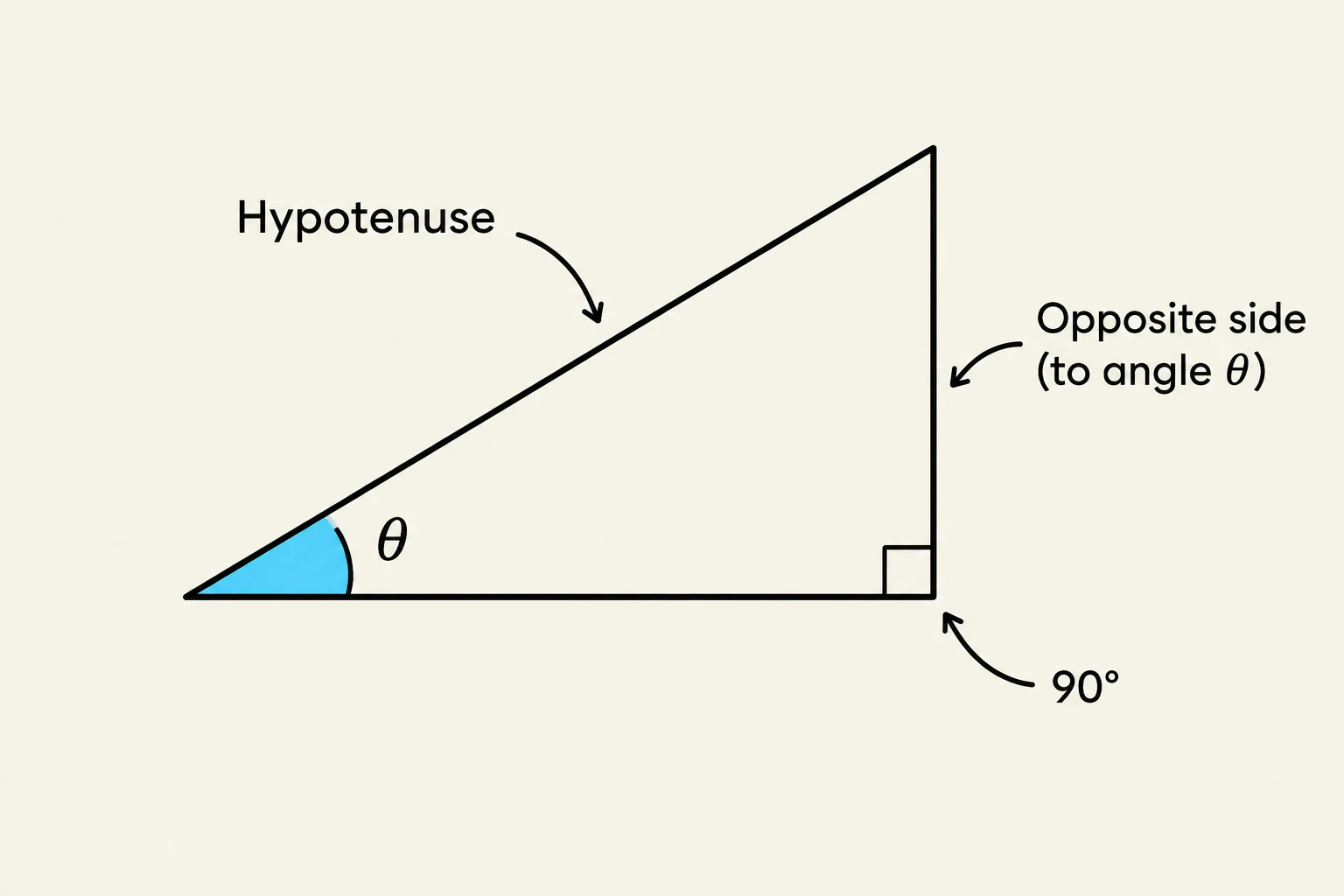
Exam Tip: Always identify the hypotenuse first! Since it is always across from the right angle, it is the easiest side to find and serves as your anchor for the other two sides.
Keep reading for free.
Create an account to finish this reading and make it part of your study routine.
Continue reading freeAlready have an account? Log in
Updated