


Trigonometry is one of the most practical branches of mathematics, serving as the bridge between the angles of a shape and the lengths of its sides. While it may seem intimidating at first, the core principles rely on the predictable relationships found within a specific geometric shape: the right-angled triangle. By understanding how an angle relates to the sides surrounding it, you can solve for unknown distances in everything from construction projects to navigation.
Understanding the Right-Angled Triangle
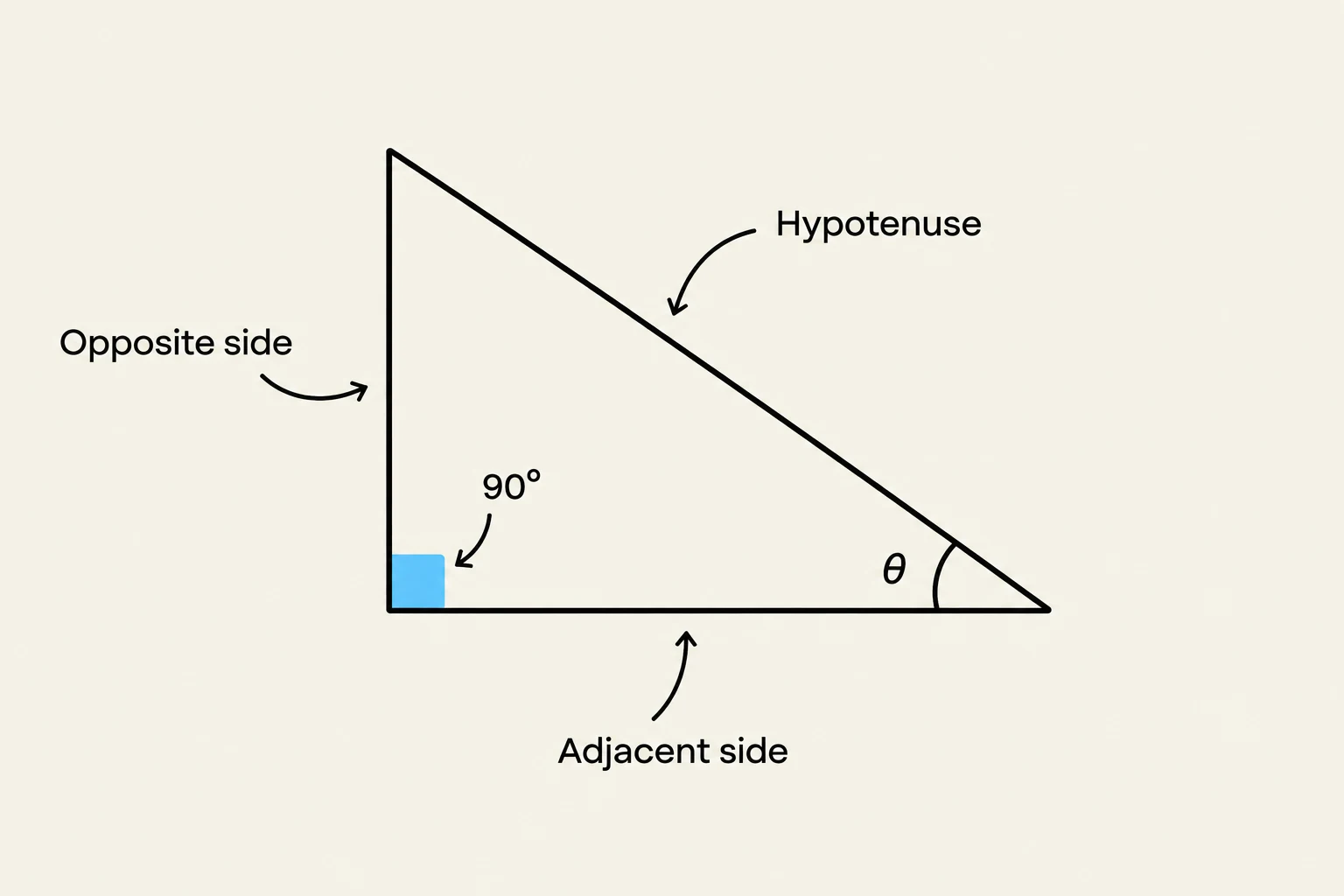
Before performing any calculations, you must be able to identify the components of a right-angled triangle. A right-angled triangle is defined by having one angle that measures exactly , often indicated by a small square symbol in the corner.
The three sides of the triangle are given specific names based on their position relative to the angles:
- The Hypotenuse: This is the longest side of the triangle and is always located directly opposite the angle.
- The Opposite Side: This is the side that sits across from a specific reference angle (the angle you are currently studying).
- The Adjacent Side: This is the side that helps form the reference angle but is not the hypotenuse.
The Sine Formula and Trigonometric Ratios
Trigonometric calculations rely on ratios. A ratio is simply a comparison of two quantities. In a right-angled triangle, the ratio between certain sides remains constant for a given angle, no matter how large or small the triangle is.


Keep reading for free.
Create an account to finish this reading and make it part of your study routine.
Continue reading freeAlready have an account? Log in
Updated