


Uterine sarcomas are a group of rare, aggressive mesenchymal neoplasms that present significant clinical challenges due to their high recurrence rates and diverse biological behaviors. The management of these tumors—primarily Leiomyosarcoma (uLMS), Endometrial Stromal Sarcoma (ESS), and Undifferentiated Uterine Sarcoma (UUS)—is highly individualized. Clinicians must integrate tumor grade, clinical stage, and molecular profiling to design effective treatment strategies encompassing surgery, radiotherapy, systemic therapy, and long-term surveillance.
Classification and Initial Management
The approach to uterine sarcomas begins with accurate histological and molecular characterization. Uterine neoplasms are broadly categorized into malignant epithelial (carcinomas) and malignant mesenchymal (sarcomas). Within the sarcoma category, the distinction between low-grade and high-grade disease is critical for determining the intensity of adjuvant therapy.
Clinical Pearl: If there is any suspicion of malignancy during a biopsy or morcellation, fragmentation/morcellation should be avoided to prevent potential upstaging of the disease.
Management of Low-Grade Endometrial Stromal Sarcoma (ESS)
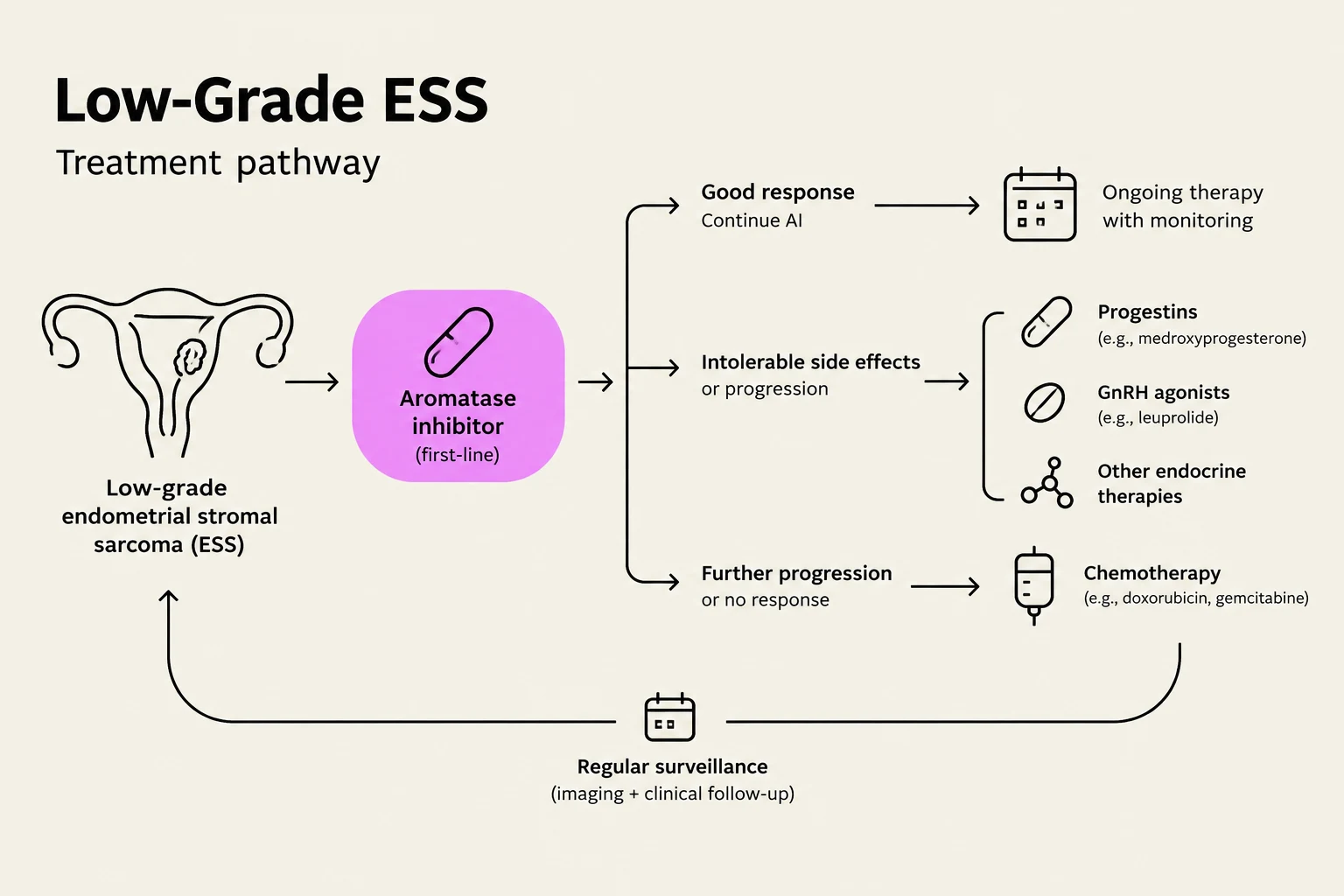
Low-grade ESS follows a different clinical trajectory compared to high-grade sarcomas. Because these tumors often express hormone receptors, endocrine-based approaches are a cornerstone of management.
Systemic Endocrine Therapy
For patients with low-grade ESS, systemic endocrine therapy is recommended. Aromatase inhibitors are the preferred choice for these patients. In cases where the tumors are ER/PR-positive, other effective options include:
- Fulvestrant
- Megestrol acetate
- Medroxyprogesterone acetate
High-Grade Sarcomas: uLMS, UUS, and High-Grade ESS
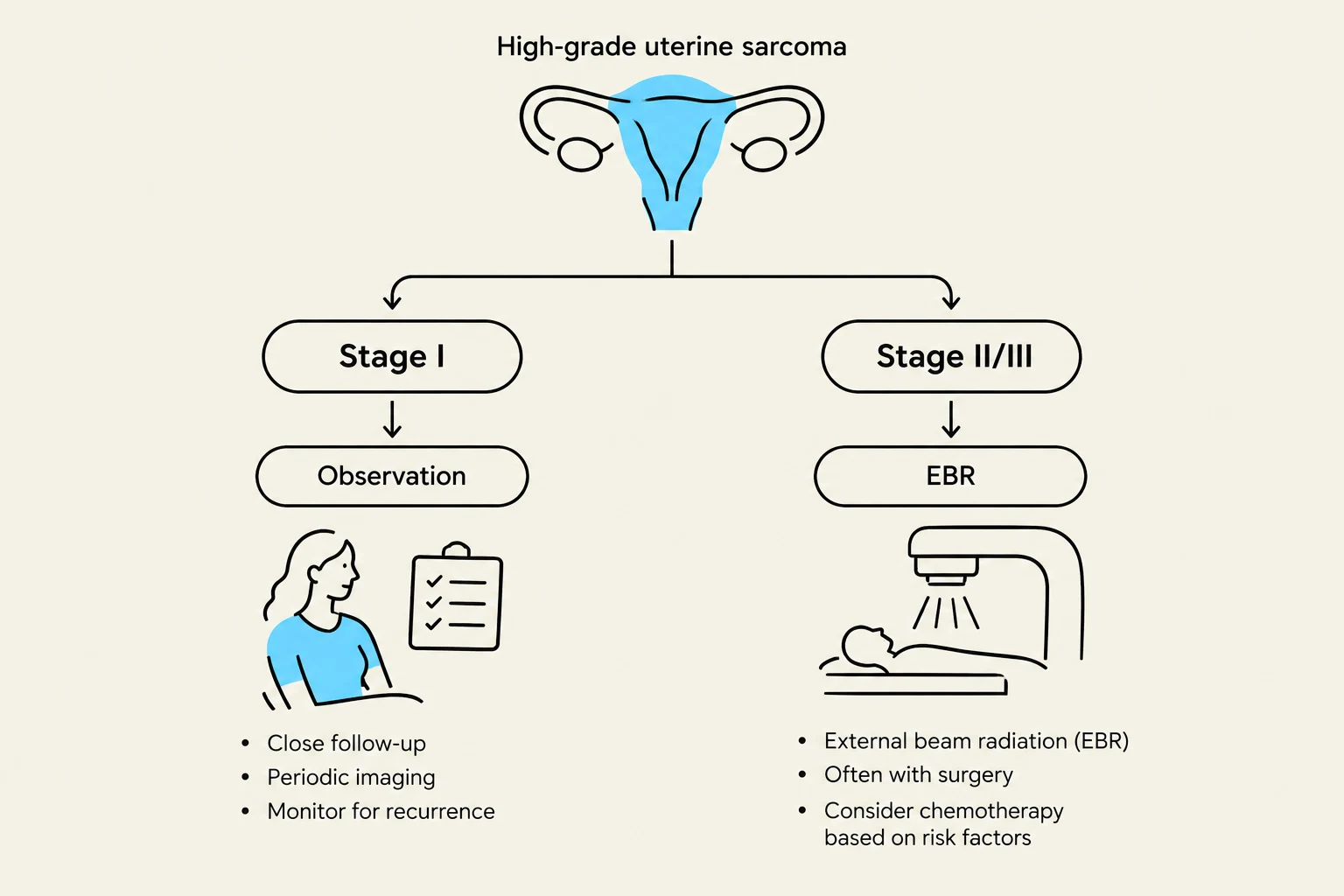
High-grade sarcomas, including leiomyosarcoma (uLMS) and undifferentiated uterine sarcoma (UUS), require more aggressive management strategies due to their aggressive nature.

Keep reading for free.
Create an account to finish this reading and make it part of your study routine.
Continue reading freeAlready have an account? Log in
Updated