


In the central dogma of molecular biology, information flows from DNA to RNA through transcription, and finally from RNA to protein through translation. While transcription is the process of creating an mRNA transcript from a DNA template, translation is the actual process of protein expression, where that mRNA sequence is used to assemble a chain of amino acids into a functional protein. It is important to distinguish between these two: the presence of mRNA (transcriptional activity) does not guarantee that a protein will be produced. Many regulatory layers, such as RNA interference (RNAi) or miRNA, can prevent an mRNA from being translated.
The Genetic Code: Deciphering the Instructions
The "language" used during translation is known as the genetic code. This code is a triplet system, meaning that every three nucleotides in an mRNA sequence form a codon. Because there are four possible bases (A, U, C, G), a triplet code allows for possible combinations. These 64 codons are used to encode the 20 standard amino acids.
The genetic code possesses several unique characteristics:
- Degeneracy: Most amino acids are encoded by more than one codon (e.g., there are multiple codons for Leucine), though some, like Methionine and Tryptophan, have only one.
- Universality: The code is largely the same across almost all living organisms.
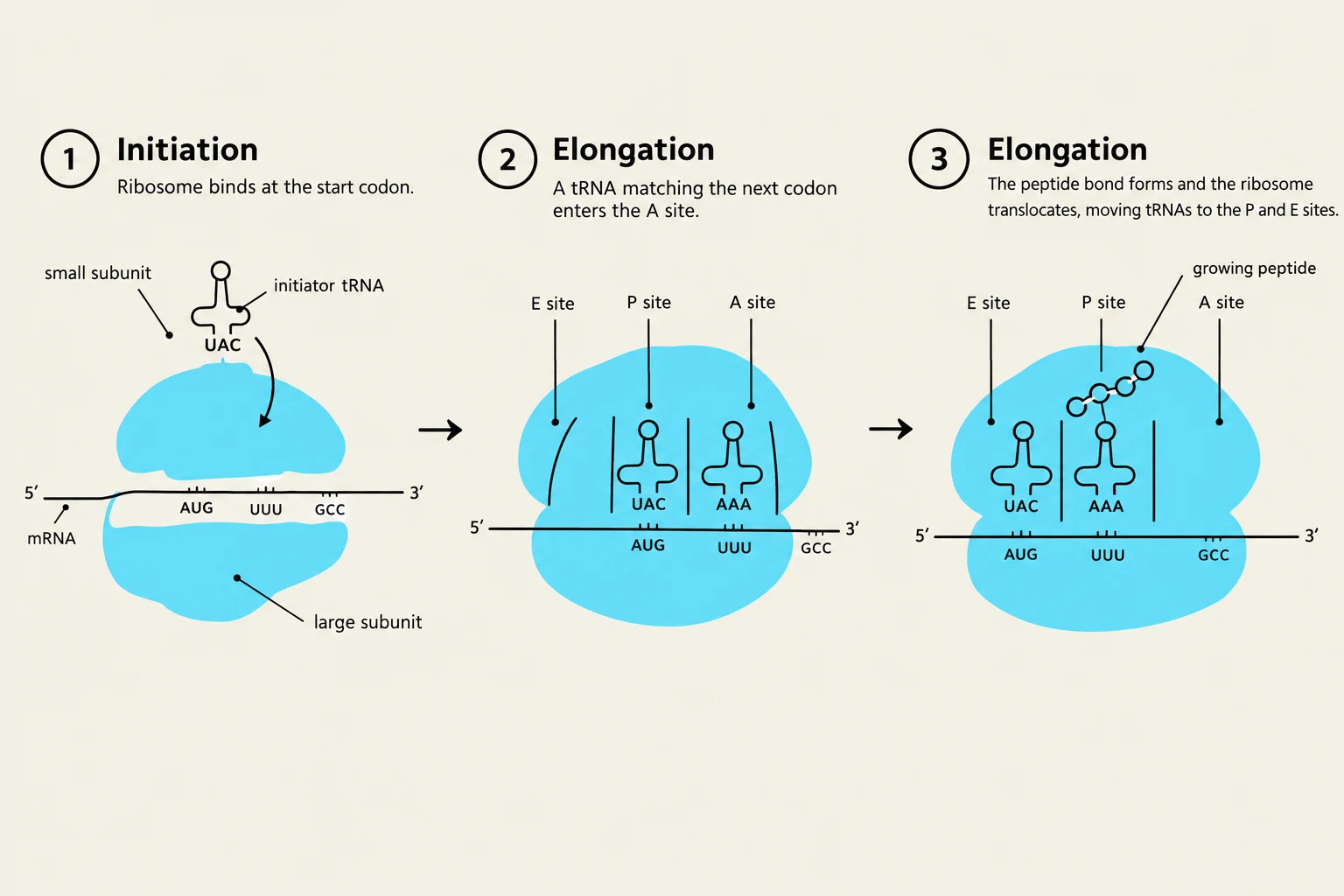
- Non-overlapping and Punctuated: The ribosome reads the mRNA in a continuous, non-overlapping fashion, starting at a specific start codon (usually AUG, which encodes Methionine) and ending at a stop codon.
The Wobble Hypothesis
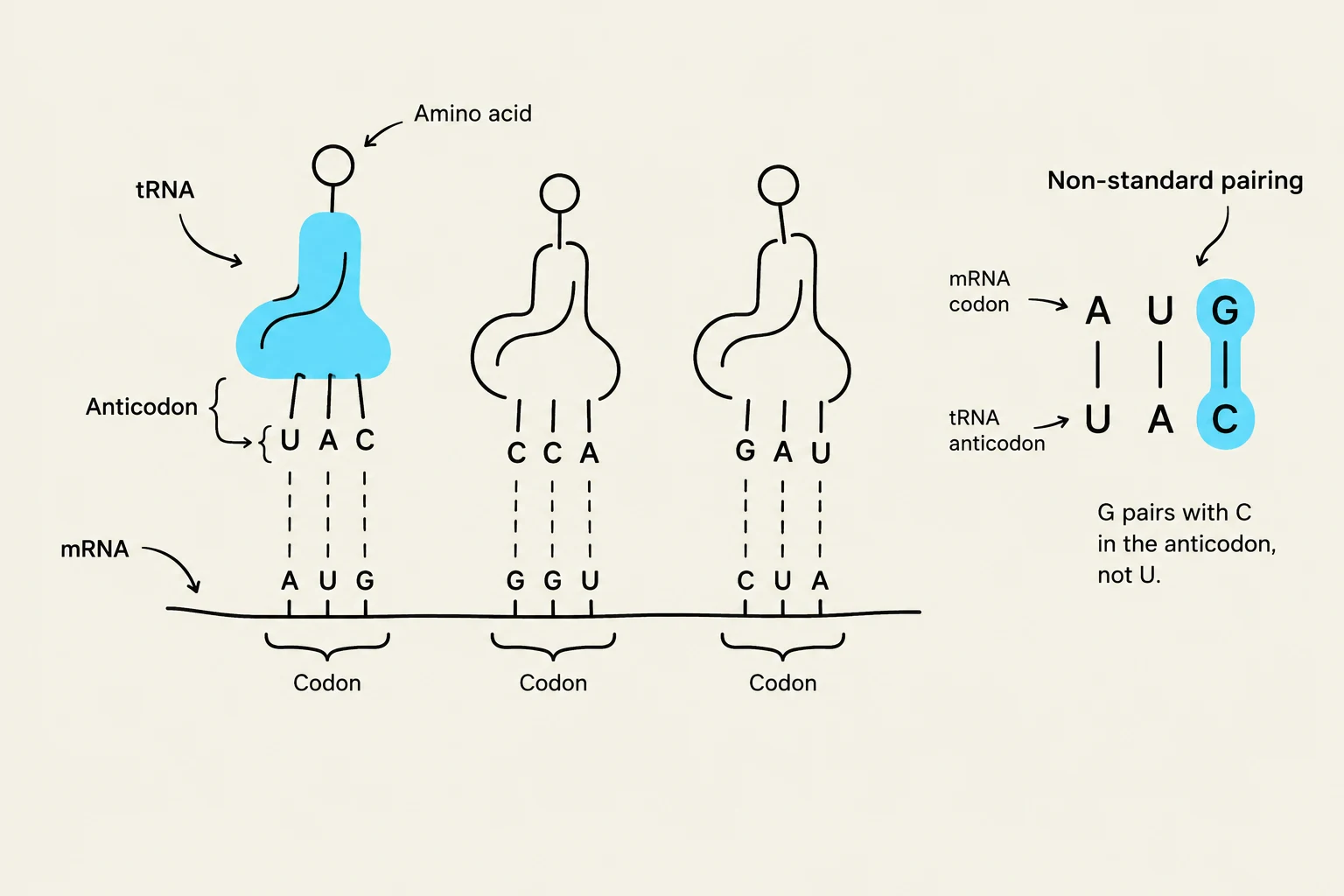
You might wonder: if there are 61 codons that encode amino acids but cells often have fewer than 61 different types of tRNA, how does the cell ensure the right amino acid is added? The answer lies in the wobble position. The first base of the tRNA anticodon (the 5' base) can undergo nonstandard base pairing with the third base of the mRNA codon. For example, an Inosine (I) in the wobble position can pair with U, C, or A in the codon. This allows a single tRNA to recognize multiple synonymous codons, increasing efficiency.
Keep reading for free.
Create an account to finish this reading and make it part of your study routine.
Continue reading freeAlready have an account? Log in
Updated