


In the study of chemical kinetics, understanding how a reaction proceeds from start to finish requires more than just knowing the starting materials and the final results. We must look at the energetic "journey" that molecules take. This journey involves a climb in energy to reach a critical, unstable peak before descending into a more stable state. By analyzing the energy of the reactants, the transition state, and the products, chemists can determine whether a reaction will release energy, absorb energy, or how fast it might occur.
The Starting Point: Energy of the Reactants
Every chemical reaction begins with the reactants, the substances that are consumed during the process. Each reactant possesses a specific amount of internal energy, which includes the kinetic energy of the molecules and the potential energy stored within their chemical bonds.
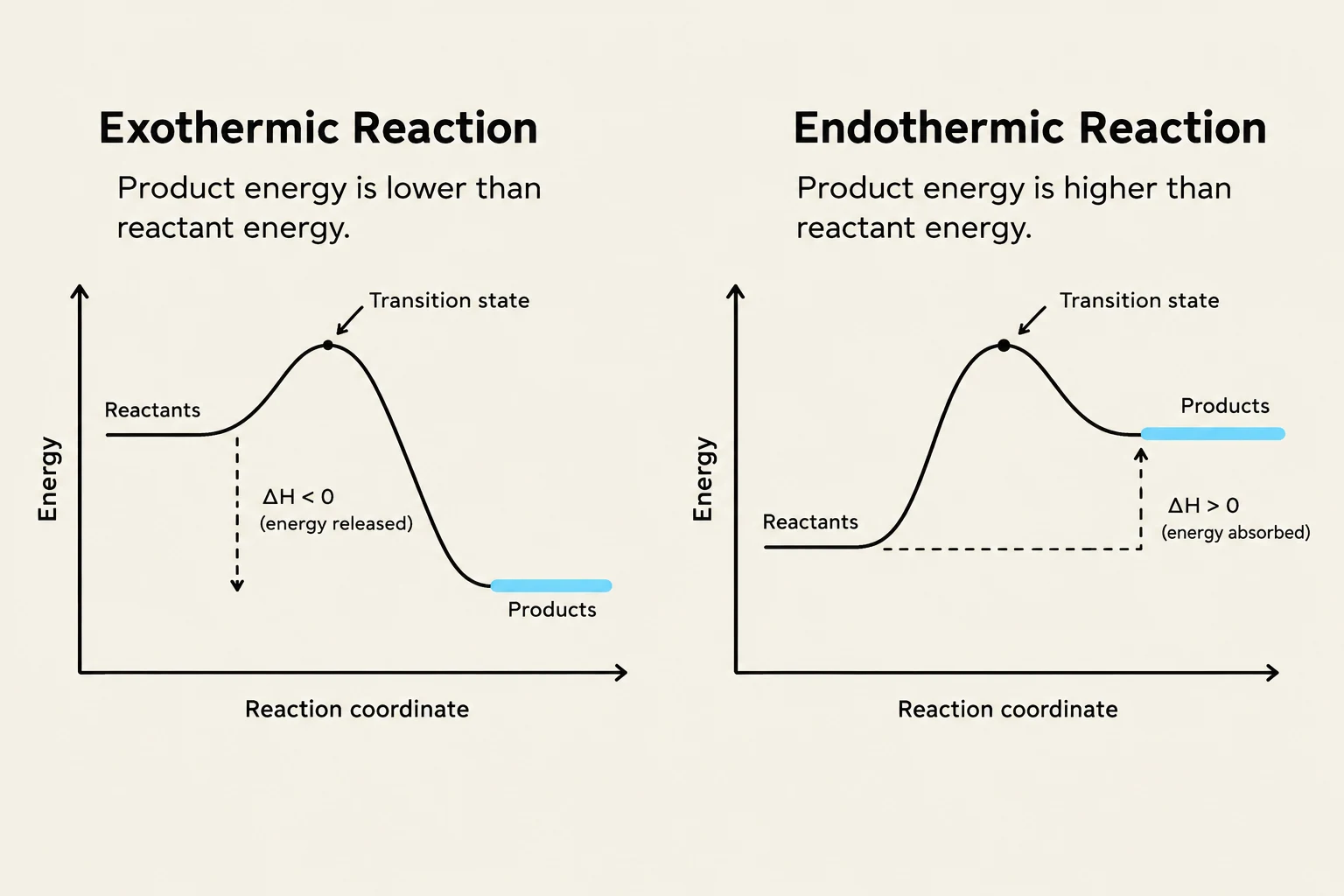
In a reaction coordinate diagram, the energy of the reactants serves as our baseline. This baseline is crucial because the difference between this initial energy level and other points in the reaction determines the thermodynamics of the process. For example, if we are looking at an exothermic reaction, the reactants will start at a higher energy level than the products they eventually become.
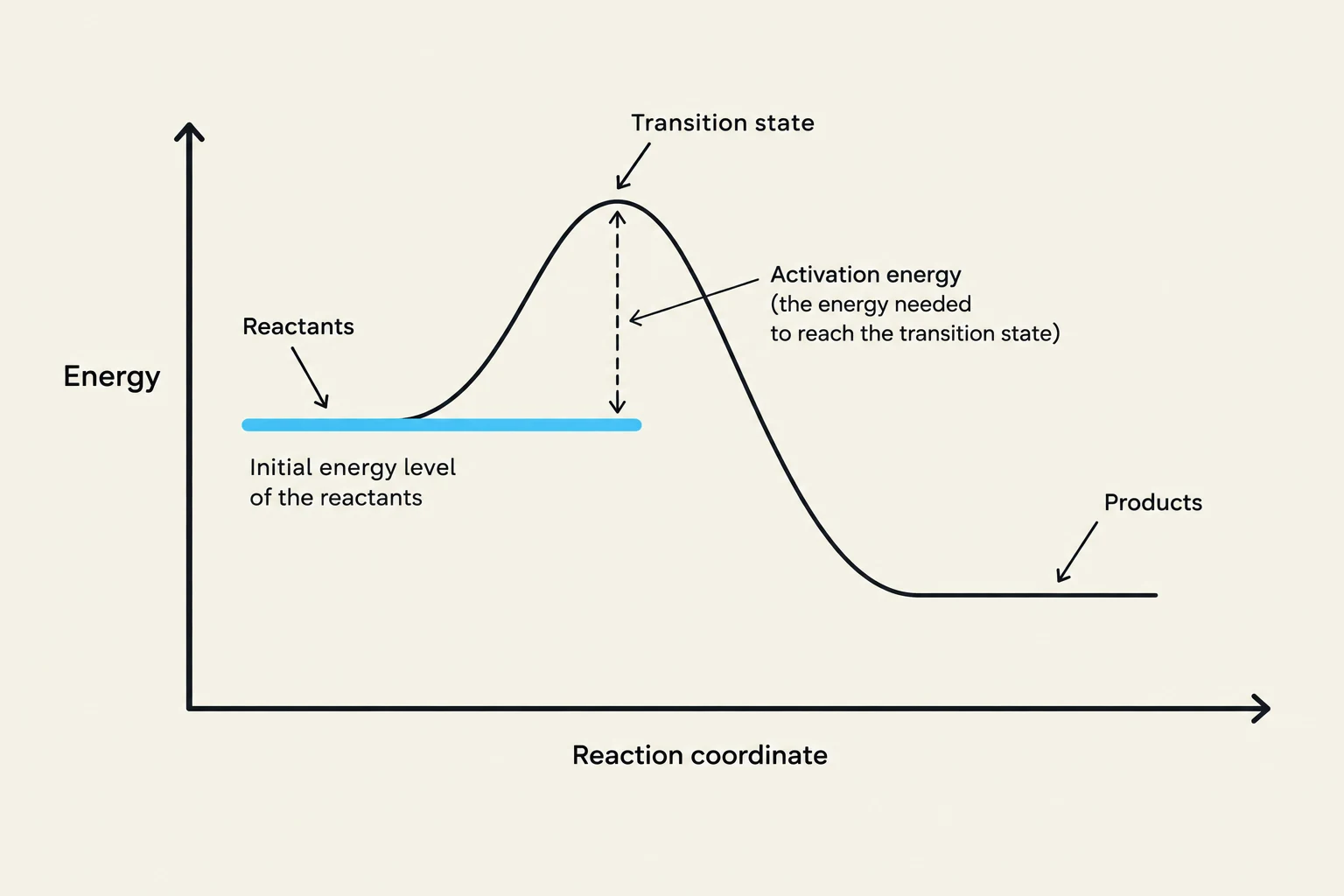
The Peak of the Climb: The Transition State
As reactants collide and interact, they must overcome an energy barrier to transform into something new. At the very highest point of this energy barrier lies the transition state (also frequently referred to as the activated complex).

Keep reading for free.
Create an account to finish this reading and make it part of your study routine.
Continue reading freeAlready have an account? Log in
Updated