Traditional Diets vs. The Industrialisation of Food: A Nutritional Evolution
Examines the historical shift from nutrient-dense traditional diets to calorie-dense, nutrient-poor modern diets due to food industrialisation. Discusses regional dietary models, key drivers of nutritional decline, and modern dietary patterns including fad diets and fasting.
The history of human nutrition is a story of profound transition. For millennia, human eating patterns were dictated by geography, seasonality, and the natural availability of unprocessed foods. However, the post-Second World War era ushered in a period of rapid industrialisation that fundamentally altered how we produce, process, and consume energy. Understanding the distinction between the nutrient-dense patterns of our ancestors and the calorie-dense, nutrient-poor patterns of modern society is essential for anyone studying nutritional science.
The Foundation of Traditional Diets
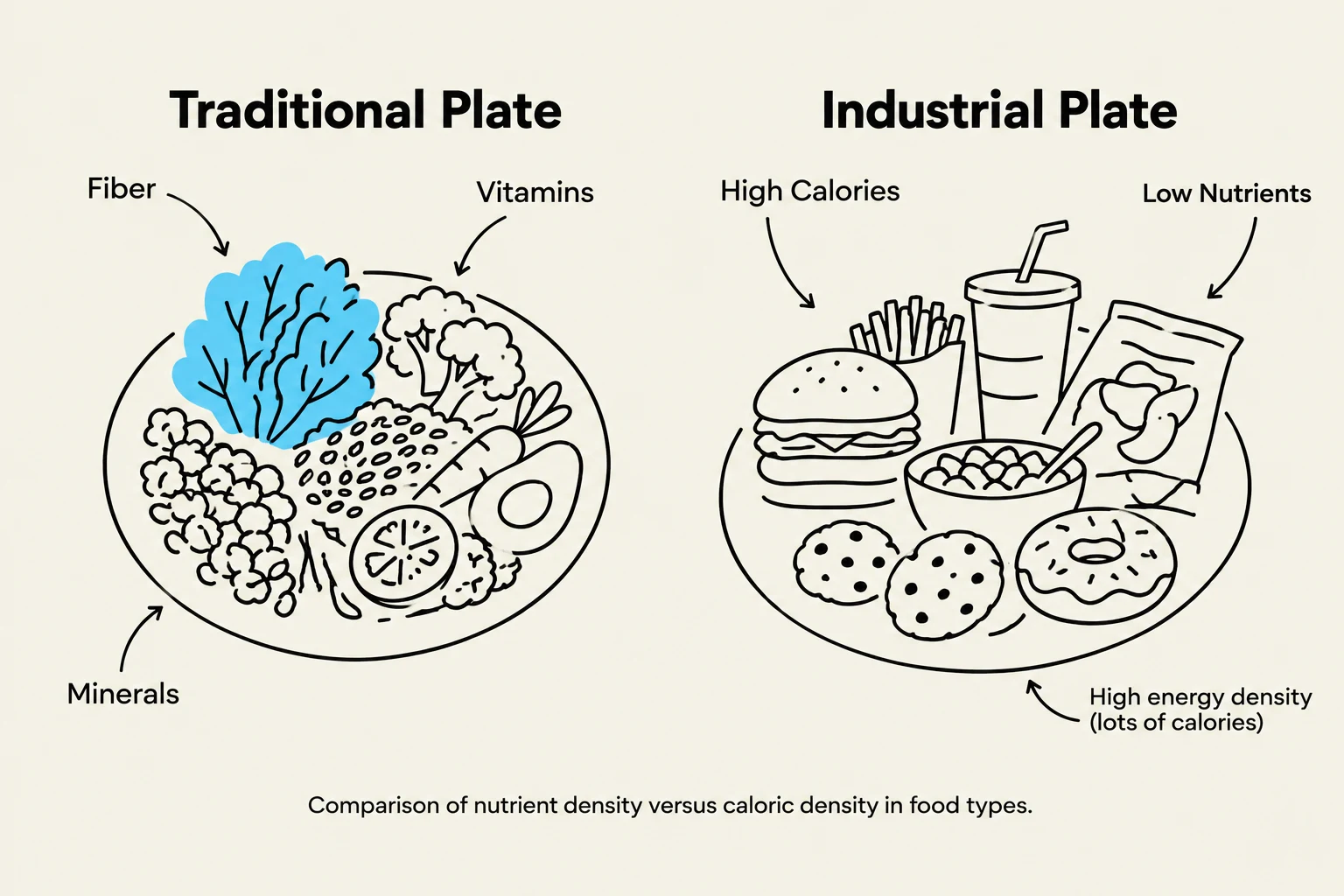
Comparison of nutrient density versus caloric density in food types.
Traditional diets are eating patterns rooted in specific cultures or geographic regions that prioritize unprocessed, fresh, and locally-derived foods. Unlike modern dietary models, these patterns are characterized by high nutritional value, featuring foods that are minimally processed and rich in fiber, vitamins, minerals, and antioxidants.
A significant clinical observation in nutritional studies is that chronic illnesses—such as cancer, diabetes, and cardiovascular disease—are notably rare in populations that consume traditional diets without the influence of Western food patterns.
Regional Dietary Models
Different regions have developed unique ways of achieving this nutritional balance:
The Mediterranean Diet: Perhaps the most studied nutritional model, it is based on the traditional diets of the Mediterranean basin. It features an abundance of plant foods (fruits, vegetables, whole-grain cereals, nuts, and legumes), uses olive oil as the primary fat source, and involves low consumption of red meat. Compared to Northern European diets, it is linked to a lower incidence of heart disease, cancer, and diabetes, as well as slightly higher longevity.
Traditional Arabic Diet: This pattern focuses on whole grains, vegetables, fruits, beans (such as chickpeas), and herbs (like parsley), with moderate consumption of meat (lamb) and fish.
Traditional African Diet: Emphasizes leafy greens, vegetables, fruits, yams, sweet potatoes, beans, and whole grains, with fish, meat, and eggs consumed in moderation.
Traditional Asian Diet: While variable across countries, it typically includes vegetables, fruits, beans, legumes, nuts, rice, noodles, and various spices and teas, with moderate amounts of fish, poultry, and eggs.
The Industrialisation of Food
The shift from hunter-gatherer and early farming societies to industrialised food production has significantly impacted human health. Since the mid-20th century, the focus of food production has shifted from nutritional quality to high yields, profit, and convenience.
Key Drivers of Nutritional Decline
Production Methods: The widespread use of fertilizers, pesticides, and growth hormones in livestock (common in US beef and sheep production) is now standard. Intensive factory farming and the overuse of antibiotics in animal stocks contribute to environmental and health risks, including antibiotic resistance.
Food Processing: Modern manufacturing prioritizes food additives and preservatives to maximize profit and shelf-life. In many cases, calorie counting has taken precedence over nutrient density.
Consumption Habits: The rise of "eating on the run," pre-packaged meals, and fast food has led to a society that is increasingly unaware of the actual nutritional content of its diet.
Exam Tip: When discussing the costs of industrialisation, remember to look beyond human health. Consider environmental impacts such as pesticide toxicity, water pollution, and soil depletion caused by monoculture.
Modern Dietary Patterns and "Fad Diets"
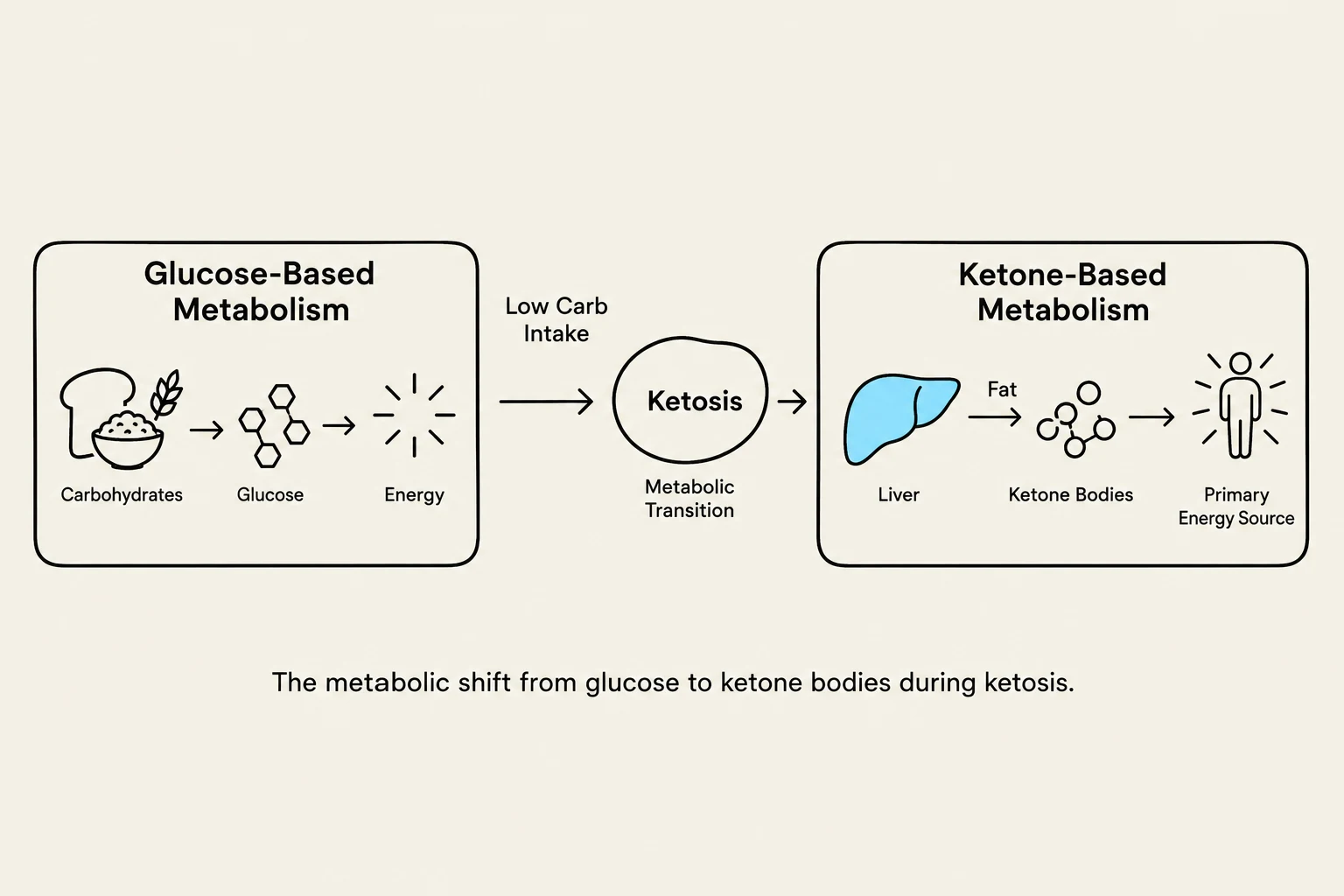
Diagram illustrating the metabolic shift from glucose-based metabolism to ketone-based metabolism during ketosis, triggered by low carbohydrate intake.
The modern diet is often characterized by high intakes of processed meats, refined sugars, salt, soft drinks, and fried foods. We also see an increase in the consumption of irradiated, microwaved, and genetically modified (GM) foods. This shift has contributed to an all-time high in chronic health issues, including obesity, Alzheimer’s, and Parkinson’s disease.
In response to these health crises, many "fad diets" have emerged. While some are based on specific health aims, they often require careful scrutiny:
The Blood Type Diet: Proposes that your blood type determines your ideal diet based on how your immune system reacts to certain lectins (proteins). For example, Type A is encouraged to eat high-carbohydrate plant foods, while Type O is encouraged to eat high-protein meats. However, critics note that many lectins are harmless and can be inactivated by simple cooking methods like boiling or sprouting.
The Ketogenic Diet: A very low-carbohydrate, high-fat diet (typically 75% fat, 20% protein, and 5% carbs) designed to induce ketosis. In ketosis, the body shifts from using glucose to using ketone bodies for energy. While it shows promise for epilepsy and certain neurological conditions, long-term compliance can be difficult, and there are risks of nutrient deficiencies and dyslipidaemia.
The Paleo Diet: Mimics the hunter-gatherer diet of the Paleolithic era by excluding grains, legumes, and dairy.
SCD and GAPS: These are strict elimination diets designed to improve intestinal health and the gut-brain connection by managing carbohydrate maldigestion and intestinal permeability.
Low FODMAP Diet: A therapeutic diet used to manage IBS by restricting certain short-chain carbohydrates (fermentable oligosaccharides, disaccharides, monosaccharides, and polyols) that ferment in the colon. It is intended for short-term use to identify triggers, as FODMAPs are important prebiotics for healthy gut flora.
The Role of Fasting in Modern Nutrition
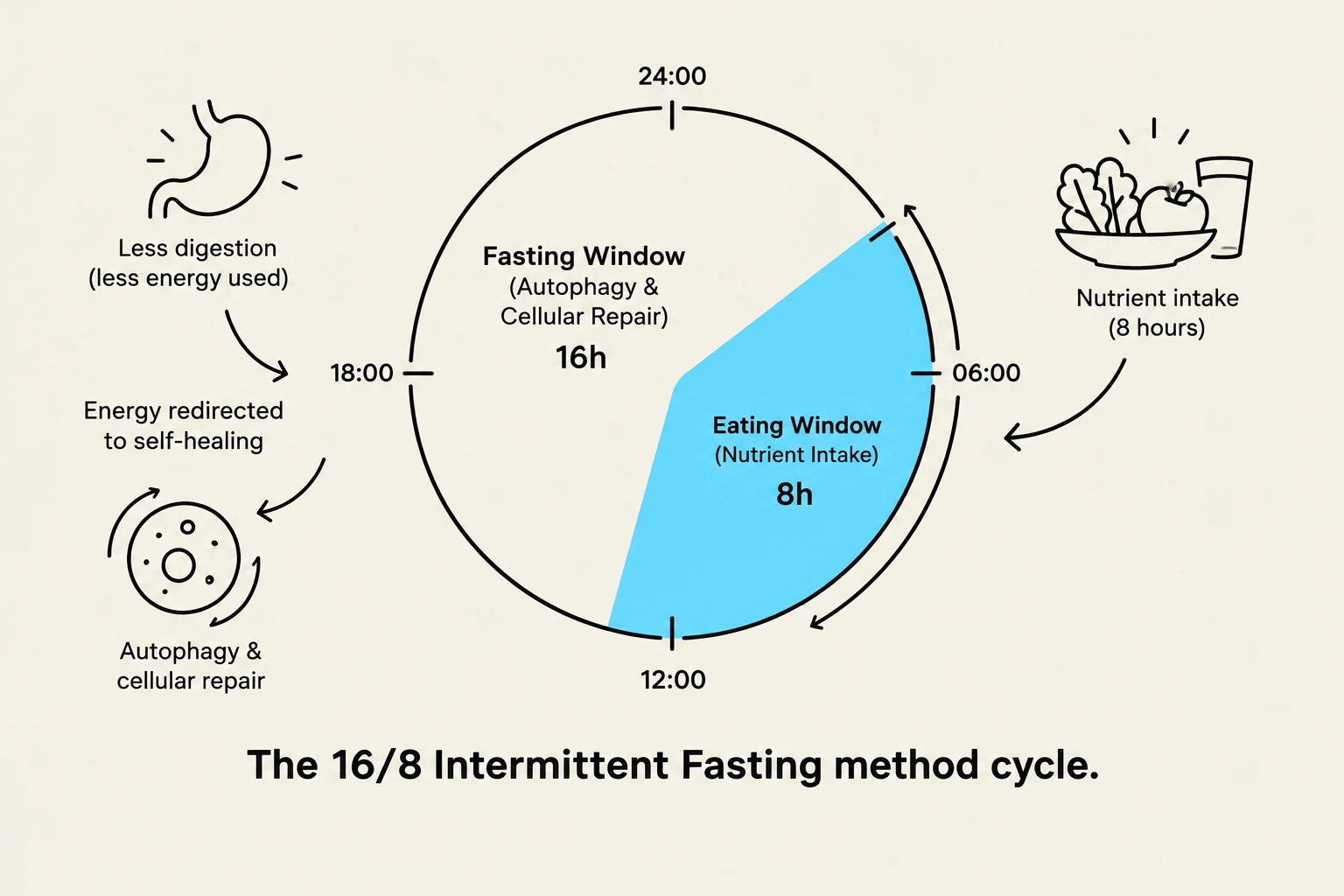
The 16/8 Intermittent Fasting method cycle illustrates a fasting window of 16 hours for autophagy and cellular repair, and an eating window of 8 hours for nutrient intake.
Fasting—the abstinence from food for a specific period—is an ancient practice that is seeing renewed scientific interest. By redirecting energy away from digestion and toward self-healing, fasting can offer several physiological benefits.
Common Fasting Protocols
Intermittent Fasting (IF): Includes the 16/8 method (fasting for 16 hours and eating during an 8-hour window) and the Eat-Stop-Eat method (a 24-hour fast once or twice a week). IF is linked to improved insulin sensitivity, weight loss, and enhanced cellular repair mechanisms.
Liquid Fasts: These include Vegetable Broth Fasting, which is considered a gentle way to alkalise the body and provide minerals, and Juice Fasting, which provides high nutrient density for detoxification.
Mono Fasting: Focusing on a single type of food (e.g., just apples) to rest the digestive system.
Clinical Note: During a fast, some individuals may experience a "healing crisis" (nausea, headaches, or fatigue) as toxins are mobilised from adipose tissue. Supporting the body's elimination channels through adequate hydration and, in some cases, enemas can help manage these symptoms.
In conclusion, while the industrialisation of food has provided convenience and high yields, it has come at a significant cost to human nutritional quality. Moving back toward the principles found in traditional diets—and utilizing structured tools like fasting or well-formulated plant-based diets—may offer a pathway to mitigating the modern epidemic of lifestyle diseases.
Keep reading for free.
Create an account to finish this reading and make it part of your study routine.