


Toxicological emergencies involving psychoactive substances present unique challenges for prehospital providers. These substances, whether used for medicinal purposes or recreational abuse, can cause profound alterations in mental status, physiological stability, and behavior. Understanding the specific clinical presentations—or "toxidromes"—of stimulants, cannabinoids, and hallucinogens is essential for effective assessment and management.
Stimulants
Stimulants are substances that increase activity within the Central Nervous System (CNS). They possess an enormous potential for abuse; in some cases, a first-time user may develop an addiction within just a few days.
Cocaine and Crack Cocaine
Cocaine is a naturally occurring alkaloid that functions as both a local anesthetic and a potent CNS stimulant. It has had devastating effects on various populations due to its high addictive potential. "Crack cocaine" refers to a specific form of the drug, often smoked, which leads to rapid absorption and intense effects.
Amphetamines and Methamphetamine
Amphetamines are structurally similar to phenylethylamine derivatives. While they have legitimate clinical applications—such as treating narcolepsy and Attention-Deficit/Hyperactivity Disorder (ADHD)—they are frequently abused. Methamphetamine is a related, low-cost, and long-acting stimulant that is extremely addictive and can be easily and quickly manufactured.
Speedballing
"Speedballing" refers to the dangerous practice of combining a stimulant (like cocaine) with a depressant (like heroin or opioids) to attempt to balance the physiological effects. This complicates the clinical picture, as the provider may see conflicting signs of both CNS stimulation and depression.
Clinical Presentation and Management
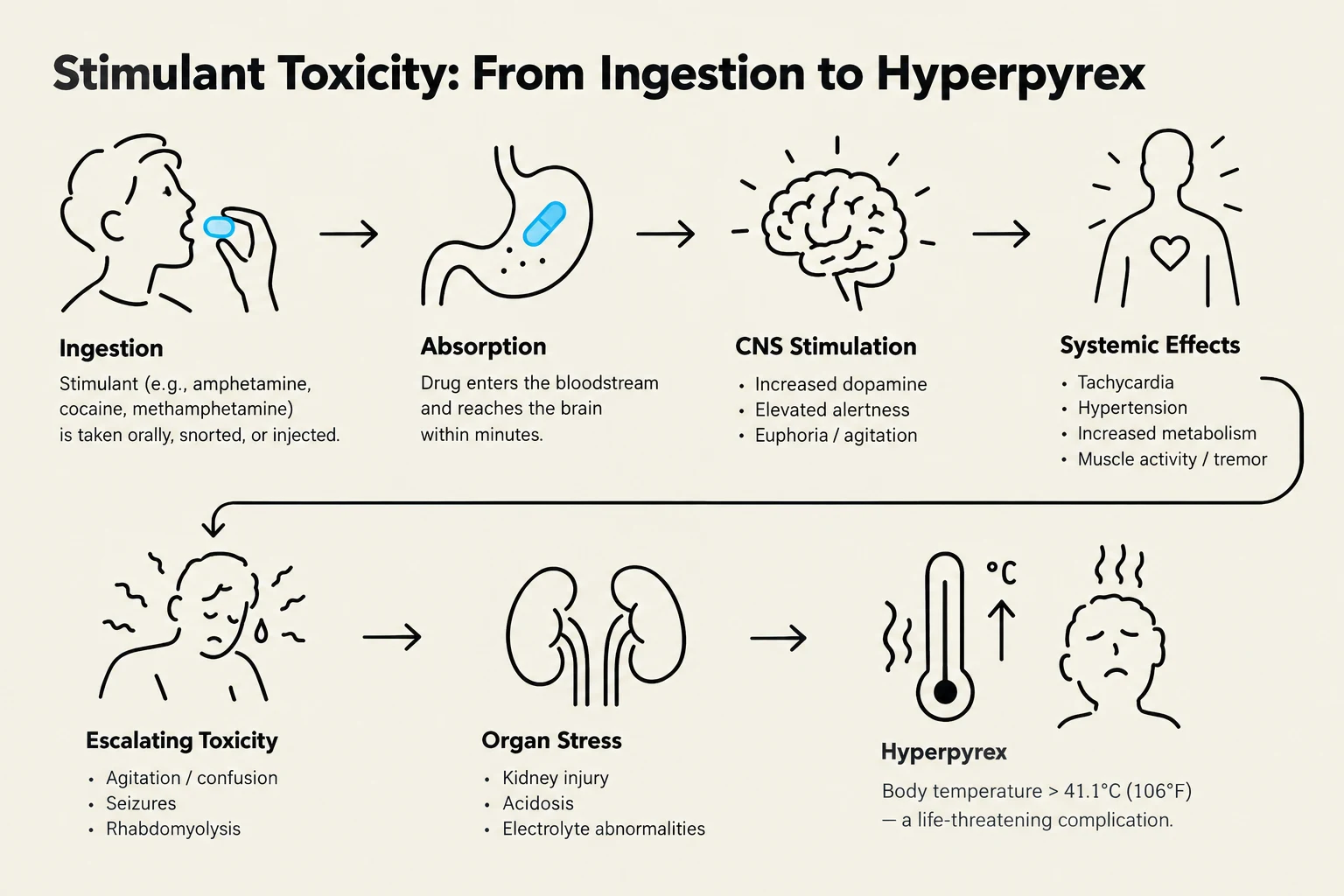
Toxic levels of stimulants can lead to a life-threatening constellation of symptoms, including:
Keep reading for free.
Create an account to finish this reading and make it part of your study routine.
Continue reading freeAlready have an account? Log in
Updated