


Toxicological emergencies can arise from a wide variety of sources, ranging from accidental ingestion of household cleaners to the intentional misuse of medications or illicit substances. Whether the exposure occurs via ingestion, inhalation, injection, or dermal contact, the clinician's priority remains the same: rapid assessment of the patient's airway, breathing, and circulation. Understanding the specific toxicological profiles of various agents—such as poisonous plants, mushrooms, and common household chemicals—is essential for effective prehospital and clinical management.
Plant and Mushroom Toxicology
Plants are a common source of unintentional poisoning. While many species cause only mild irritation, others contain potent toxins that can lead to severe systemic illness.
Poisonous Plants
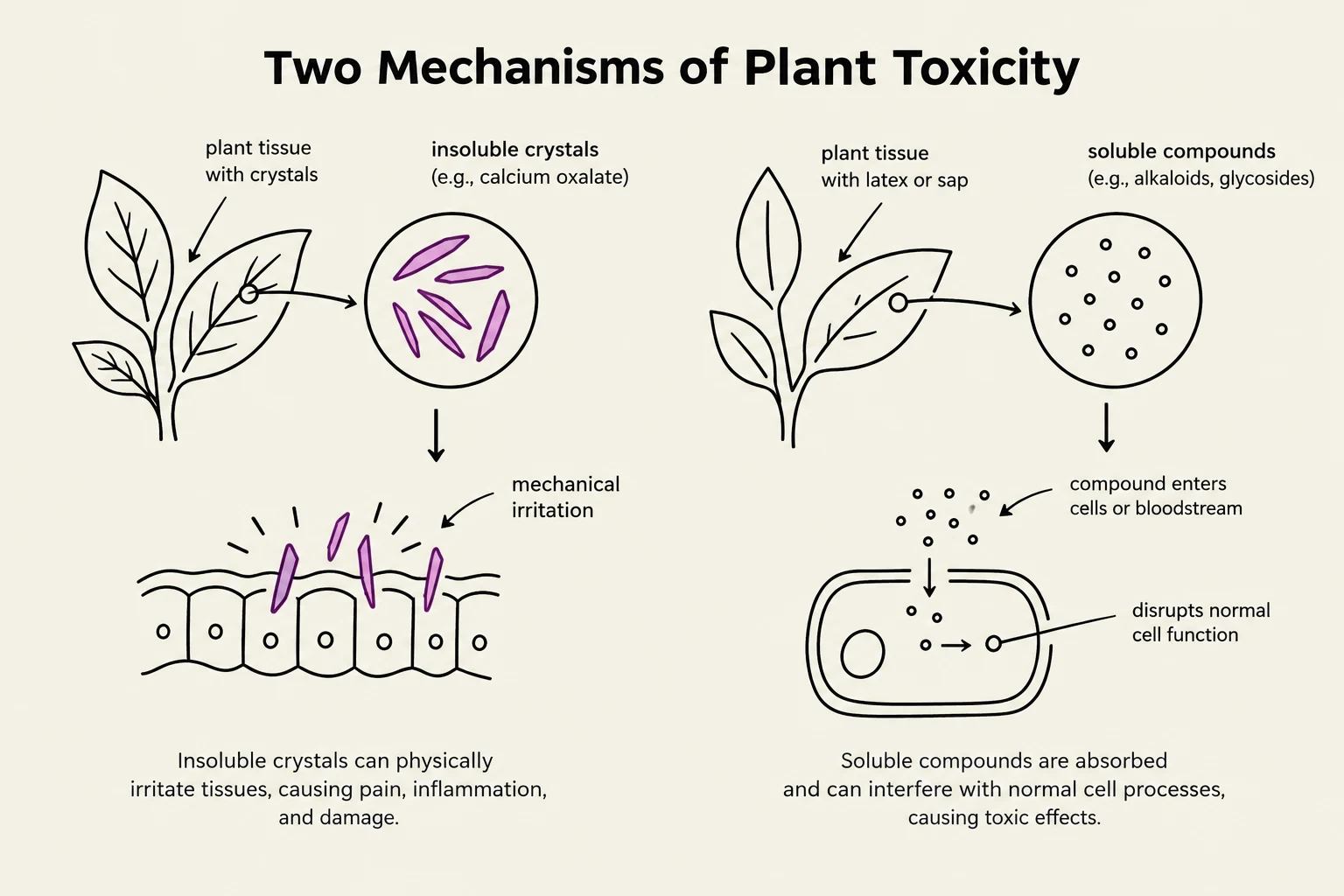
Plant toxicity generally manifests in two ways: contact dermatitis (skin irritation) or gastroenteritis (stomach and intestinal distress). Specific toxins include:
- Insoluble Calcium Oxalate Crystals (Raphides): Found in plants like Dieffenbachia, caladium, and philodendron, these needle-like crystals cause immediate oral burning and can lead to life-threatening airway edema.
- Soluble Calcium Oxalate: Found in the leaves of rhubarb plants, this form of the toxin can lead to renal failure.
- Cyanide: Certain fruit pits, such as those from apricots, peaches, and choke cherries, can release cyanide, a rapid-acting poison that causes cellular suffocation by inhibiting cytochrome oxidase.
- Cardiac Glycosides: Found in foxglove, monkshood, and yew berries, these substances directly affect heart function.
- CNS Toxins: The roots of water hemlock contain toxins that can trigger seizures.
- Colchicine: Found in the autumn crocus, this is highly toxic when ingested in large quantities.
Keep reading for free.
Create an account to finish this reading and make it part of your study routine.
Continue reading freeAlready have an account? Log in
Updated