Toxicology and Biologic Emergencies: A Clinical Review
This review covers essential principles for managing toxicology and biologic emergencies, including ABCs assessment, recognizing toxidromes, diagnostic clues like the osmolar gap, decontamination, enhanced elimination, and specific antidotes for major overdoses and chemical/biologic agents.
In the high-stakes environment of an emergency department, managing a suspected poisoning requires a disciplined, systematic approach. While the urge to identify the specific toxin is strong, clinical management must always prioritize physiological stability over definitive diagnosis. This review outlines the core priorities, diagnostic patterns known as toxidromes, and the critical interventions used to manage toxic exposures and biologic threats.
The Foundation: ABCs and Airway Protection
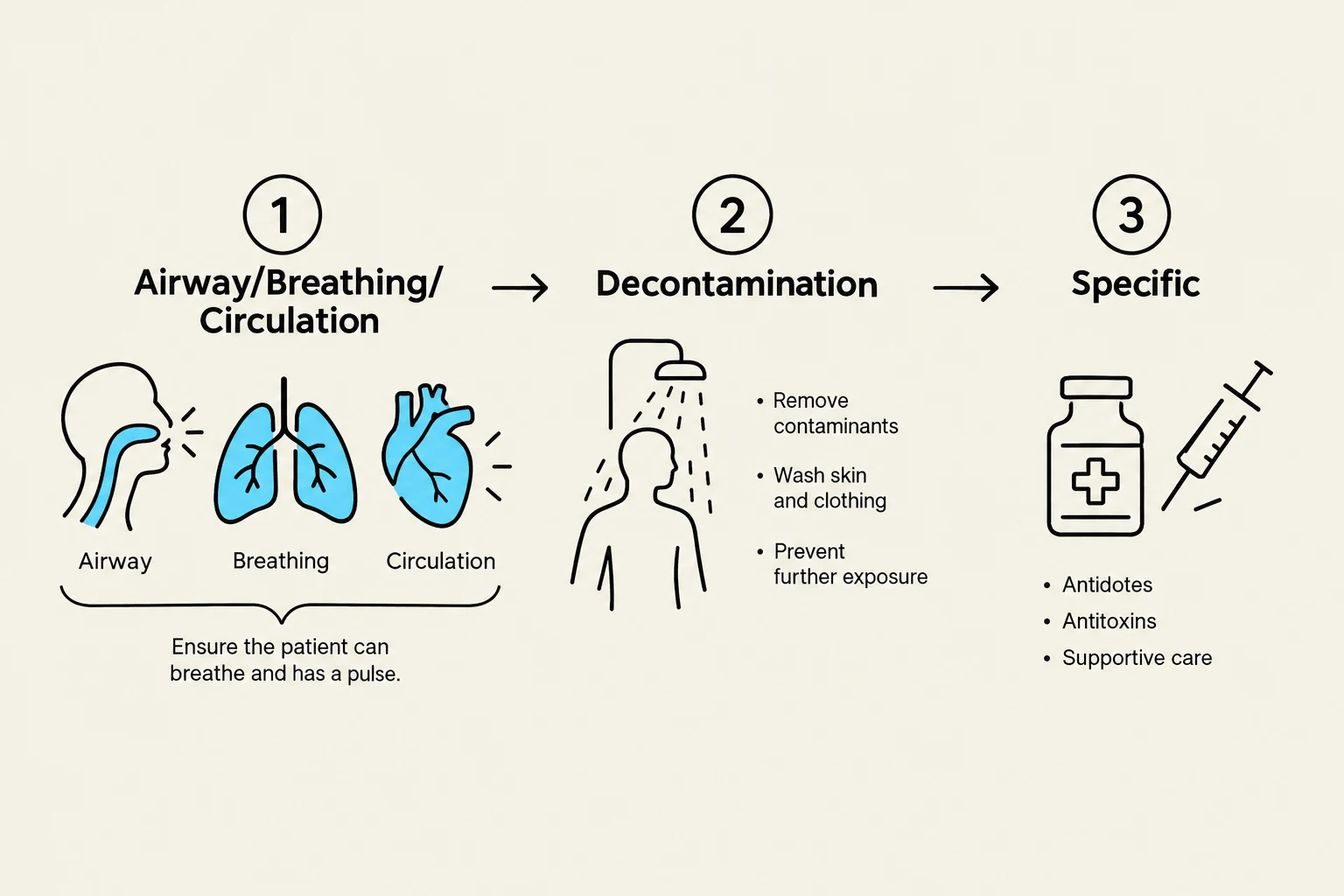
The absolute first priority in any toxicology or biologic emergency is the assessment of the ABCs: Airway, Breathing, and Circulation. Before administering charcoal, ordering laboratory tests, or even identifying the substance, the clinician must ensure the patient can maintain oxygenation and ventilation.
Airway protection is particularly critical in patients presenting with altered mental status, vomiting, or a loss of gag and cough reflexes. In these scenarios, the risk of aspiration is high, and clinicians should be prepared to use positioning, suction, bag-mask support, or endotracheal intubation. Once the airway is secure, rapid bedside checks should include vital signs, oxygen saturation, ECG monitoring, finger-stick glucose, and neurological status.
Exam Tip: If a question presents a patient with an unknown ingestion and asks for the "next step," always look for the answer that stabilizes the ABCs before any diagnostic or decontamination step.
This diagram illustrates a three-step approach to managing a patient, focusing on Airway/Breathing/Circulation, Decontamination, and Specific treatments like antidotes and supportive care.
Diagnostic Clues: The Osmolar Gap
When a patient presents with an unexplained metabolic acidosis, calculating the osmolar gap is a vital diagnostic step to identify the presence of unmeasured solutes, such as toxic alcohols.
The calculated osmolality is determined using the following formula:
2(Na)+18glucose+2.8BUN
An osmolar gap>10 mOsm/L suggests the presence of substances like methanol, ethylene glycol, or isopropyl alcohol. A critical clinical pearl is that if a patient presents with both an anion-gap metabolic acidosis and an elevated osmolar gap, you must immediately suspect toxic alcohol ingestion.
Recognizing Toxidromes
Toxidromes are sets of clinical signs and symptoms that occur together, allowing clinicians to predict the class of toxin involved even before laboratory results return.
Cholinergic Toxidrome
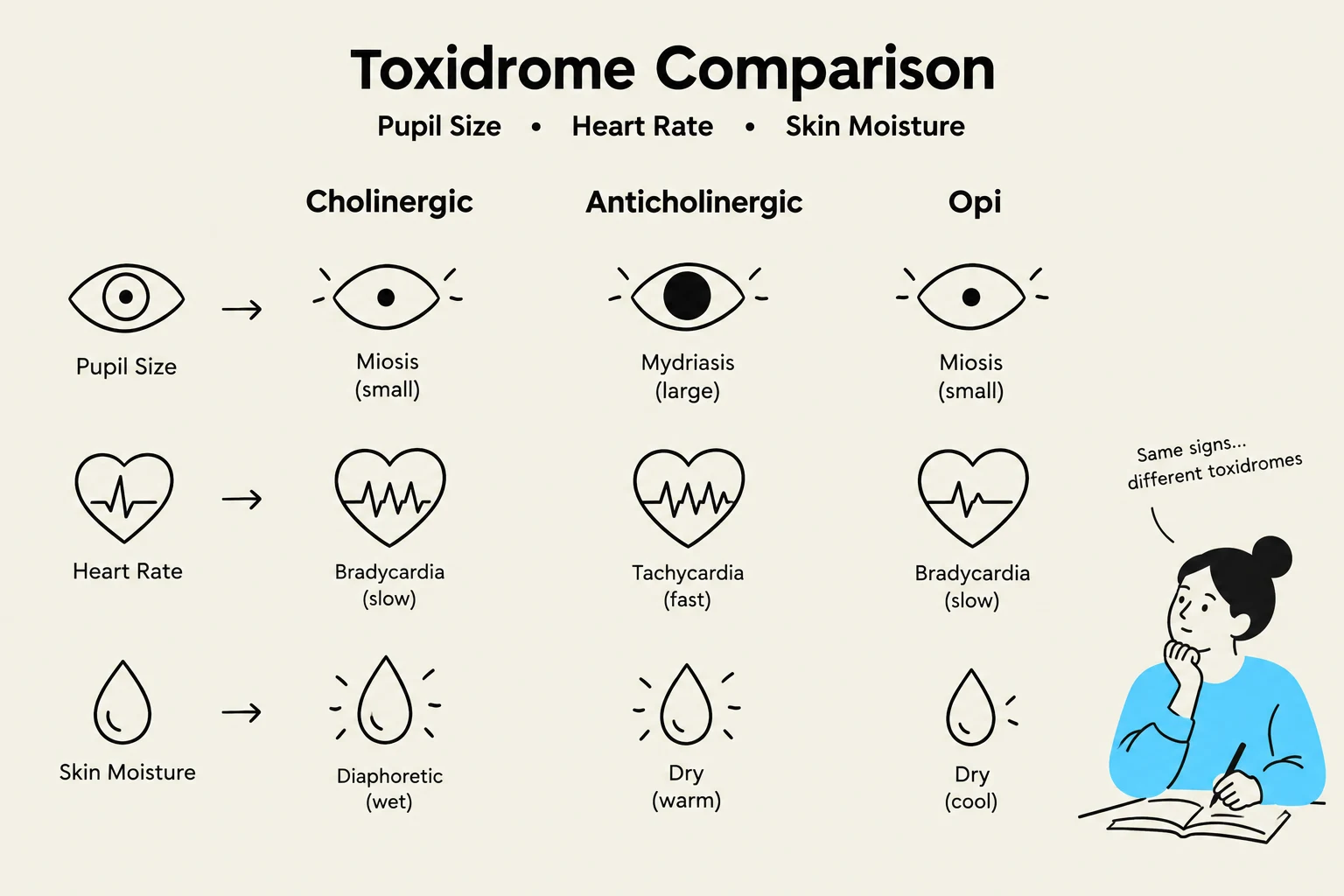
Characterized by "wet" symptoms, often summarized by the mnemonic SLUDGE (salivation, lacrimation, urination, defecation, GI upset, and emesis). Key findings include miosis (pinpoint pupils), bradycardia, and bronchospasm/bronchorrhea. This is commonly seen in organophosphate poisoning.
Priority Treatment: Atropine (for muscarinic effects) and pralidoxime.
Anticholinergic Toxidrome
The opposite of cholinergic; patients often present with "dry" symptoms. Look for dry mucous membranes, flushed/hot skin, mydriasis (dilated pupils), tachycardia, and urinary retention.
Priority Treatment: Supportive care and temperature control.
Opioid Toxidrome
Classic presentation includes the "opioid triad": respiratory depression, miosis (pinpoint pupils), and decreased consciousness/CNS depression.
Priority Treatment: Naloxone and ventilatory support.
Sympathomimetic Toxidrome
Commonly caused by stimulants like cocaine, this toxidrome presents with "fight or flight" symptoms: hypertension, tachycardia, hyperthermia, mydriasis, and agitation.
Priority Treatment: Support ABCs and control hyperthermia; avoid giving beta-blockers alone if cocaine is suspected due to alpha-stimulation.
Sedative-Hypnotic Toxidrome
Presents with CNS depression, impaired coordination, and respiratory depression. Unlike opioids, pinpoint pupils are not typical in this toxidrome.
Priority Treatment: Support ventilation. While flumazenil is a specific antidote for benzodiazepines, it must be used with caution as it can precipitate seizures in certain patients.
This chart compares the effects of cholinergic, anticholinergic, and opiate toxidromes on pupil size, heart rate, and skin moisture.
Decontamination and Enhanced Elimination
Once the patient is stable, clinicians may implement methods to reduce the body's absorption of the toxin or accelerate its removal.
Activated Charcoal: This is used to limit absorption and is most effective when administered early, typically within approximately 1 hour of ingestion. The standard dose is 1 g/kg. Note: Charcoal is ineffective for lithium, iron, alcohols, hydrocarbons, or caustics.
Urinary Alkalinization: This method is used specifically for salicylate toxicity. By administering sodium bicarbonate, the urine pH is increased, which traps the ionized drug in the urine and enhances its elimination.
Hemodialysis: This is a definitive enhanced elimination method reserved for severe cases, including severe salicylate poisoning, toxic alcohol poisoning, or lithium toxicity.
Major Overdoses and Specific Antidotes
Memorizing specific antidote pairings is essential for rapid intervention in life-threatening ingestions.
Toxin
Clinical Hallmark / Danger
Specific Antidote
Acetaminophen
Hepatic injury
N-acetylcysteine
Salicylates
Respiratory alkalosis + metabolic acidosis
Sodium bicarbonate
Tricyclic Antidepressants (TCAs)
Sodium-channel blockade; widened QRS
Sodium bicarbonate (Target pH 7.45–7.50)
Ethylene Glycol / Methanol
Toxic metabolites
Fomepizole (or dialysis if severe)
Opioids
Respiratory depression
Naloxone
Benzodiazepines
CNS depression
Flumazenil
Digoxin
Cardiac dysrhythmias
Digoxin-specific antibody fragments
Iron
Systemic toxicity
Deferoxamine
Deep Dive: TCA Toxicity
Tricyclic Antidepressants (TCAs) are particularly dangerous because they cause sodium-channel blockade, which leads to delayed ventricular depolarization. The hallmark ECG finding is a widened or prolonged QRS complex. Treatment involves a bolus of sodium bicarbonate to maintain a target serum pH of 7.45–7.50.
Deep Dive: Acetaminophen Toxicity
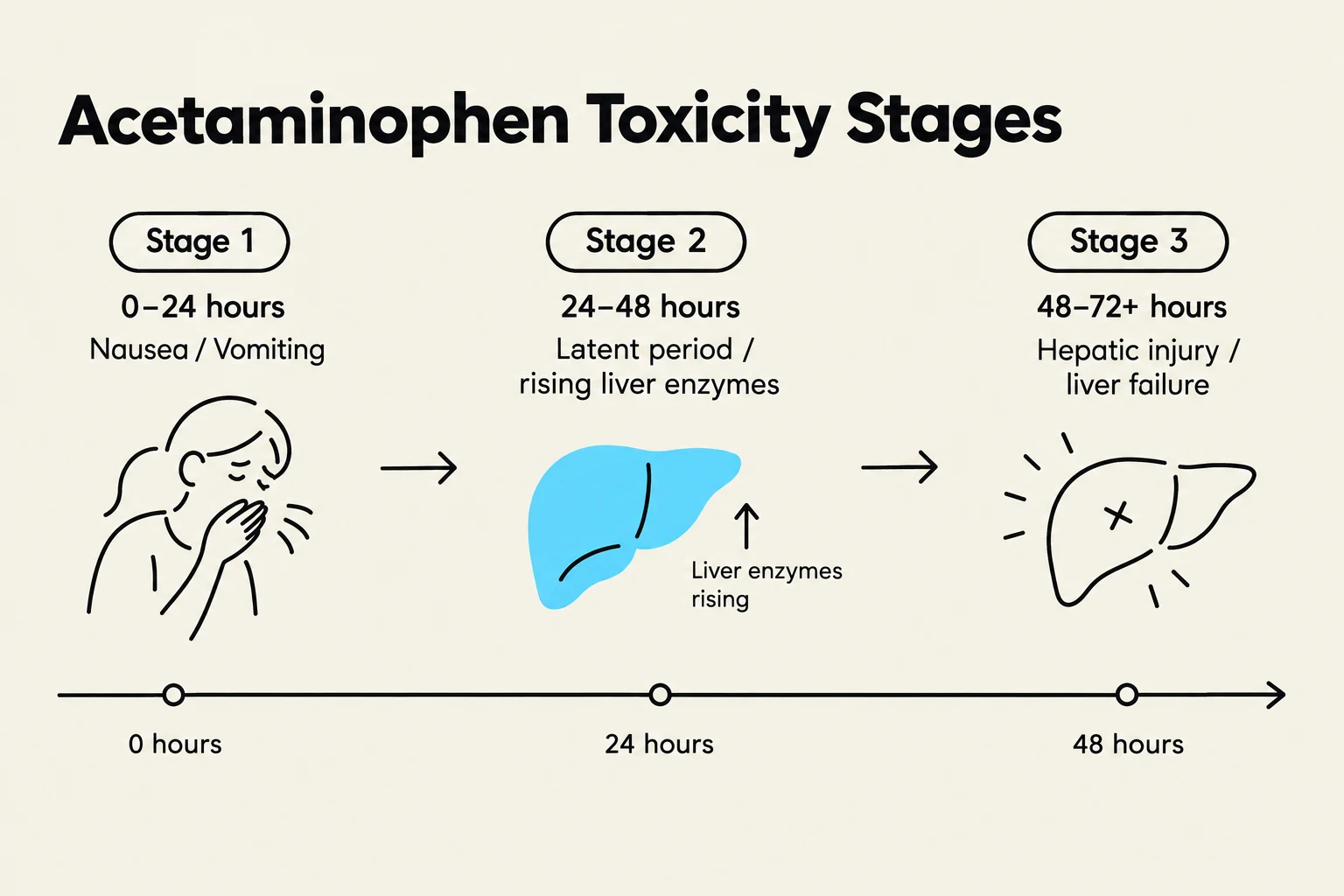
Acetaminophen is a leading cause of hepatic injury. Ingestion of approximately 140 mg/kg is considered potentially toxic. Patients may progress from an initial asymptomatic phase to hepatic failure, jaundice, and coagulopathy within days. The primary treatment is N-acetylcysteine.
This diagram illustrates the three stages of acetaminophen toxicity, detailing the timeline and symptoms associated with each stage, including nausea, vomiting, latent periods with rising liver enzymes, and eventual hepatic injury or liver failure.
Biologic and Chemical Emergencies
In cases of biological or chemical exposure, the safety of the responder is the first priority.
Biologic Agents: For diseases like Smallpox or Severe Varicella, clinicians must immediately implement airborne and contact precautions. For Inhalational Anthrax, rapid administration of antimicrobials like IV ciprofloxacin is required.
Chemical Agents: In any chemical exposure, responders must wear appropriate PPE, remove the patient from the source, and remove contaminated clothing (which should be double-bagged).
Nerve Agents (e.g., Sarin): Cause a cholinergic crisis (SLUDGE) and require atropine and pralidoxime.
Vesicants (e.g., Mustard Gas): Cause skin irritation and blistering.
Blood Agents (e.g., Cyanide): Cause rapid cellular asphyxiation and require specific antidotal protocols.
Clinical Pearl: In cases of suspected anaphylaxis (e.g., from a wasp sting), epinephrine is the first-line treatment. Antihistamines are considered adjuncts and should never delay the administration of epinephrine.
Keep reading for free.
Create an account to finish this reading and make it part of your study routine.