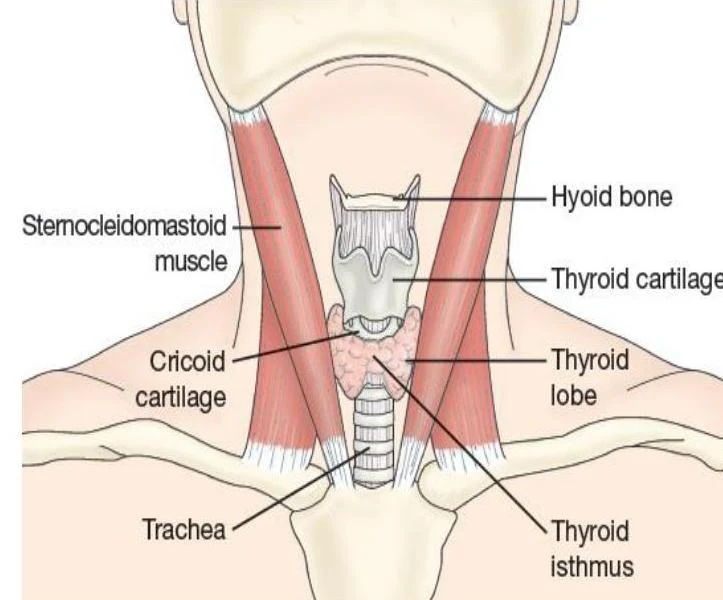
- Thyroxine (T4): Contains four iodine atoms and functions to maintain the body's metabolism in a steady, stable state.
- Triiodothyronine (T3): Contains three iodine atoms. It is the more potent, active form of the hormone and possesses a much more rapid metabolic action.
Once synthesized, these hormones must be transported through the blood. They bind to specific transport proteins, most notably Thyroxine-binding globulin (TBG), as well as Transthyretin and Albumin.
Calcitonin
Unlike T3 and T4, which focus on metabolism, calcitonin is involved in calcium regulation. It is secreted by the thyroid in response to high plasma calcium levels, working to lower those levels by increasing the deposition of calcium into the bone.
The Hypothalamic-Pituitary-Thyroid Axis
Thyroid function is governed by a sophisticated negative feedback mechanism involving the brain:
- The Hypothalamus releases Thyrotropin-releasing hormone (TRH).
- TRH stimulates the Anterior Pituitary to release Thyroid-stimulating hormone (TSH).
- TSH prompts the thyroid gland to release T3 and T4.
The system maintains homeostasis through feedback: when T3 and T4 levels are high, they signal the pituitary to decrease TSH production; conversely, when hormone levels are low, TSH production increases to stimulate the thyroid.
Exam Tip: TSH is the primary screening test for thyroid function. Because of the negative feedback loop, an elevated TSH level typically indicates hypothyroidism (the body is screaming at the thyroid to work harder), while a decreased TSH level often indicates hyperthyroidism.
Pathophysiology: Hypothyroidism ("Low and Slow")
Hypothyroidism occurs when the thyroid gland is underactive, resulting in deficient levels of T3 and T4. This can be caused by autoimmune diseases like Hashimoto's thyroiditis, iodine deficiency, or surgical removal of the gland.
Clinical manifestations follow a "low and slow" pattern due to the decreased metabolic rate:
- Metabolic: Weight gain, cold intolerance, and low body temperature.
- Cardiovascular: Bradycardia (heart rate < 60 bpm) and low blood pressure.
- Neurological/Psychological: Lethargy, fatigue, and depression.
Myxedema Crisis: This is a life-threatening complication of severe hypothyroidism. It is characterized by extreme symptoms including hyponatremia, hypoglycemia, hypoventilation, hypotension, and bradycardia, which can lead to cardiovascular collapse and death.
Pathophysiology: Hyperthyroidism ("Amped Up")
Hyperthyroidism is characterized by the excessive synthesis and secretion of thyroid hormones. A common cause is Graves disease, an autoimmune disorder.
Clinical signs reflect an "amped up" or hypermetabolic state:
- Metabolic: Rapid weight loss and heat intolerance (feeling very hot/sweaty).
- Cardiovascular: Tachycardia (HR > 100 bpm), palpitations, and hypertension (SBP > 140).
- Physical Signs: An enlarged thyroid (goiter) and exophthalmos (protrusion of the eyeballs).
- Neurological: Agitation, confusion, and irritability.
Thyroid Storm: This is a severe, life-threatening thyrotoxic crisis. It is often precipitated by stress (such as infection or surgery) and presents with hyperpyrexia (fever > 38.5∘C), extreme tachycardia (> 130 bpm), and altered mental states like delirium or coma.
Clinical Note: In hyperthyroidism, patients are often advised to consume a diet high in protein, carbohydrates, and fats to meet increased metabolic demands, while avoiding caffeine and spicy foods that might further exacerbate agitation.