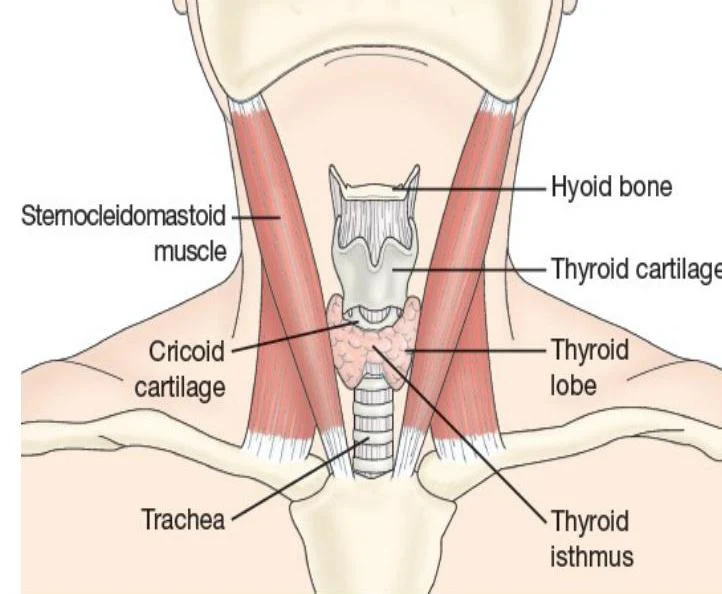
Once synthesized, these hormones are transported through the bloodstream by binding to specific proteins, including thyroxine-binding globulin (TBG), transthyretin (thyroid-binding prealbumin), and albumin.
Calcitonin
Unlike the metabolic hormones, calcitonin is secreted in response to high plasma calcium levels. Its primary function is to reduce calcium levels in the blood by increasing the deposition of calcium into the bone.
The Negative Feedback Mechanism
The regulation of thyroid hormones is a sophisticated process involving the hypothalamus and the anterior pituitary gland. This is known as a negative feedback mechanism:
- The hypothalamus releases thyrotropin-releasing hormone (TRH).
- TRH stimulates the anterior pituitary to release thyroid-stimulating hormone (TSH).
- TSH then stimulates the thyroid gland to produce and release T3 and T4.
As thyroid hormone levels rise in the blood, they signal the hypothalamus and pituitary to decrease the production of TRH and TSH, respectively. Conversely, if thyroid hormone levels drop, TSH levels rise to stimulate the gland.
Exam Tip: In clinical practice, TSH levels move inversely to thyroid hormone levels. If a patient has high T3/T4 (hyperthyroidism), their TSH will be low. If they have low T3/T4 (hypothyroidism), their TSH will be high.
Pathophysiology: Hypothyroidism
Hypothyroidism is characterized by a "low and slow" metabolism due to suboptimal levels of thyroid hormones. This can be caused by iodine deficiency, autoimmune diseases like Hashimoto's thyroiditis, pituitary tumors, or surgical removal of the gland (thyroidectomy).
Clinical Manifestations:
- Metabolic: Weight gain, lethargy, and fatigue.
- Thermoregulation: Cold intolerance and low body temperature.
- Cardiovascular: Bradycardia (heart rate < 60 bpm) and low blood pressure.
- Psychological: Depression and slowed mental processes.
Severe Complication: Myxedema Crisis
If hypothyroidism becomes extreme—often due to medication noncompliance—it can lead to a life-threatening myxedema crisis (or myxedema coma). Patients may present with hyponatremia, hypoglycemia, hypoventilation, hypotension, and hypothermia, eventually leading to cardiovascular collapse and unconsciousness.
Pathophysiology: Hyperthyroidism
Hyperthyroidism involves the excessive synthesis and secretion of thyroid hormones, resulting in an "amped up" metabolism. A common cause is Graves disease, an autoimmune disorder. Patients may also develop a goiter, which is an enlargement of the thyroid gland.
Clinical Manifestations:
- Metabolic: Weight loss and heat intolerance.
- Cardiovascular: Tachycardia (heart rate > 100 bpm), palpitations, and hypertension.
- Gastrointestinal: Diarrhea and GI distress.
- Physical Signs: Exophthalmos (protruding "grape" eyes), agitation, and nervousness.
Severe Complication: Thyroid Storm
A thyroid storm (thyrotoxic crisis) is an abrupt, severe form of hyperthyroidism that is often fatal if untreated. It is frequently precipitated by physiological stress, such as infection, surgery, or injury.
Clinical Manifestations of Thyroid Storm:
- Hyperpyrexia (fever > 38.5∘C or 101.3∘F).
- Extreme tachycardia (> 130 bpm).
- Altered mental status, including delirium, psychosis, or coma.
Nursing Alert: In a thyroid storm, avoid using aspirin (salicylates) because they can displace thyroid hormones from their binding proteins, potentially worsening the hypermetabolic state.
Diagnostic Evaluation Summary
To differentiate between these states, clinicians use several diagnostic tools:
| Test | Hyperthyroidism Finding | Hypothyroidism Finding |
|---|
| Serum TSH | Decreased | Increased |
| Free T4 | Elevated | Decreased |
| Radioactive Iodine Uptake | High uptake | Low uptake |
Sources:
Kistler, D. M. (2026). Endocrine System 2026.pptx.