


In the field of psychiatric nursing, the connection between the clinician and the patient is not merely a social courtesy; it is a clinical tool. The nurse-client therapeutic relationship serves as the fundamental cornerstone of psychiatric nursing, providing the structured framework necessary for effective patient care. Unlike casual social interactions, which are often reciprocal and driven by mutual interest, the therapeutic relationship is goal-oriented and designed specifically to facilitate problem-solving and achieve clinical outcomes.
The Foundation: The Therapeutic Relationship
The therapeutic relationship is a purposeful, goal-directed interaction. It is built upon the understanding that the nurse's primary focus is the client's needs, rather than the nurse's own social or emotional needs. To establish this bond, the nurse must navigate various pre-existing conditions—such as the client's past experiences with authority or previous trauma—that may influence how they perceive or respond to the nurse.
The development of this relationship is not instantaneous; it follows a structured progression through specific phases of relationship development. Each phase carries distinct clinical tasks that the nurse must complete to move the client toward therapeutic outcomes.
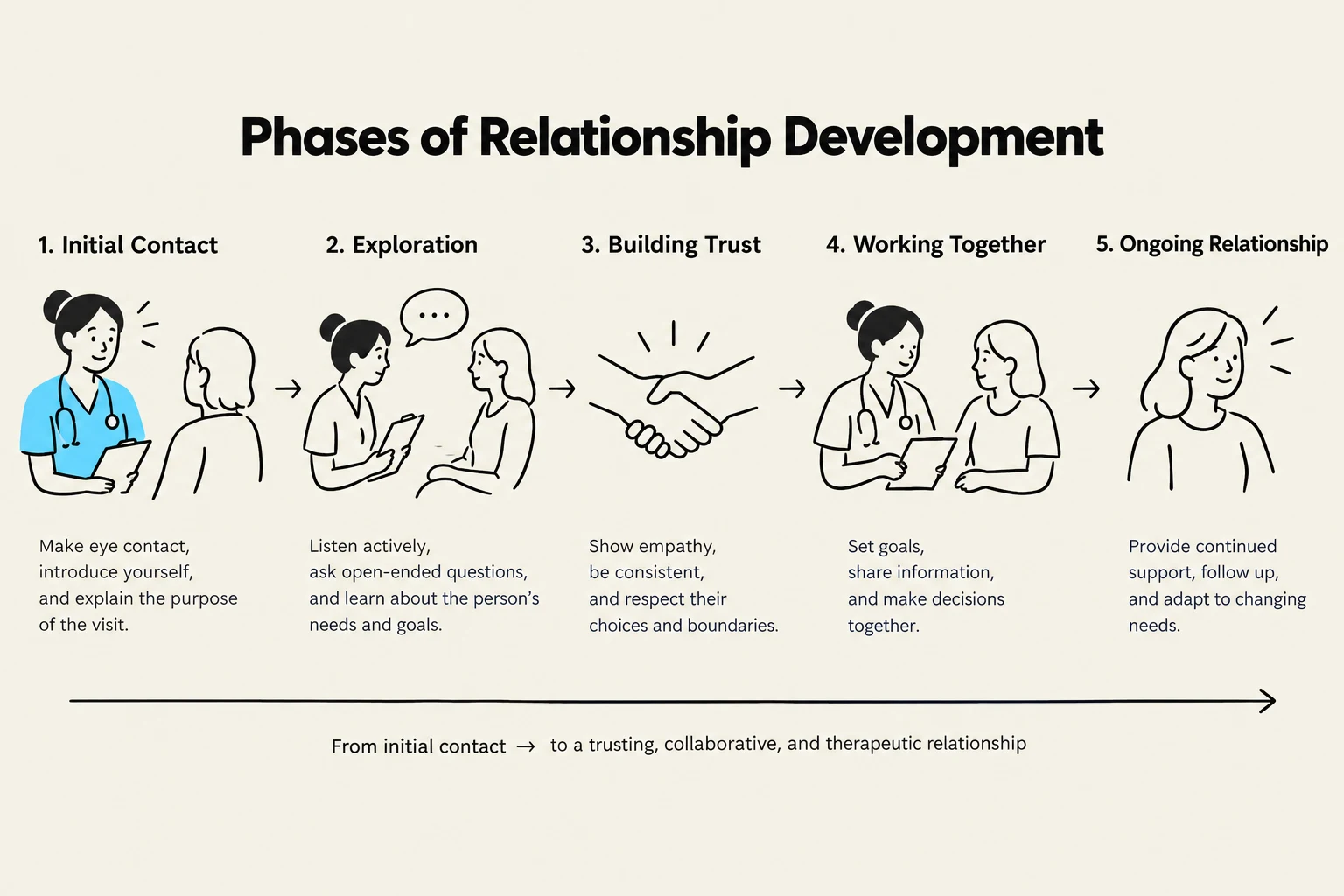
Exam Tip: Remember that the therapeutic relationship is unidirectional. While social relationships involve a "give and take" between equals, the therapeutic relationship focuses on the client's growth and the nurse's professional role in facilitating that growth.
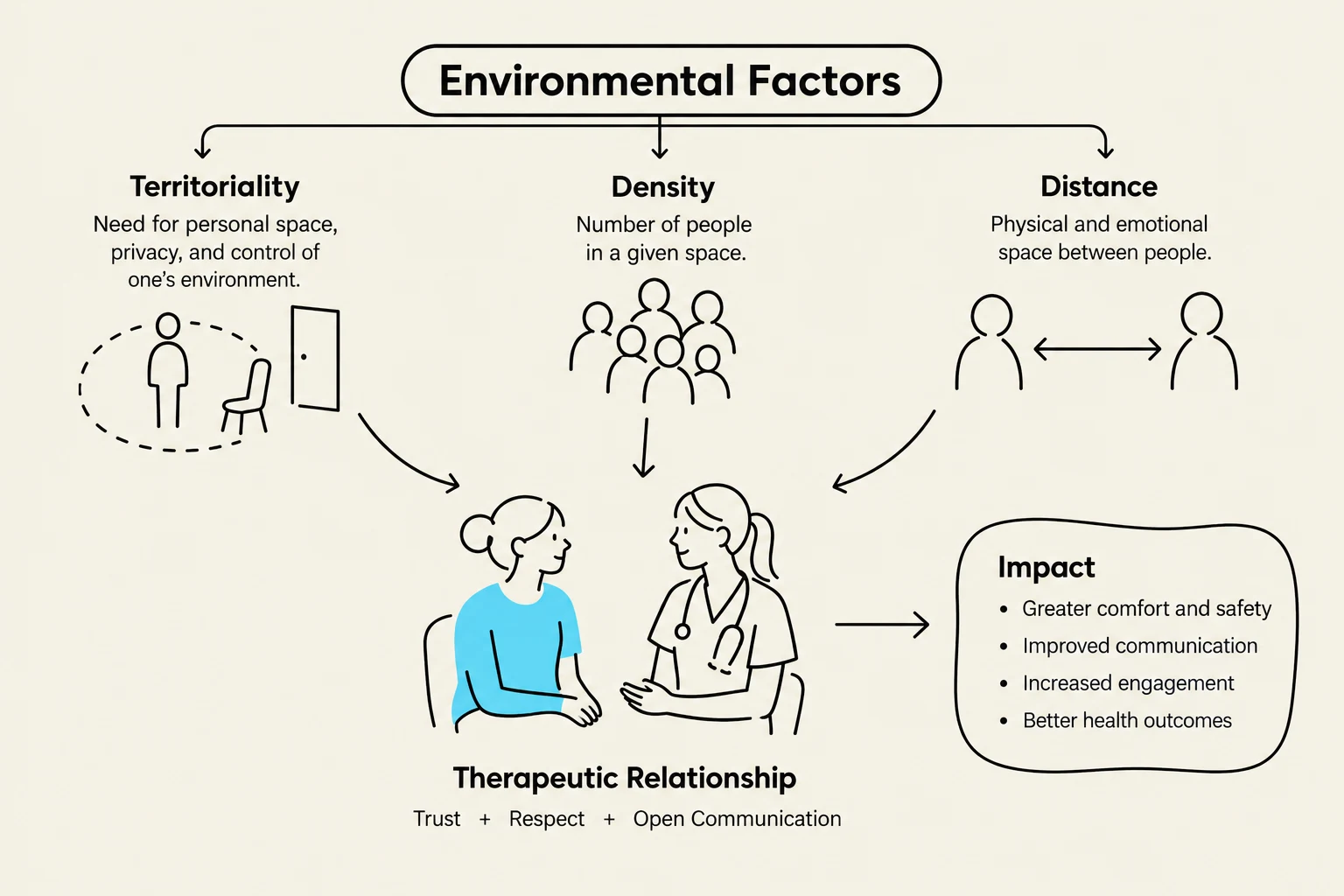
Environmental Influences on Communication
Communication does not occur in a vacuum. The physical environment plays a significant role in how a client feels and how they interact with the nurse. Three key environmental components must be managed to ensure a safe and productive space:
Keep reading for free.
Create an account to finish this reading and make it part of your study routine.
Continue reading freeAlready have an account? Log in
Updated