


In clinical psychology, one of the most consistent findings is the gender gap in the prevalence of unipolar depression. Epidemiological studies consistently show that women are diagnosed with major depressive disorder at significantly higher rates than men. While the exact cause of this disparity remains a subject of intense debate, researchers have developed several competing theories to explain why this gap exists. These theories range from biological explanations involving hormones to sociological perspectives focusing on how we define and measure mental illness.
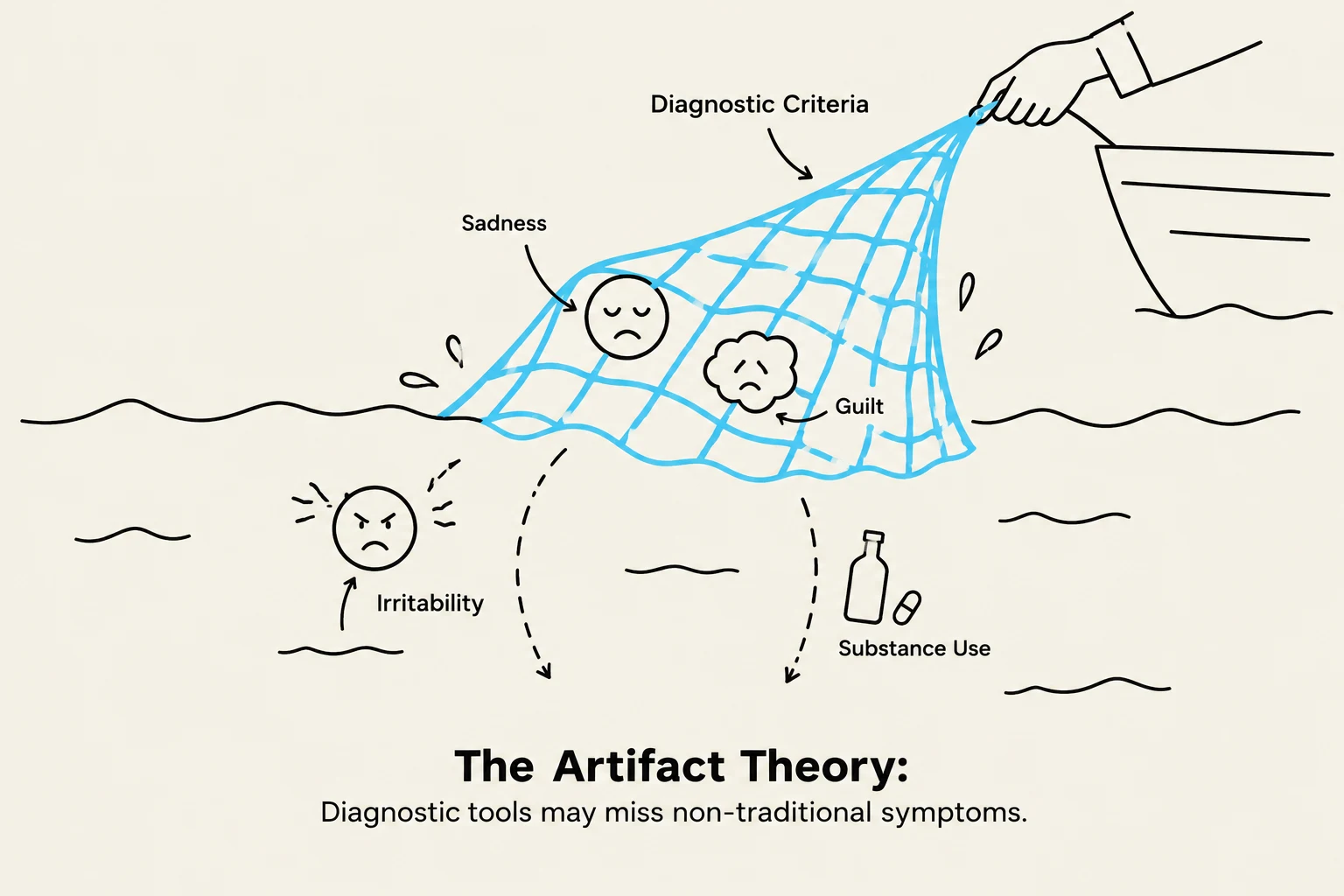
The Artifact Theory: Is the Gap Real or Measured?
The Artifact Theory suggests that the observed gender difference might not be a biological reality, but rather an "artifact" of how we collect data and define depression. This theory posits that the tools we use to diagnose depression may be biased toward female-typical presentations of the disorder.
For example, traditional diagnostic criteria often emphasize emotional symptoms like sadness, hopelessness, and guilt. If men tend to express distress through different symptoms—such as irritability, anger, or substance use—they might be overlooked by standard screening tools. In this view, the "gap" is actually a measurement error: women are being identified more frequently because the "net" we use to catch depression is designed to catch their specific symptoms.
Exam Tip: If a question asks whether the gender gap in depression is purely biological, remember to mention the Artifact Theory. It argues that sociocultural biases in diagnostic criteria can inflate the perceived prevalence in women.
Keep reading for free.
Create an account to finish this reading and make it part of your study routine.
Continue reading freeAlready have an account? Log in
Updated