


The transition from the Late Bronze Age to the Early Iron Age represents one of the most dramatic turning points in Mediterranean history. For centuries, the Aegean world was defined by highly organized, centralized palace economies. However, a period of systemic failure led to a profound restructuring of Greek society, a period often referred to as the "Dark Ages." While the term suggests a total loss of human achievement, modern scholarship views this era as a complex period of adaptation, technological shifts, and the eventual laying of the foundations for Classical Greece.
The Late Bronze Age Collapse
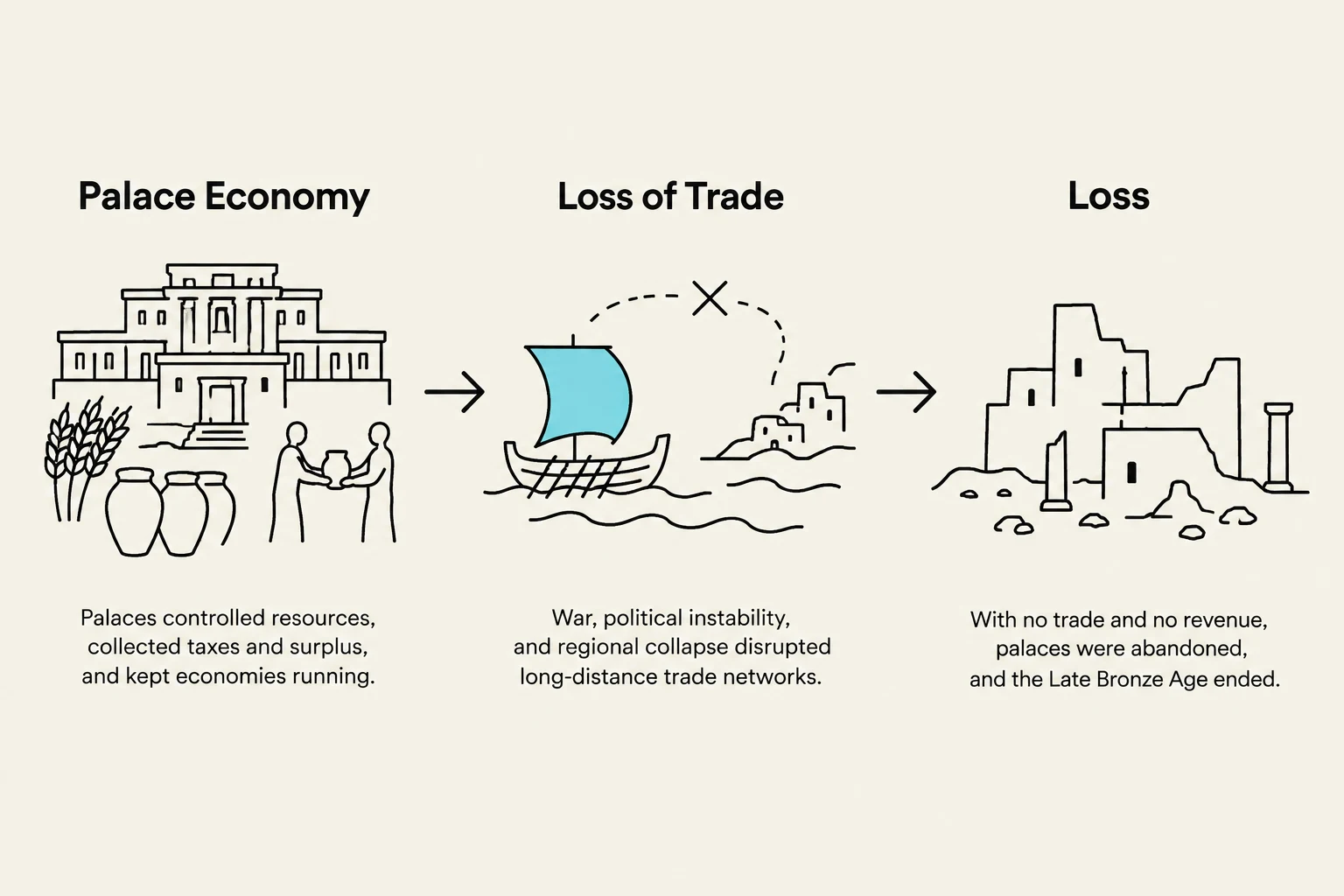
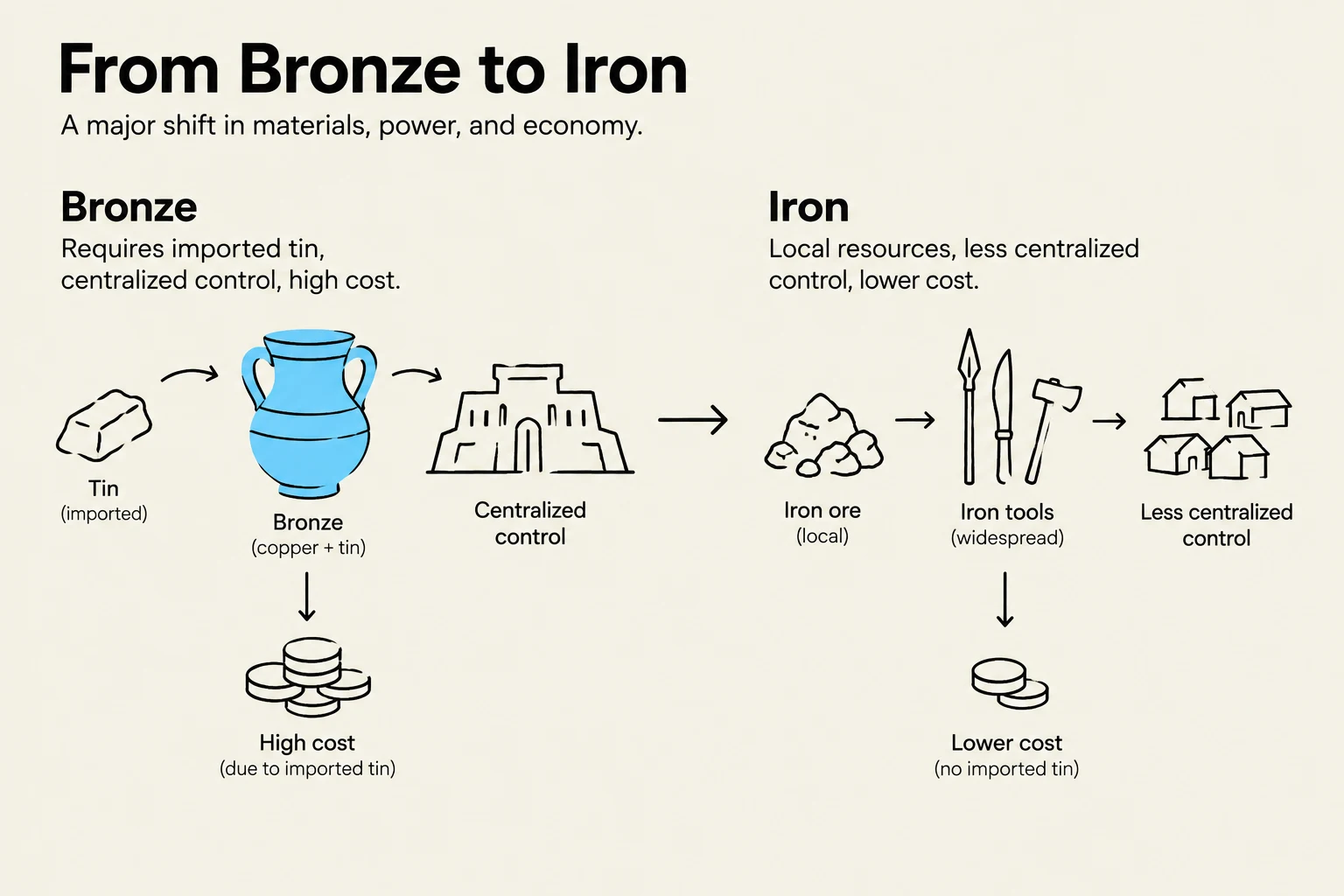
Before the collapse, Greek civilization was characterized by sophisticated palace structures that managed resources, labor, and long-distance trade. These centers relied heavily on the production of bronze—an alloy of copper and tin. Because tin was not locally available in Greece, the stability of these civilizations depended on complex, long-distance trade networks to secure the necessary materials.
The "collapse" refers to the sudden breakdown of these systems. As the palaces fell, the centralized administration vanished, and the extensive trade routes that once connected the Aegean to distant lands were severed.
Exam Tip: When discussing the "Collapse," remember it is not just about warfare; it is a systemic failure involving the loss of trade, administration (palaces), and writing systems.
The Greek Dark Ages and the Loss of Literacy
The period following the collapse is traditionally called the "Dark Ages". This name stems from the perceived lack of archaeological and historical evidence compared to the preceding era. One of the most significant losses during this time was the disappearance of Linear B, the syllabic script used by the Mycenaean palaces to keep administrative records.
Keep reading for free.
Create an account to finish this reading and make it part of your study routine.
Continue reading freeAlready have an account? Log in
Updated