


In the hierarchy of biological organization, cells are not merely isolated units. To perform complex tasks like movement, sensation, or protection, cells must work together. When a group of cells shares a common embryonic derivation and performs a specific, unified function, they form a tissue.
The human body utilizes four major types of tissues to maintain homeostasis and structural integrity: epithelial, connective, muscle, and nervous tissue. While each plays a vital role, epithelial tissue serves as the body's primary interface with the environment, acting as both a protective barrier and a specialized secretory engine.
The Fundamentals of Tissues
Before diving into specific types, it is important to understand what defines a tissue. Tissues are derived from the three embryonic germ layers during development. The four primary categories are:
- Epithelial Tissue: Covers surfaces and forms glands.
- Connective Tissue: Provides support, protection, insulation, and transport.
- Muscle Tissue: Responsible for movement, categorized into skeletal, cardiac, and smooth types.
- Nervous Tissue: Transmits electrical signals via neurons and glial cells.
Deep Dive: Epithelial Tissue
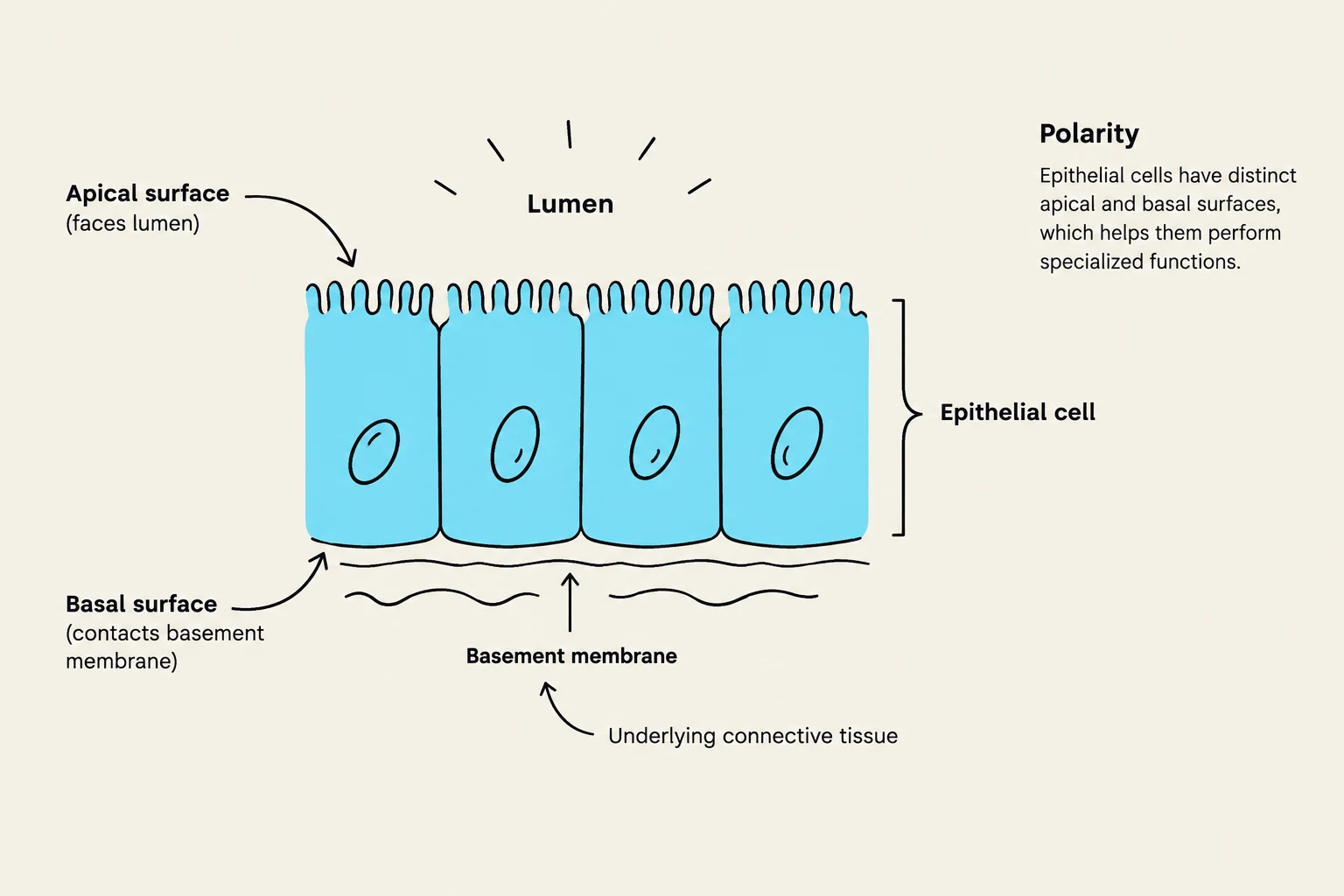
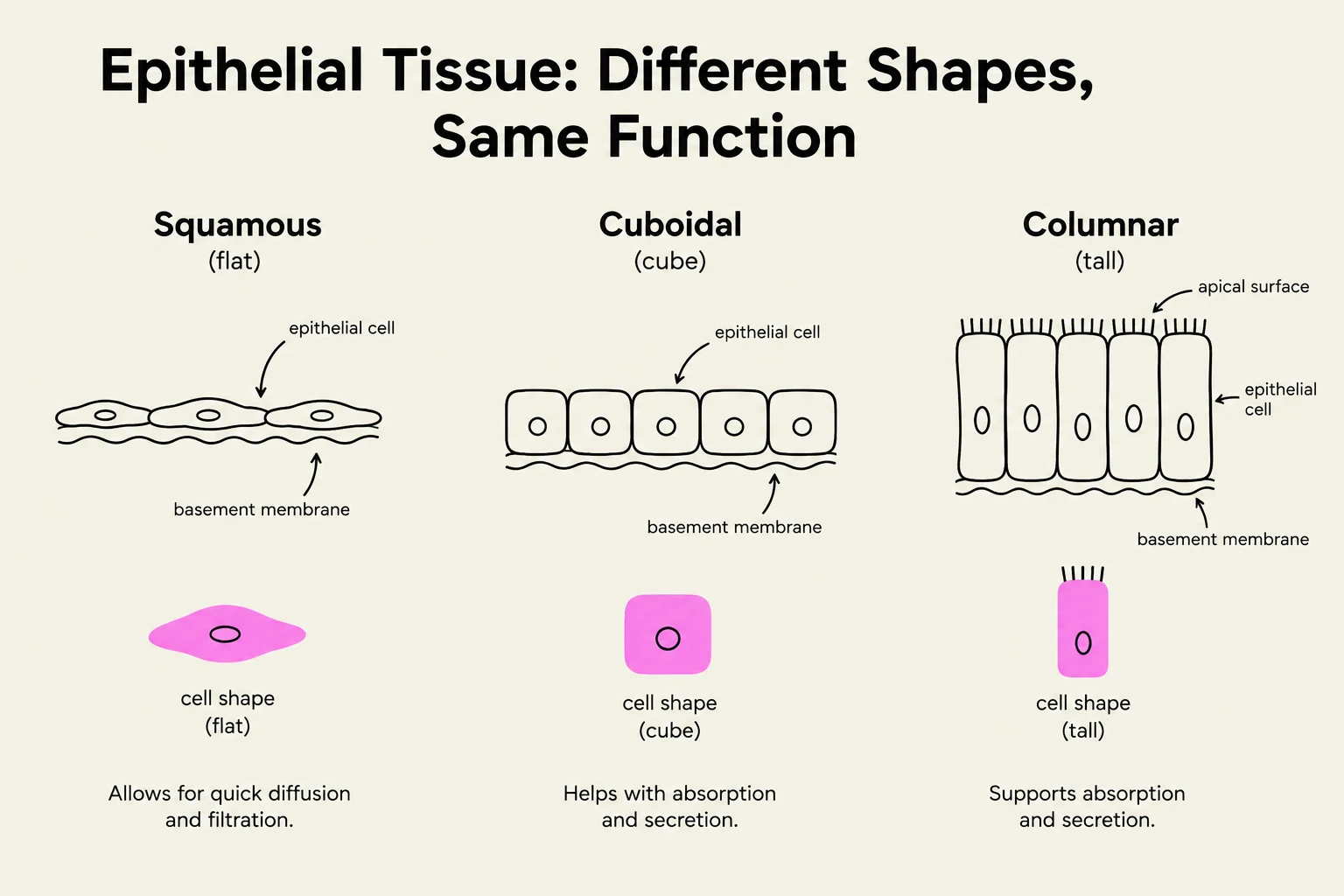
Epithelial tissue is unique because of its high density and specialized arrangement. Unlike connective tissue, which is often defined by a large amount of extracellular matrix, epithelium is characterized by extreme cellularity—it is composed almost entirely of closely packed cells with very little space between them.
To maintain this tight structure, epithelial cells utilize specialized adhesions. These cells form continuous sheets held together by structures such as tight junctions and desmosomes, ensuring the barrier remains intact even under physical stress.
Study Tip: Think of epithelial tissue like a brick wall. The "bricks" are the cells, and the "mortar" (the junctions) is minimal but essential to keep the wall from falling apart.
Keep reading for free.
Create an account to finish this reading and make it part of your study routine.
Continue reading freeAlready have an account? Log in
Updated