


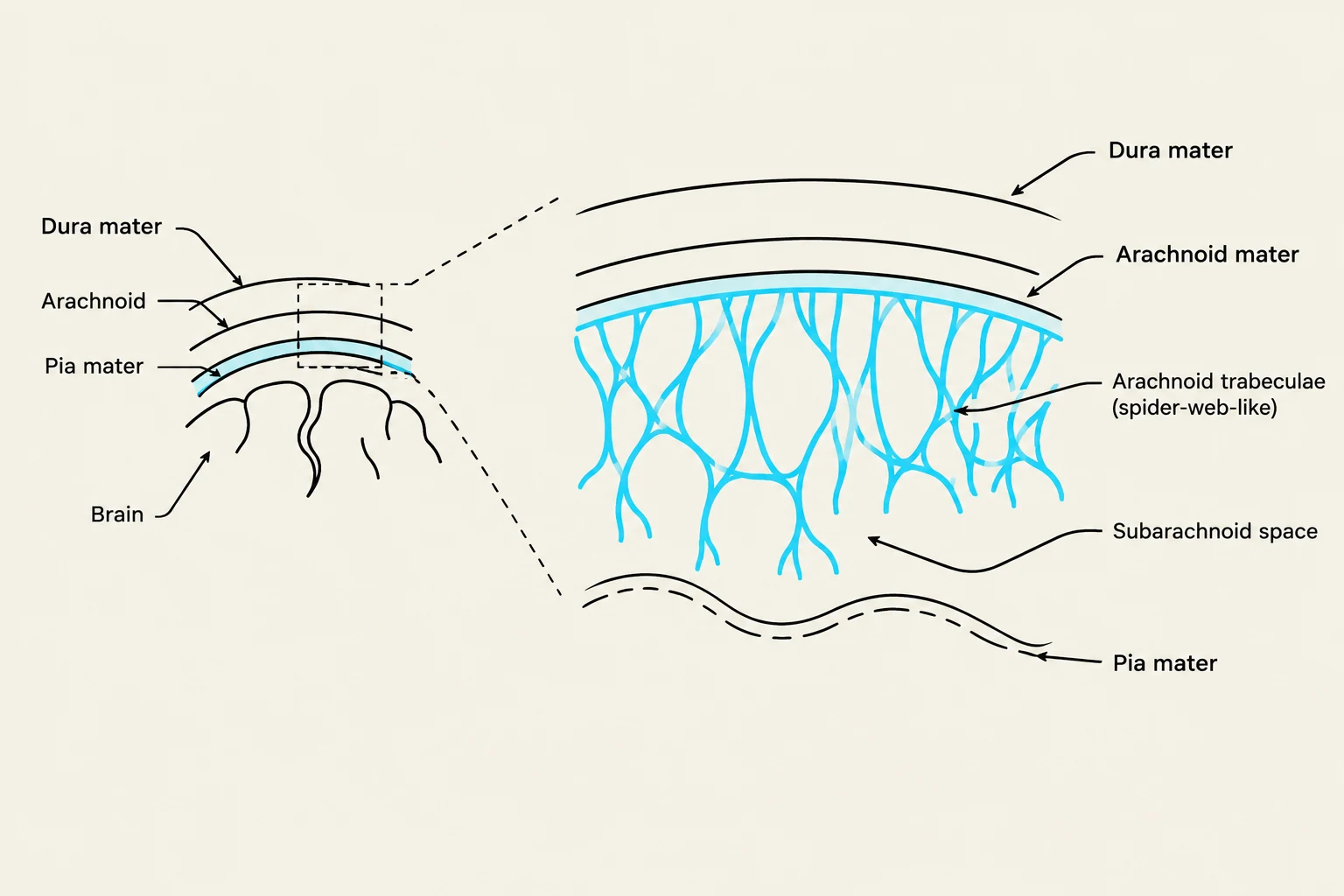
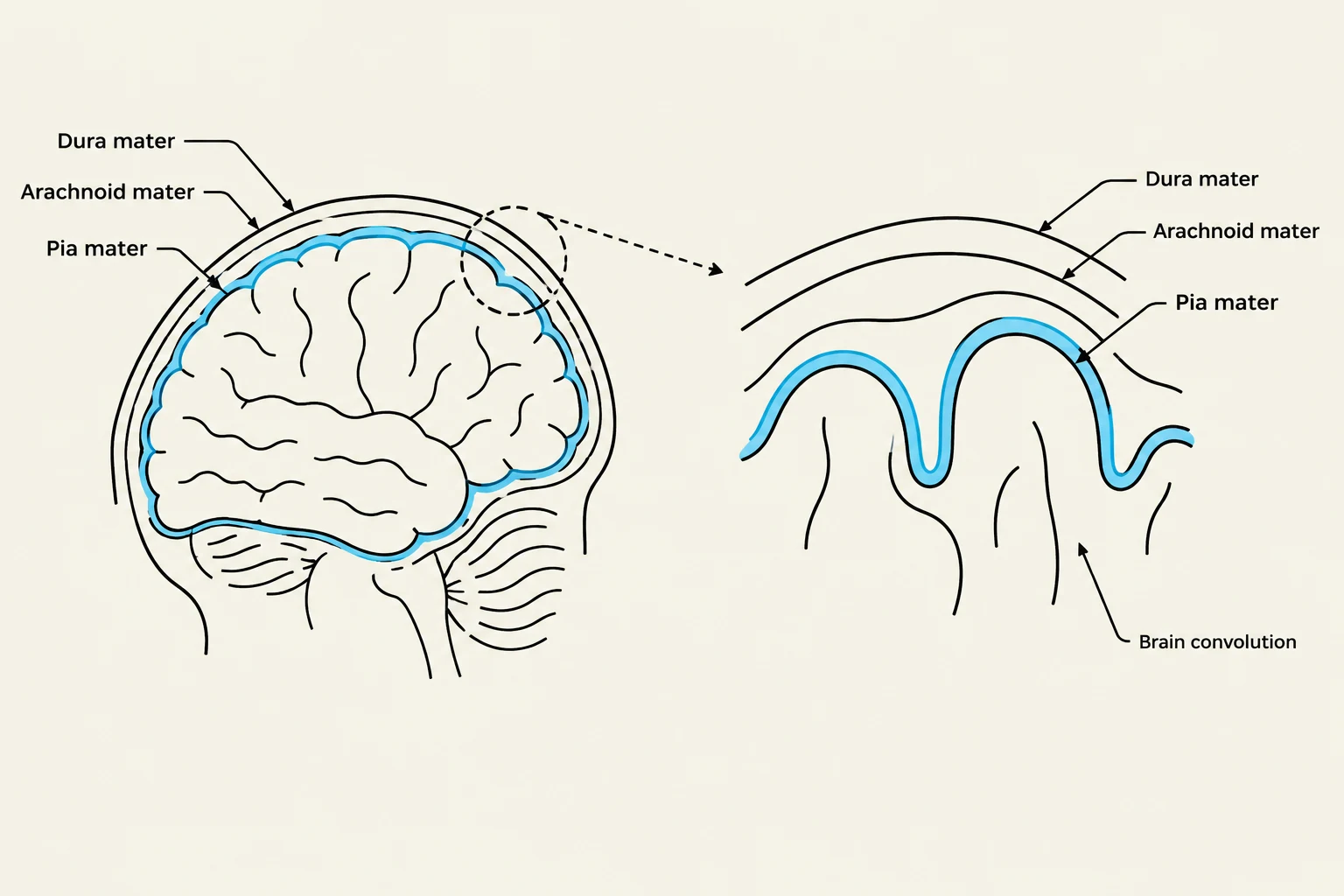
The central nervous system (CNS), comprising the brain and spinal cord, is one of the most delicate structures in the human body. Because it is highly susceptible to mechanical injury, pressure changes, and infection, it is encased in a sophisticated multi-layered protective system known as the meninges. These three distinct layers—the dura mater, the arachnoid mater, and the pia mater—work in concert to provide physical cushioning, chemical stability, and a pathway for cerebrospinal fluid (CSF) circulation.
Understanding these layers is fundamental for students of anatomy, neurology, and medicine, as many clinical pathologies, such as meningitis or subdural hematomas, arise from disruptions in these specific membranes.
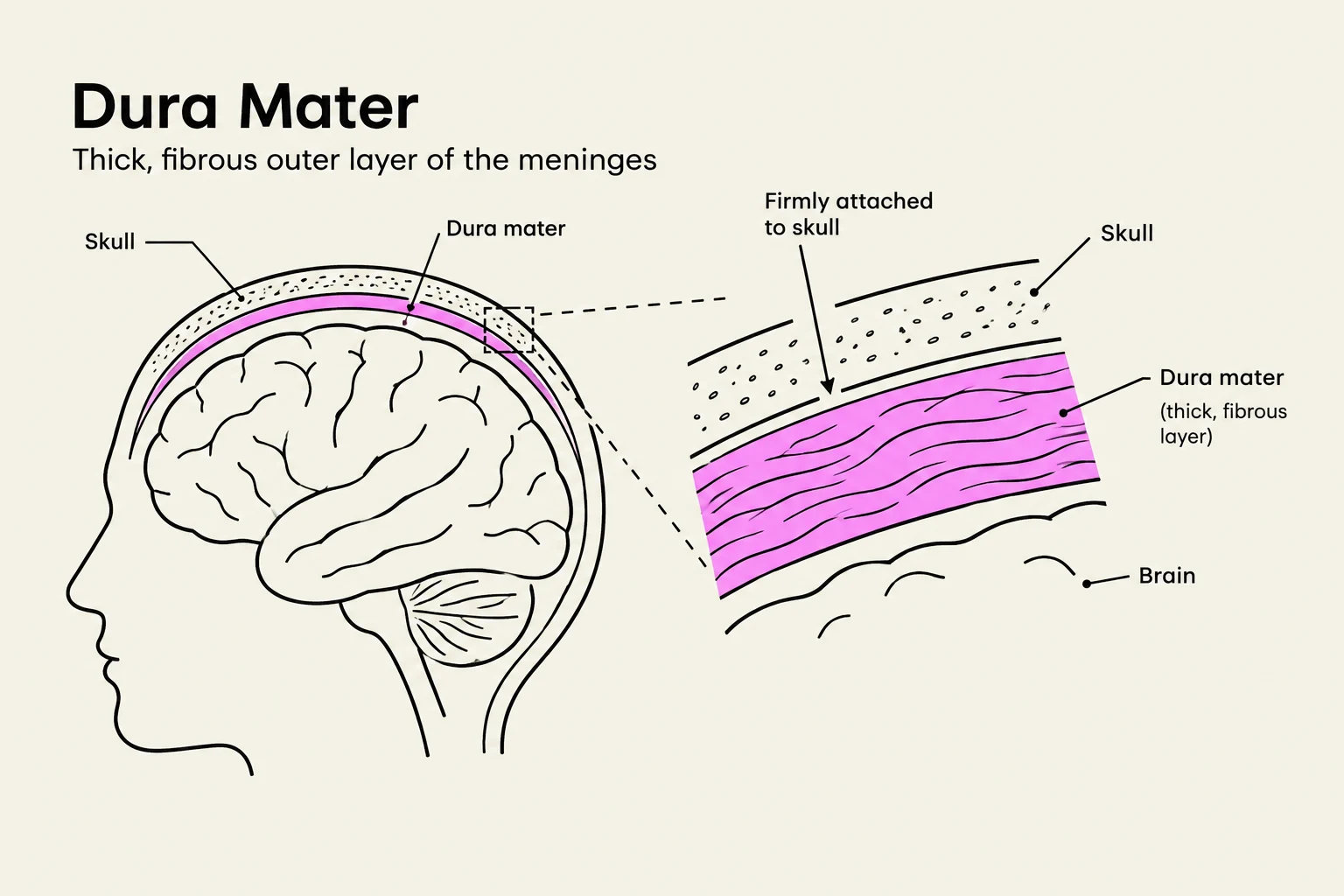
The Dura Mater: The Tough Protector
The outermost layer is the dura mater, a name derived from the Latin word for "hard mother." As the name implies, this is the thickest, most durable, and most fibrous of the three layers. Its primary role is to act as a heavy-duty physical barrier that protects the brain from mechanical trauma and helps maintain the structural integrity of the cranial cavity.
In the cranium, the dura mater is actually composed of two distinct layers:
- Periosteal layer: This layer adheres directly to the inner surface of the skull bones.
- Meningeal layer: This is the deeper layer that faces the brain and forms various folds (such as the falx cerebri) that partition the brain compartments.
In the spinal cord region, the dura mater is a single layer that surrounds the spinal cord, providing a protective sleeve.
Keep reading for free.
Create an account to finish this reading and make it part of your study routine.
Continue reading freeAlready have an account? Log in
Updated