The Three Lines of Defense in the Human Immune System
Explore the three interconnected lines of defense that protect the human body: surface barriers, innate immunity, and adaptive immunity. Understand how these systems work together to identify, attack, and remember pathogens.
The human body is constantly under siege by a diverse array of pathogens, including bacteria, viruses, and fungi. To survive, we rely on a complex, highly integrated immune system that does not function as a single entity, but rather as three distinct yet interconnected lines of defense. These lines—surface barriers, innate immunity, and adaptive immunity—work in concert to identify, attack, and remember threats. Understanding how these systems transition from general, non-specific responses to highly specialized, targeted attacks is fundamental to studying human biology.
The First Line of Defense: Surface Barriers
The first line of defense is designed to prevent pathogens from ever entering the body's internal environment. This is achieved through surface barriers, which act as physical and chemical blocks.
Cutaneous Membranes (The Skin)
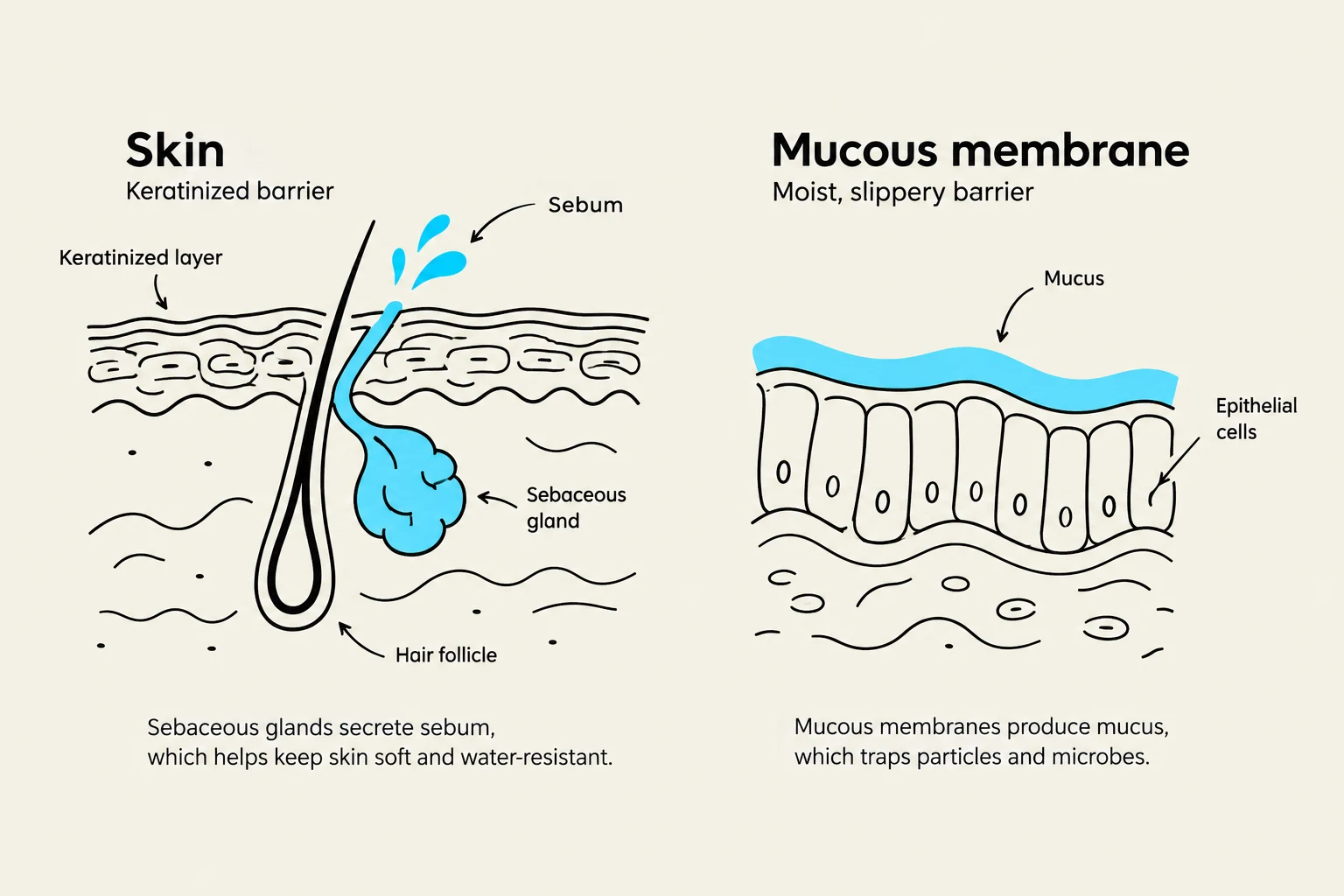
The skin is our most extensive physical barrier. It is highly resistant to mechanical stress due to multiple layers of epithelial cells filled with a hard protein called keratin. Beyond being a physical wall, the skin provides chemical protection; sebaceous glands secrete sebum (an oil), which maintains a slightly acidic pH that helps deter the growth of most pathogenic organisms.
Mucous Membranes
While the skin protects the exterior, mucous membranes line the internal passageways that open to the outside world, such as the respiratory, gastrointestinal, and genitourinary tracts. Unlike the skin, these epithelia lack keratin, making them more susceptible to mechanical abrasion. To compensate, they secrete mucus, a sticky substance that traps pathogens and debris, protecting the underlying cells from both chemical and mechanical trauma. In specific areas like the stomach, these membranes also secrete acid to kill ingested pathogens.
Diagrams illustrating the structure and function of skin and mucous membranes, including sebaceous glands secreting sebum and mucous membranes producing mucus to trap particles.
The Second Line of Defense: Innate Immunity
If a pathogen breaches the surface barriers, the second line of defense is activated. This is known as innate (nonspecific) immunity. It is called "nonspecific" because it responds to all pathogens or classes of pathogens in a uniform, identical manner.
The innate response is the dominant defense during the first 12 hours after exposure. It consists of several key components:
Chemicals and Antimicrobial Proteins: These include cytokines and proteins that can inhibit pathogen replication or trigger inflammation.
Cells: This group includes phagocytes (such as macrophages and neutrophils) that ingest pathogens, natural killer cells (NKC) that target diseased cells, and granulocytes (neutrophils, basophils, and eosinophils).
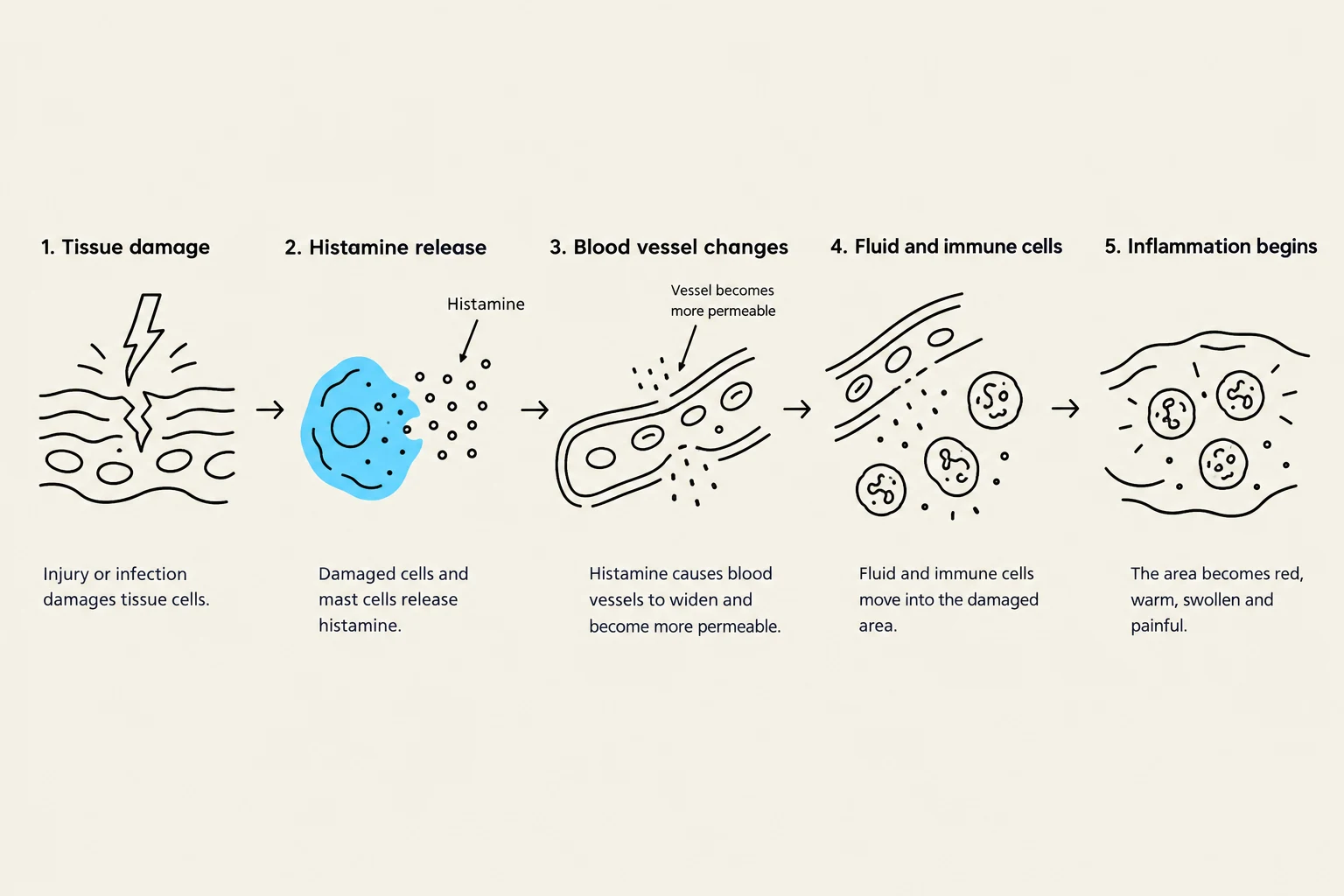
Inflammation: A nonspecific response to injury characterized by vasodilation, increased capillary permeability, heat, redness, swelling, and pain.
Exam Tip: Remember that the primary limitation of innate immunity is that it lacks immunological memory. It will respond to a repeat exposure to the same pathogen in the exact same way as the first time.
The Inflammatory Response and Phagocytosis
When tissue is damaged, inflammatory mediators like histamine are released, causing vasodilation and making capillaries "leaky" to allow immune cells to reach the site. Phagocytes, particularly macrophages (which are mature monocytes), act as "first responders" to engulf and destroy the invaders.
This diagram illustrates the five stages of inflammation: tissue damage, histamine release, blood vessel changes, movement of fluid and immune cells, and the onset of inflammation, characterized by redness, warmth, swelling, and pain.
The Third Line of Defense: Adaptive Immunity
When the innate response is insufficient, the third line of defense—adaptive (specific) immunity—takes over. Unlike the innate system, adaptive immunity responds to unique glycoprotein markers called antigens.
While the initial response is slower because it requires exposure to a specific antigen to initiate, it is much more powerful once active. Most importantly, it possesses immunological memory, allowing the body to recognize and respond much more rapidly and efficiently to subsequent exposures to the same pathogen.
The Two Arms of Adaptive Immunity
Adaptive immunity is divided into two specialized branches:
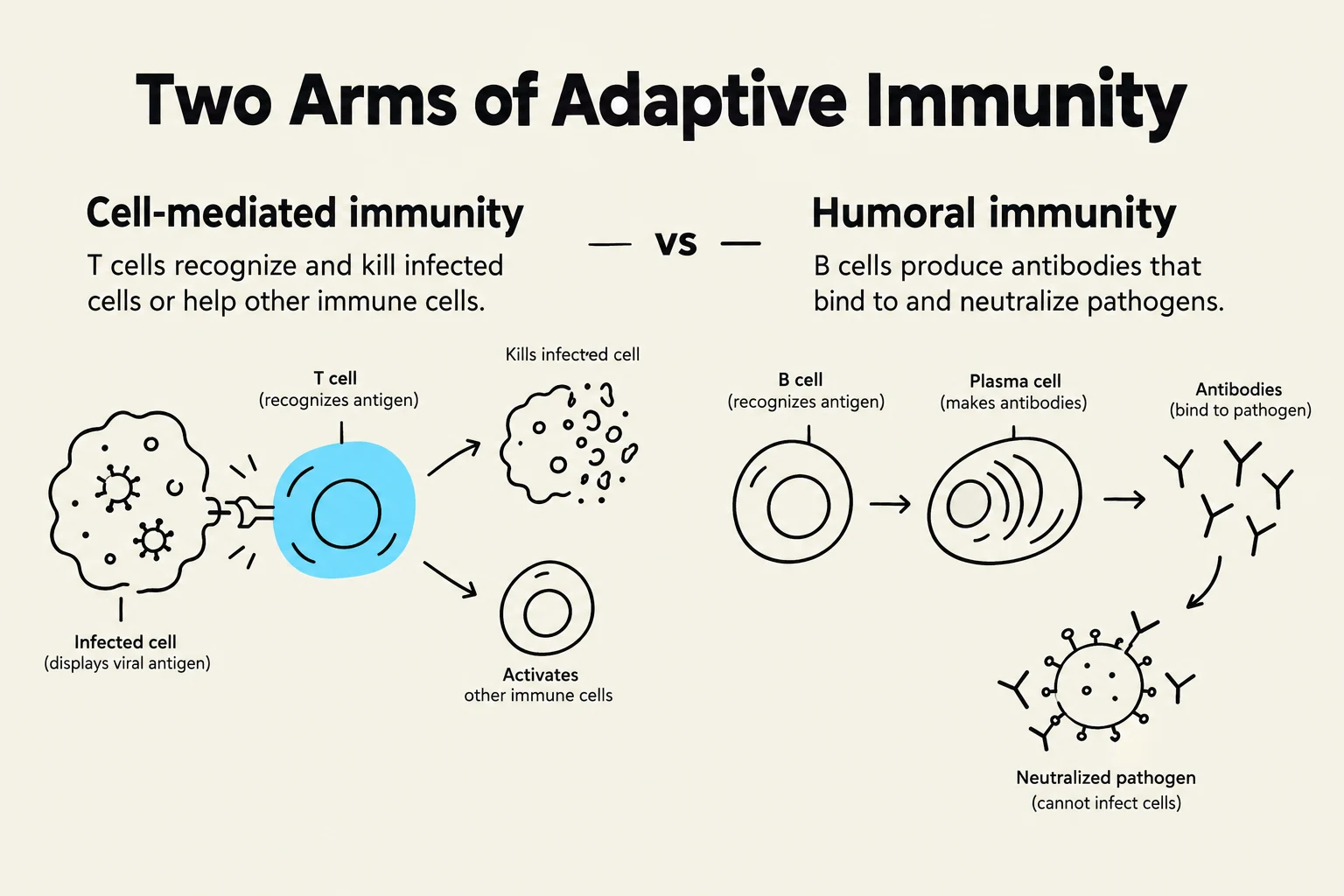
Cell-mediated immunity: This arm is driven by T cells. T cells respond primarily to cells infected with intracellular pathogens (like viruses), cancer cells, or foreign cells from transplants.
Antibody-mediated (humoral) immunity: This arm is carried out by B-cells and the antibodies (immunoglobulins) they produce. These antibodies circulate in the blood and lymph to neutralize pathogens in the body's fluids.
This diagram illustrates the two main arms of adaptive immunity: cell-mediated immunity involving T cells and humoral immunity involving B cells and antibodies.
Classifying Adaptive Immunity
To fully understand how we acquire protection, we categorize adaptive immunity based on how it is obtained:
Active vs. Passive Immunity
Active Immunity: The body's own cells actively respond to an antigen, resulting in the production of memory cells and a long-lasting defense.
Passive Immunity: The individual receives preformed antibodies from another source. This provides immediate protection but does not create memory cells, so the protection is not long-lasting.
Natural vs. Artificial Immunity
Natural Immunity: Occurs through natural biological processes, such as catching a cold (active) or receiving antibodies through the placenta from a mother (passive).
Artificial Immunity: Occurs through medical intervention, such as receiving a vaccine (active) or an injection of preformed antibodies (passive).
Summary of Immune Integration
It is a common misconception to view these three lines as independent. In reality, adaptive and innate immunity are highly integrated. For example, antigen-presenting cells (APCs) like dendritic cells and macrophages (part of the innate system) ingest pathogens and then "present" pieces of those antigens to T cells (part of the adaptive system) to trigger a specific response. This synergy ensures that the body provides both an immediate, broad defense and a precise, long-term solution to infection.
Keep reading for free.
Create an account to finish this reading and make it part of your study routine.