


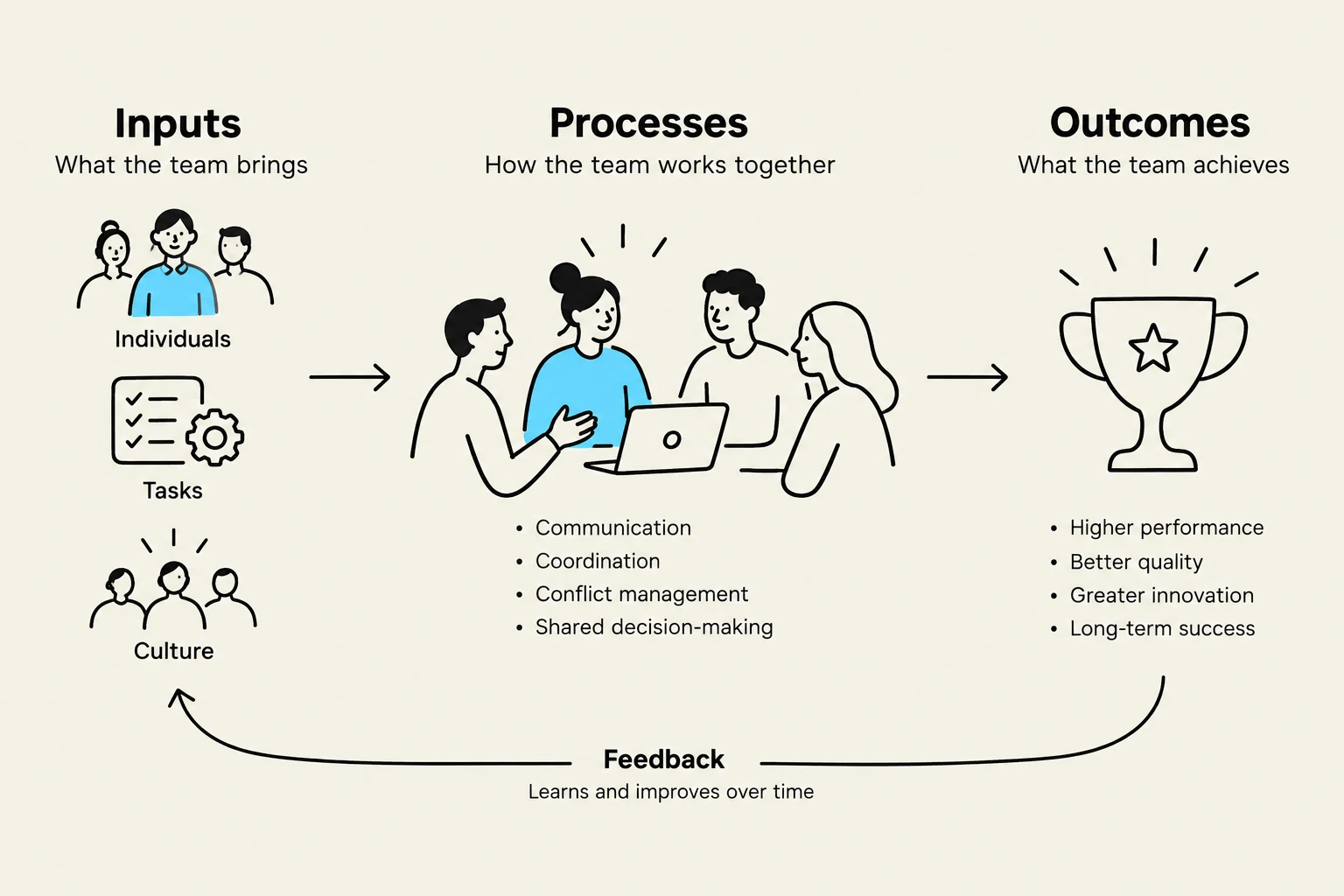
In organizational psychology, understanding why some teams excel while others flounder is a central challenge. It is rarely as simple as putting talented individuals in a room and expecting magic to happen. Instead, success is the result of a complex interplay between what a team starts with, how they interact during a task, and the resulting psychological and functional outcomes. The Team Performance Model provides a structured framework to analyze these dynamics, focusing on the flow from inputs to processes and, ultimately, to outcomes.
The Framework: Inputs, Processes, and Outcomes
The Team Performance Model functions as a causal chain. To understand a team's success, we must look at three distinct stages: Inputs, Processes, and Outcomes.
1. Team Inputs
Inputs are the "raw materials" that exist before the team even begins working on a specific task. These include the individual characteristics of the members (their skills, personalities, and experience), the nature of the task itself, and the organizational culture in which the team operates.
2. Team Processes
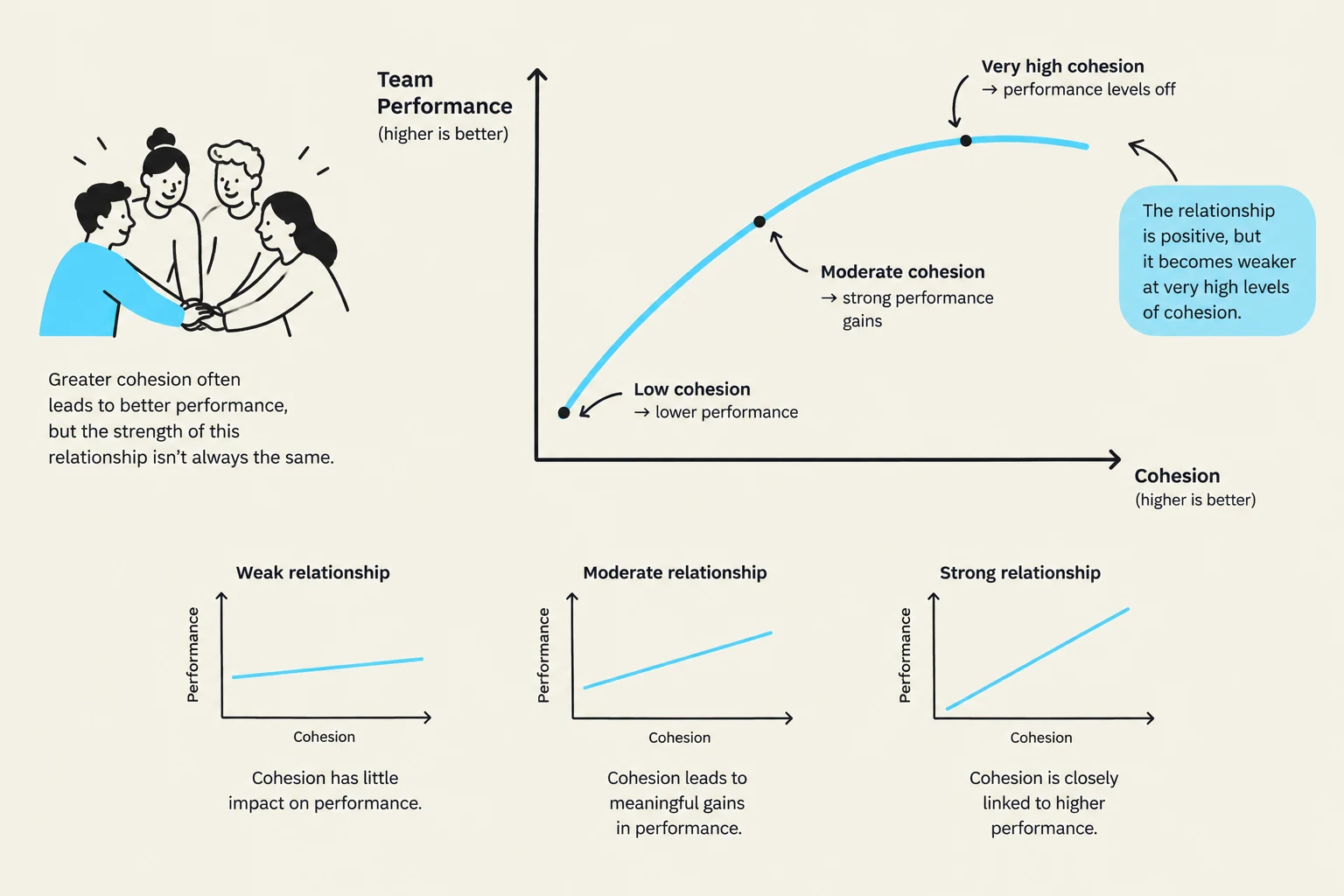
Processes are the "verbs" of the team. They represent the actions, interactions, and psychological states that occur as the team works together to transform inputs into results. This is where cohesion and collective efficacy live.
3. Team Outcomes
Outcomes are the final results of the team's efforts. These are typically measured in three ways:
- Team Performance: The actual achievement of task goals (e.g., sales targets, software completion).
- Team Satisfaction: How happy or fulfilled the members feel about being part of the team.
- Team Viability: The likelihood that the team will continue to work together effectively in the future.
Keep reading for free.
Create an account to finish this reading and make it part of your study routine.
Continue reading freeAlready have an account? Log in
Updated