The Struggle for Equality in America: Rights, Legislation, and Disparities
An overview of the historical and ongoing struggle for equal rights in the United States, examining legal frameworks, landmark legislation, and the persistent disparities faced by various racial, ethnic, and gender groups.
The history of the United States is often defined by the tension between its founding ideals and its lived reality. While the nation was built on the proposition that "all men are created equal," the journey toward realizing that promise has been a continuous, often turbulent struggle for various racial, ethnic, and gender-based groups. This struggle involves the pursuit of equal rights—the right of every person to equal protection under the laws and equal access to society’s opportunities and public facilities.
To understand this struggle, one must distinguish between civil liberties (specific individual rights) and civil rights (the equal treatment of members of differing groups). While legal frameworks like the Fourteenth Amendment provide the foundation for equality, the gap between de jure discrimination (discrimination based on law) and de facto discrimination (inequality resulting from prejudice and financial constraints) remains a central challenge in American society.
The Legal Framework of Equality
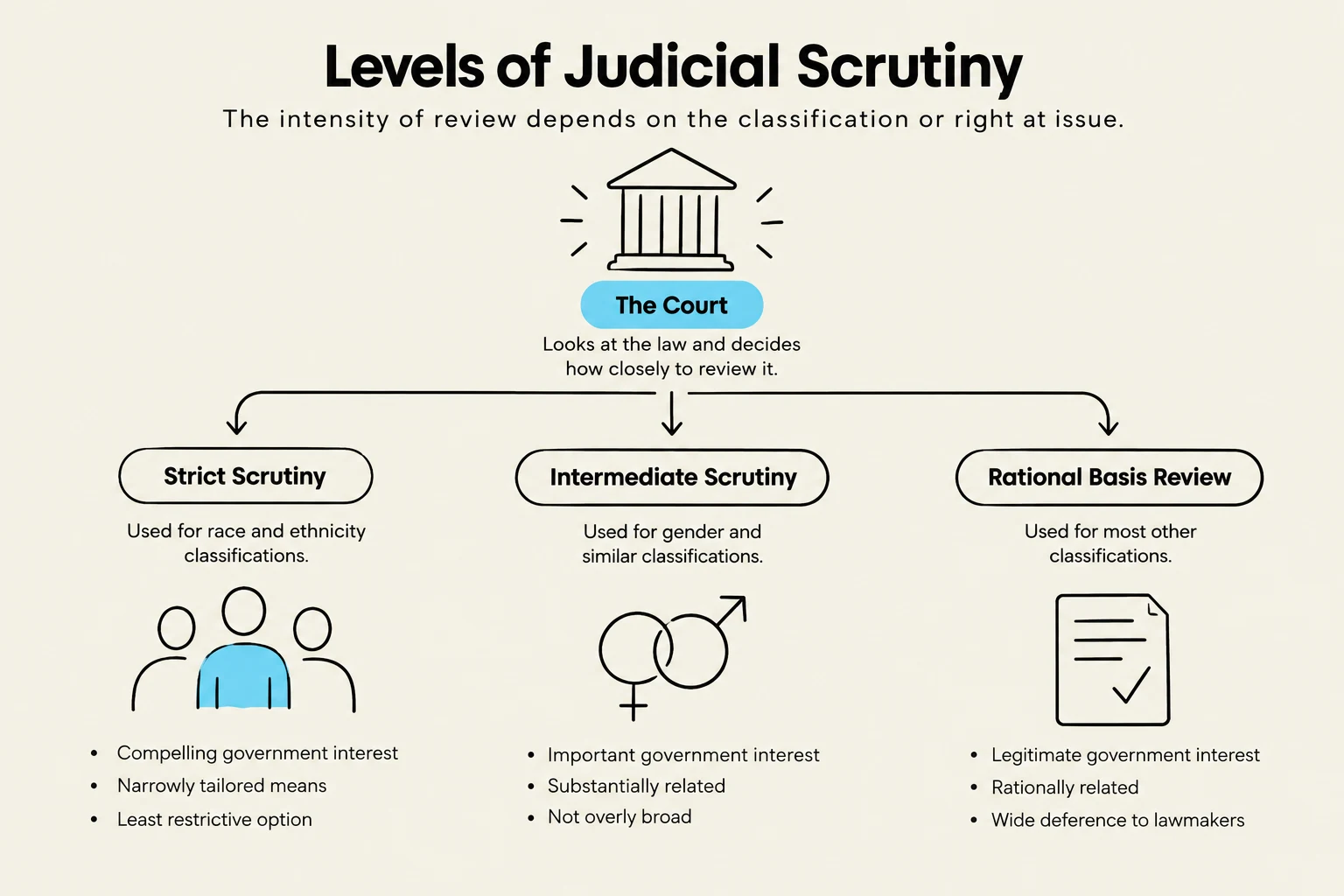
The judicial system plays a critical role in defining how equality is applied. Under the Fourteenth Amendment, the Equal-protection clause forbids states from denying equal protection to citizens. However, not all laws are treated equally by the courts. Judges apply different "levels of scrutiny" depending on the group being affected:
Strict Scrutiny: Applied to "suspect classifications" like race and national origin. The law is assumed unconstitutional unless the government provides an overwhelming justification.
Intermediate Scrutiny: Applied to gender. The law is assumed unconstitutional unless it serves a clearly compelling and justified purpose.
Reasonable-basis Test: Applied to other categories like age or income. These are not considered "suspect" categories, so laws are assumed constitutional unless no sound rationale can be provided.
This diagram illustrates the three levels of judicial scrutiny: Strict Scrutiny, Intermediate Scrutiny, and Rational Basis Review, used by courts to review laws and government actions.
Exam Tip: If a question asks about the legal standard for a law that treats people differently based on race, remember that the court uses Strict Scrutiny, which is the highest and most difficult standard for the government to meet.
The Civil Rights Act of 1964 was a landmark achievement in this legal evolution, prohibiting discrimination in public accommodations and ensuring that large firms could not discriminate based on race, color, religion, sex, or national origin regarding employment.
Black Americans: Progress and Persistent Disparities
The Black civil rights movement, fueled by events like the Montgomery bus boycott and the March on Washington, was the primary impetus behind the Civil Rights Act of 1964. Significant strides have been made in political representation. Black Americans have seen a rise in elective offices, including over 600 mayors and 60 members of Congress. Most notably, the nation elected its first Black president, Barack Obama, in 2008, and appointed Ketanji Brown Jackson as the first Black female justice to the Supreme Court in 2020.
Despite these political victories, economic equality remains elusive. The Voting Rights Act of 1965 was essential in overcoming disenfranchisement tactics like literacy tests and poll taxes, leading to a rapid increase in Black voter registration in the South. However, modern challenges persist, including high income disparities and significant disadvantages faced by Black children. Furthermore, the Supreme Court's 2023 ruling against race-based affirmative action in college admissions has altered the landscape of how institutions attempt to address historical disadvantages.
Women's Rights and the Economic Gap
The organized fight for women's rights began in earnest at the 1848 Seneca Falls Convention. Key milestones include the Nineteenth Amendment in 1920, which granted women the right to vote, and the Equal Pay Act of 1963.
While women have broken glass ceilings—reaching offices such as Vice President Kamala Harris and having served on the Supreme Court—they remain underrepresented in Congress compared to men and other global democracies. Economically, women face a significant wage gap, earning approximately 83% of what men earn.
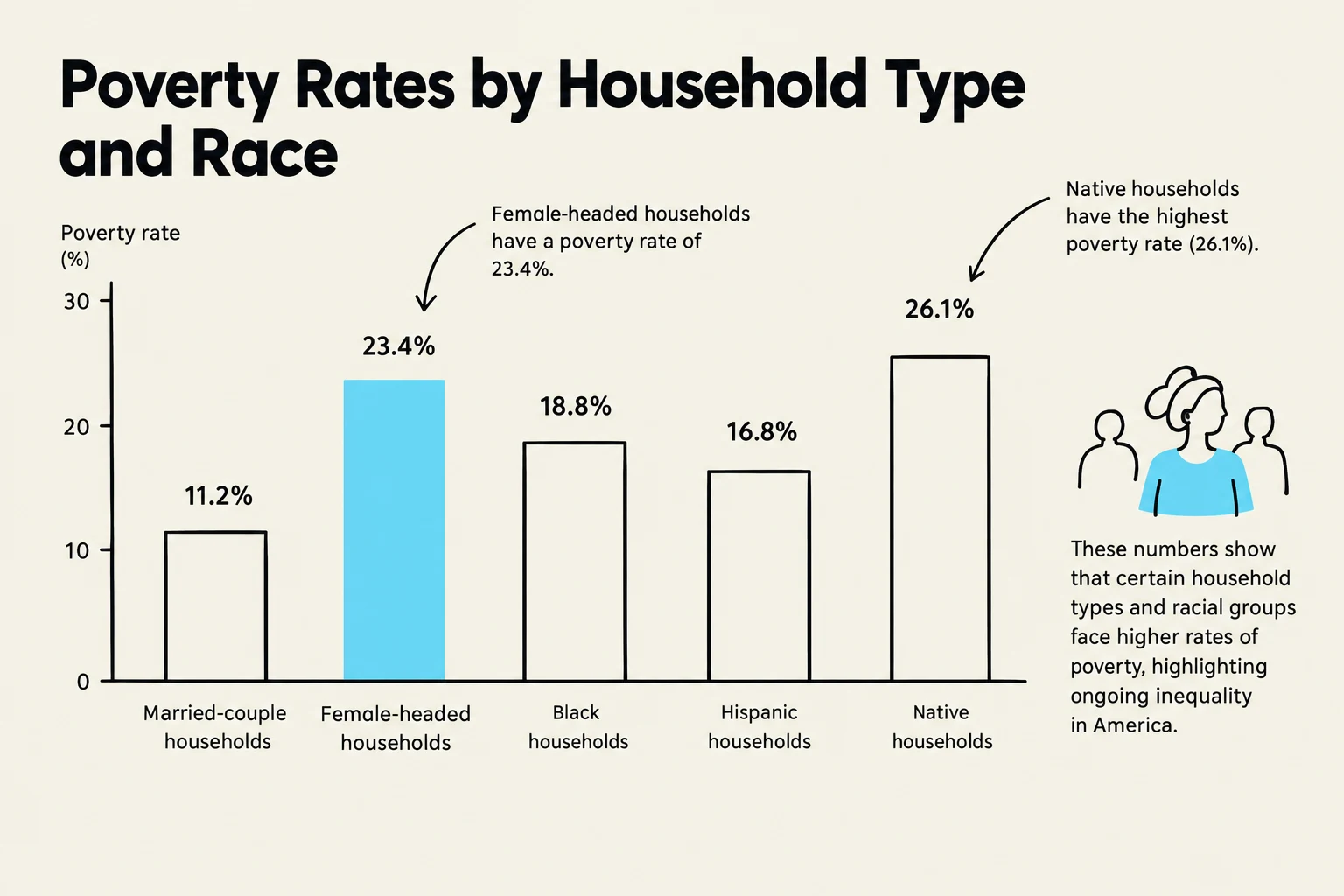
This economic struggle is best illustrated by the concept of the feminization of poverty. This term describes the phenomenon where single-parent, female-headed households are disproportionately likely to live below the poverty line.
This bar chart illustrates poverty rates across different household types and racial groups in America, showing that Native households have the highest poverty rate at 26.1%, and female-headed households have a poverty rate of 23.4%.
Hispanic and Asian Americans: Demographic Shifts
Hispanic Americans constitute the nation's largest minority group. Their struggle for equality has historically focused on the rights of farm workers and, more recently, on the rights of undocumented immigrants through policies like DACA. While they hold significant political influence in states like Texas, California, and Florida, their average income levels remain below the national average.
Asian Americans represent the fastest-growing ethnic group in the U.S., a shift driven largely by the end of restrictive immigration laws in 1965. This group is characterized by high upward mobility, boasting the highest median family income and high levels of educational attainment. However, despite this economic success, they remain underrepresented in top professional and political roles.
Native American Sovereignty
Native Americans face a unique legal status defined by treaty terms with the federal government. Unlike other groups, their relationship with the state is often mediated by federal authority over reservations. While the Indian Civil Rights Act of 1968 provided essential constitutional guarantees, conflicts over jurisdiction and sovereignty persist. A major legal milestone occurred in the 2020 McGirt v. Oklahoma decision, which affirmed that large portions of eastern Oklahoma remain "Indian country" for criminal jurisdiction purposes.
Expanding Protections: Age, Disability, and LGBTQ+ Rights
The scope of legal protection in America has continued to expand beyond race and gender to include other disadvantaged groups:
Older Americans: Protected from workplace bias through the Age Discrimination in Employment Act of 1967.
Americans with Disabilities: The Americans with Disabilities Act (ADA) of 1990 provides essential protections and access for individuals with disabilities.
LGBTQ+ Community: In a landmark 2020 ruling, the Supreme Court determined that the ban on sexual discrimination in the 1964 Civil Rights Act includes sexual orientation, providing long-overdue job protections.
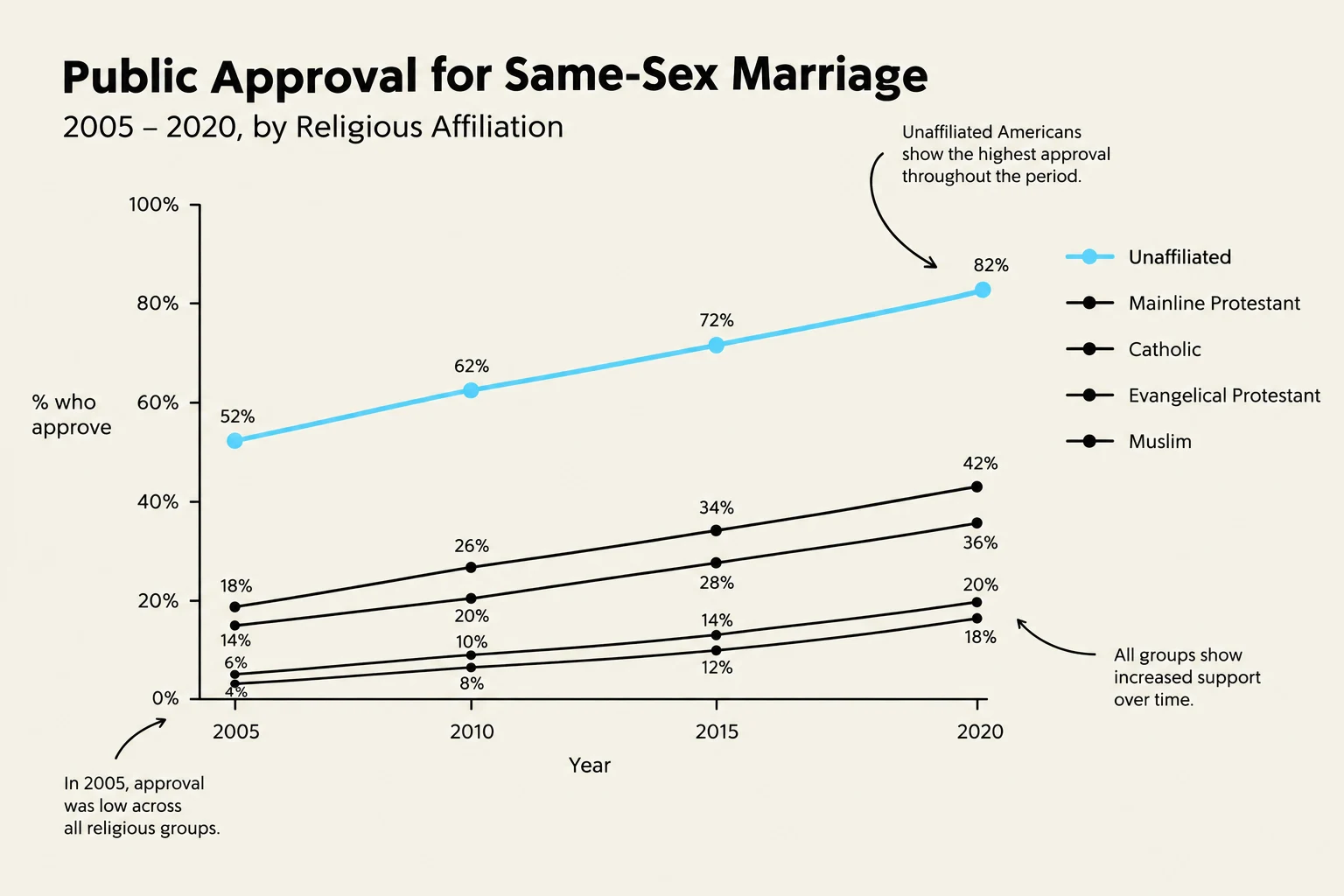
As public opinion shifts—such as the sharp increase in approval for same-sex marriage across various religious groups—the legal and social landscape of equality continues to evolve.
This graph shows the public approval for same-sex marriage in the United States from 2005 to 2020, broken down by religious affiliation. It indicates an overall increase in support across all groups over time, with unaffiliated Americans consistently showing the highest approval.
Keep reading for free.
Create an account to finish this reading and make it part of your study routine.