


In the study of biology, cell division is often categorized into two main types: mitosis and meiosis. While mitosis is responsible for growth and tissue repair by creating identical copies of cells, meiosis is a specialized two-stage division process essential for sexual reproduction. The primary objective of meiosis is to reduce the chromosome number from diploid ($2n$) to haploid (). This reduction ensures that when a sperm and an egg fuse during fertilization, the resulting zygote restores the correct diploid number for the next generation.
Through this process, a single diploid cell produces four genetically unique haploid daughter cells, known as gametes. These gametes—sperm in males and eggs in females—carry the genetic blueprint necessary for life.
Meiosis I: The Reductional Division
Meiosis I is often referred to as the "reductional division" because it is during this stage that the cell moves from a diploid state to a haploid state by separating homologous chromosomes. Homologous chromosomes are pairs of chromosomes (one from each parent) that carry the same genes, though they may have different versions (alleles) of those genes.
Prophase I: The Engine of Diversity
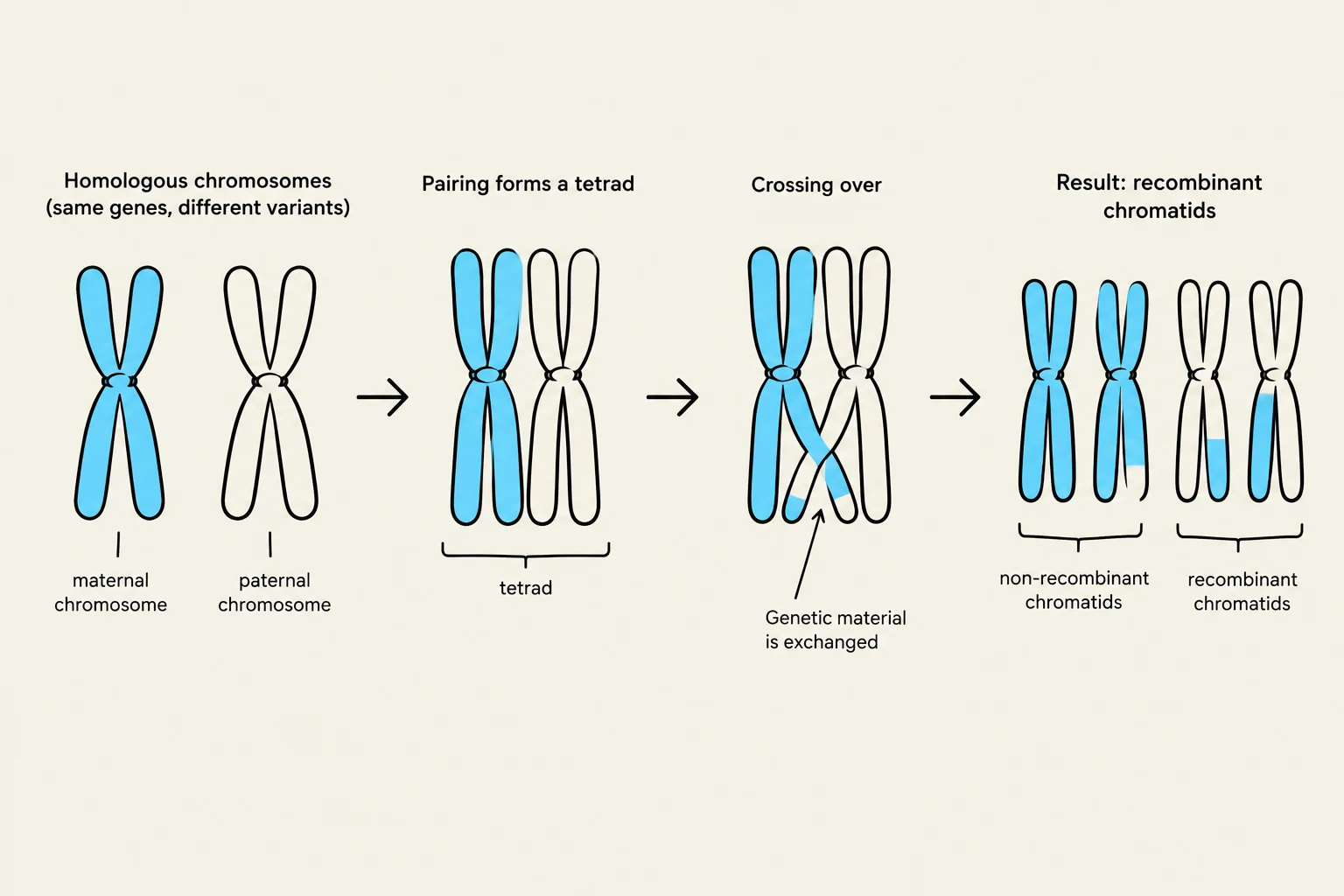
Meiosis begins with the replication and condensing of DNA. During Prophase I, several critical events occur: chromosomes take shape, the nuclear envelope breaks down, and centrosomes move toward opposite poles. Most importantly, homologous chromosomes pair up and link together to form structures called tetrads.
While paired, these chromosomes undergo crossing over (or recombination), where they exchange reciprocal chromosomal segments. This process creates recombinant chromosomes, which possess new combinations of genetic material not found in either parent.
Keep reading for free.
Create an account to finish this reading and make it part of your study routine.
Continue reading freeAlready have an account? Log in
Updated