The Social Feedback Loop: Understanding Social Reward Deficits in Depression
This article explains the concept of social reward deficits in depression, detailing how a diminished ability to derive pleasure from social interactions, combined with declining social skills, creates a self-perpetuating cycle that deepens depressive states. It covers the mechanics of this feedback loop, clinical impl
Depression is often characterized by a profound sense of isolation, but the mechanism behind this isolation is frequently more complex than simply "feeling lonely." At the heart of many depressive episodes lies a phenomenon known as social reward deficit. This refers to a diminished ability to derive pleasure or satisfaction from social interactions, which, when combined with declining social skills, creates a self-perpetuating cycle that deepens the depressive state.
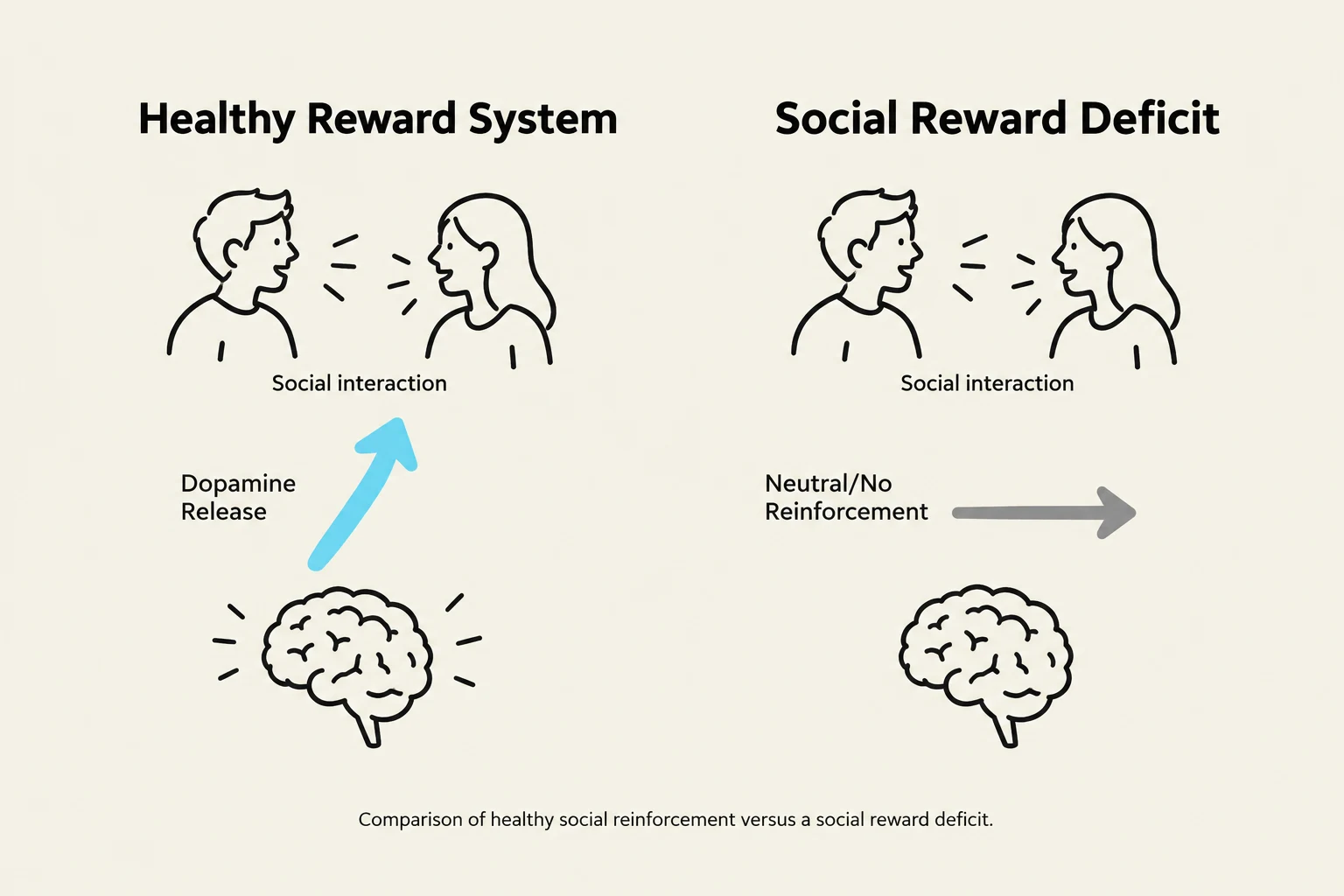
This diagram illustrates the difference between a healthy reward system, where social interaction leads to dopamine release, and a social reward deficit, where social interaction results in neutral or no reinforcement.
Understanding this cycle is crucial for both clinicians and students of psychology, as it shifts the focus from viewing depression as a purely internal emotional state to viewing it as a breakdown in the interaction between the individual and their social environment.
Defining Social Reward Deficits
In a healthy psychological state, social interactions act as a "reward." When we engage in a meaningful conversation, receive a compliment, or share a laugh with a friend, our brain's reward system—primarily involving dopamine pathways—is activated. This reinforcement encourages us to seek out more social connection.
A social reward deficit occurs when this reinforcement mechanism fails. For an individual experiencing this deficit, social interactions may feel neutral, exhausting, or even mildly unpleasant, rather than revitalizing. Instead of receiving a "hit" of positive reinforcement from a successful social encounter, the individual feels nothing, or perhaps even experiences a sense of emptiness.
Key Concept: A social reward deficit is not necessarily an aversion to people (social anxiety), but rather a lack of positive reinforcement derived from social contact.
The Mechanics of the Feedback Loop
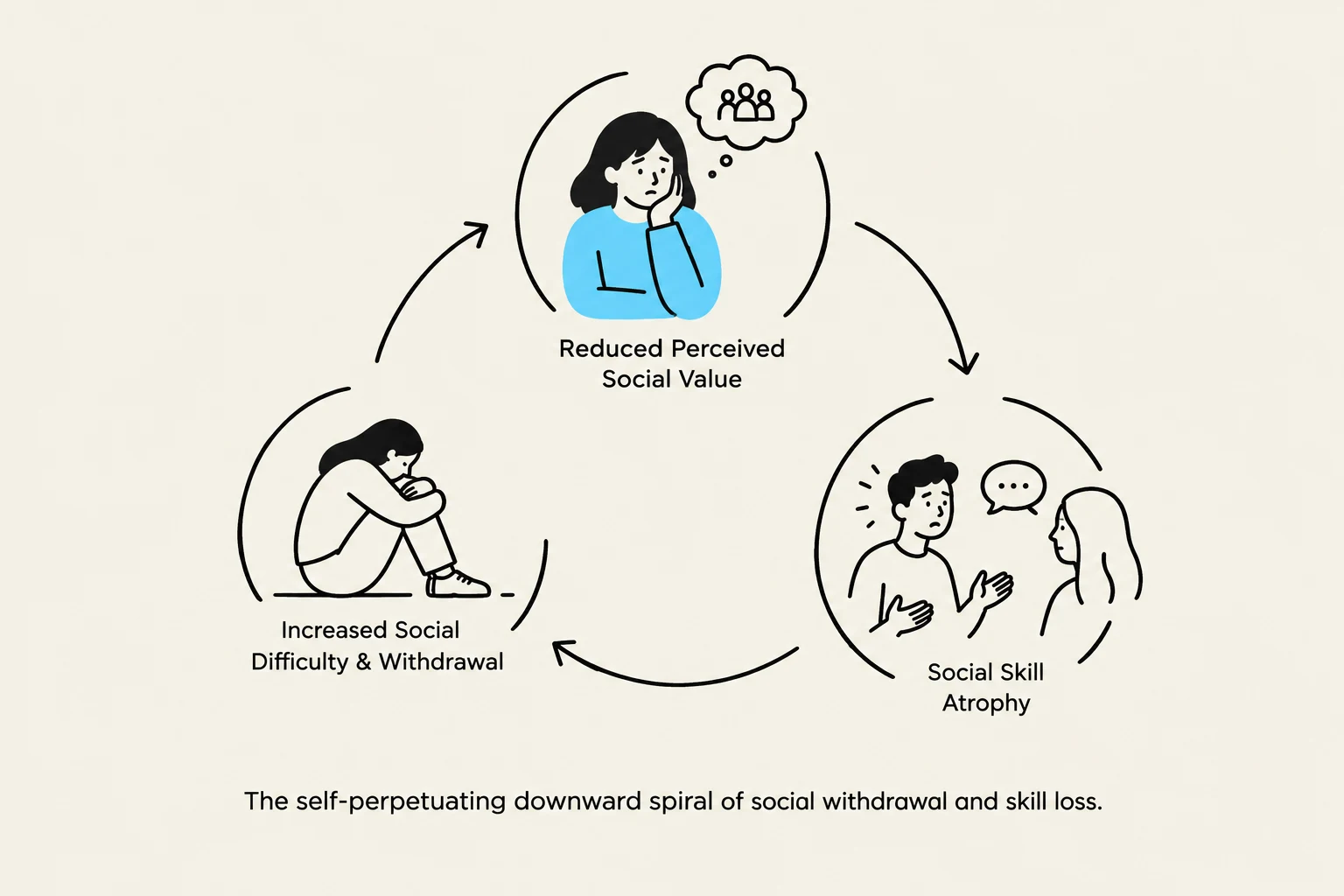
A diagram illustrating the self-perpetuating downward spiral of social withdrawal and skill loss, showing how reduced perceived social value leads to social skill atrophy, which in turn increases social difficulty and withdrawal.
The danger of social reward deficits lies in how they interact with social skills to create a "downward spiral" or feedback loop. This process can be broken down into three distinct phases:
1. The Initial Deficit
The cycle often begins with a biological or psychological shift—perhaps triggered by stress, trauma, or neurochemical changes—that reduces the perceived value of social interaction. The individual begins to find social outings "not worth the effort."
2. Skill Atrophy and Ineffective Interaction
Socializing is a skill that requires practice. As the individual withdraws due to the lack of reward, their social "muscles" begin to atrophy. They may struggle with:
Reading non-verbal cues: Misinterpreting a friend's neutral expression as boredom or judgment.
Conversational flow: Finding it difficult to maintain engagement or initiate topics.
Emotional regulation: Feeling overwhelmed by the sensory or emotional demands of a group setting.
As these skills decline, social interactions become objectively more difficult and awkward.
3. The Reinforcement of Withdrawal
Because the interactions are now awkward or unsuccessful, they provide even less reward than they did before. This "bad experience" serves as evidence to the individual that socializing is a chore or a source of failure. Consequently, they withdraw further to avoid the discomfort, which leads to more skill atrophy, completing the loop.
A Worked Example: The Case of "Alex"
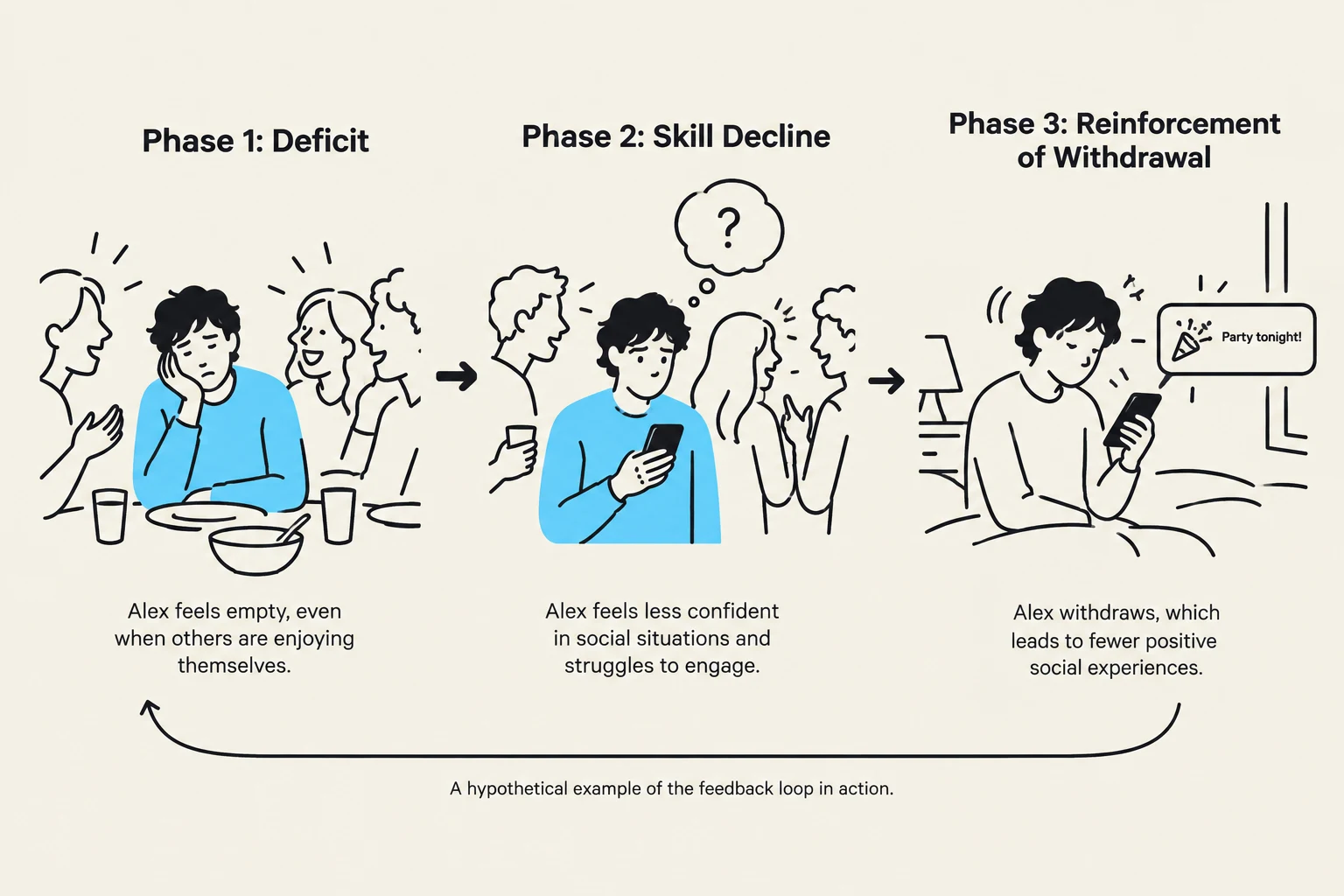
A diagram illustrating a three-phase feedback loop: deficit, skill decline, and reinforcement of withdrawal, depicting a hypothetical scenario of social withdrawal.
To better understand this, let's look at a hypothetical student, Alex.
Phase 1 (The Deficit): After a period of intense academic stress, Alex notices that hanging out with friends doesn't feel "fun" anymore. The laughter feels hollow, and the dopamine spike they used to get from a Friday night dinner is absent.
Phase 2 (The Skill Decline): Because Alex has been staying home more, they feel "out of the loop." When they do go out, they struggle to follow group jokes and find themselves staring at their phone to avoid awkward silences.
Phase 3 (The Loop): Alex leaves a party feeling drained and socially incompetent. They think, "See? I'm just not good at this anymore." They decide to skip the next event. This isolation makes them even more out of practice, making the next attempt even harder.
Clinical Implications and Perspectives
When analyzing unipolar depression, it is essential to consider how sociocultural factors and individual treatments address these social deficits. While traditional treatments often focus on mood regulation, modern perspectives emphasize the importance of reintegrating the individual into social reward systems.
Exam Tip: If asked about the maintenance of depression, remember that social withdrawal is not just a symptom of depression; it can be a mechanism that maintains the disorder through the loss of positive social reinforcement.
Treatments must often target both the biological capacity to feel reward and the behavioral capacity to engage socially. This might include:
Behavioral Activation: Gradually reintroducing social activities to break the pattern of withdrawal.
Social Skills Training (SST): Rebuilding the practical tools needed to navigate interactions successfully.
Cognitive Restructuring: Addressing the negative thought patterns (e.g., "Everyone thinks I'm boring") that arise from ineffective social encounters.
By understanding the social reward deficit, we move away from seeing the depressed individual as someone who is simply "unwilling" to socialize, and toward seeing them as someone trapped in a cycle where the very thing they need for recovery—connection—has become the hardest thing to achieve.
Keep reading for free.
Create an account to finish this reading and make it part of your study routine.