


In the field of social work, practitioners are constantly faced with complex questions: Which intervention is most effective for a child experiencing trauma? Does a specific community program actually reduce poverty? While it is tempting to rely on intuition or "common sense," professional social work requires a more rigorous approach to understanding human behavior and social change. Science provides a structured way of knowing that helps practitioners move beyond guesswork toward effective, reliable practice.
Understanding Science as a Way of Knowing
At its core, science is a method of inquiry designed to learn more about social phenomena—the observable occurrences, behaviors, and patterns within human society. A social scientist does not simply observe; they apply specific principles and methods to ensure that their understanding of these phenomena is accurate and reliable.
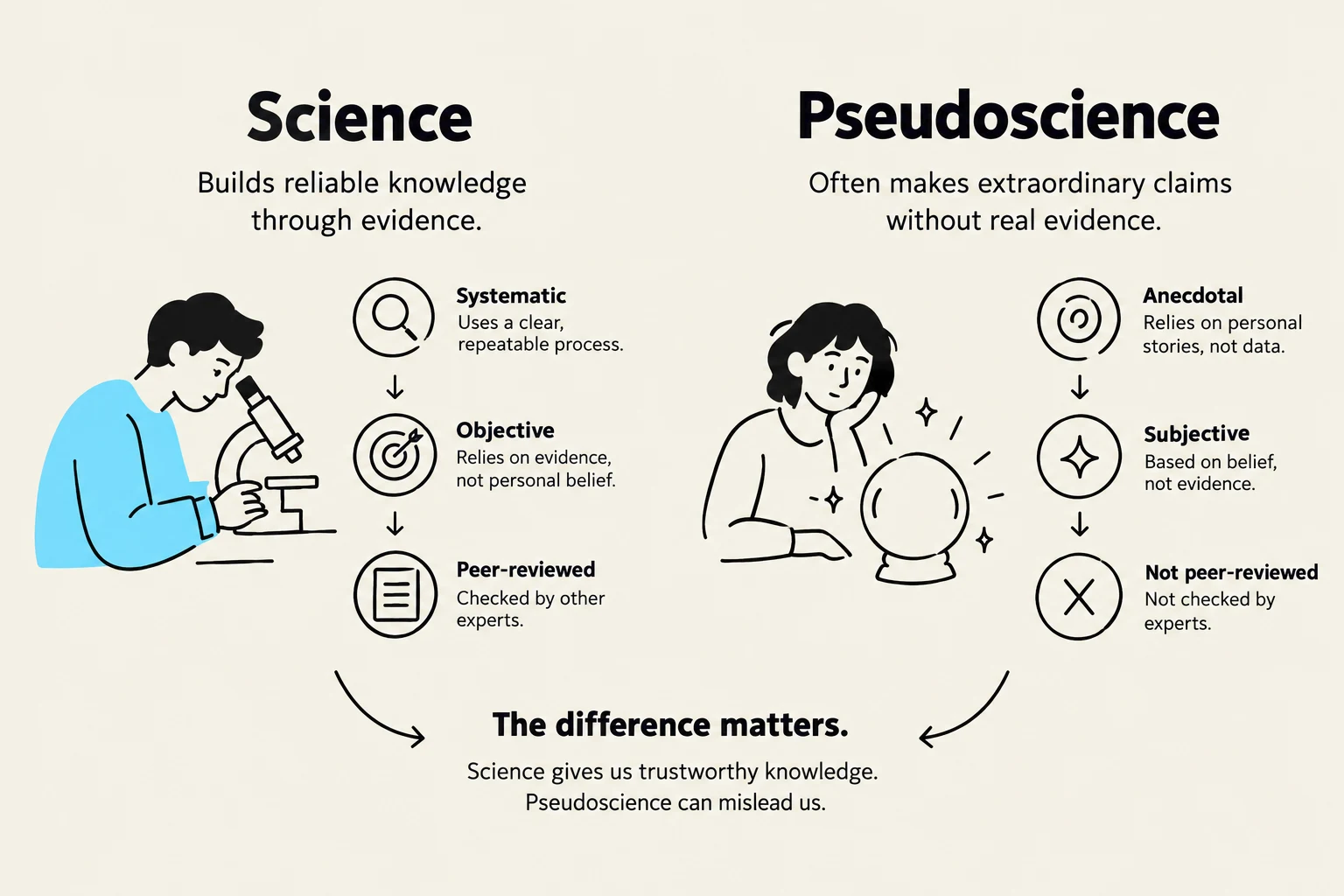
Unlike other ways of knowing, science is not based on authority (doing something because an expert said so), personal intuition (doing something because it "makes sense"), or tradition (doing something because "that's how it's always been done"). While these methods may occasionally yield truths, they are not scientifically supported and are prone to significant errors.
Exam Tip: If a question asks why "authority" or "tradition" is insufficient in social work, remember that science requires empirical evidence and systematic testing to validate claims, whereas authority does not.
The Scientific Method and Research Process
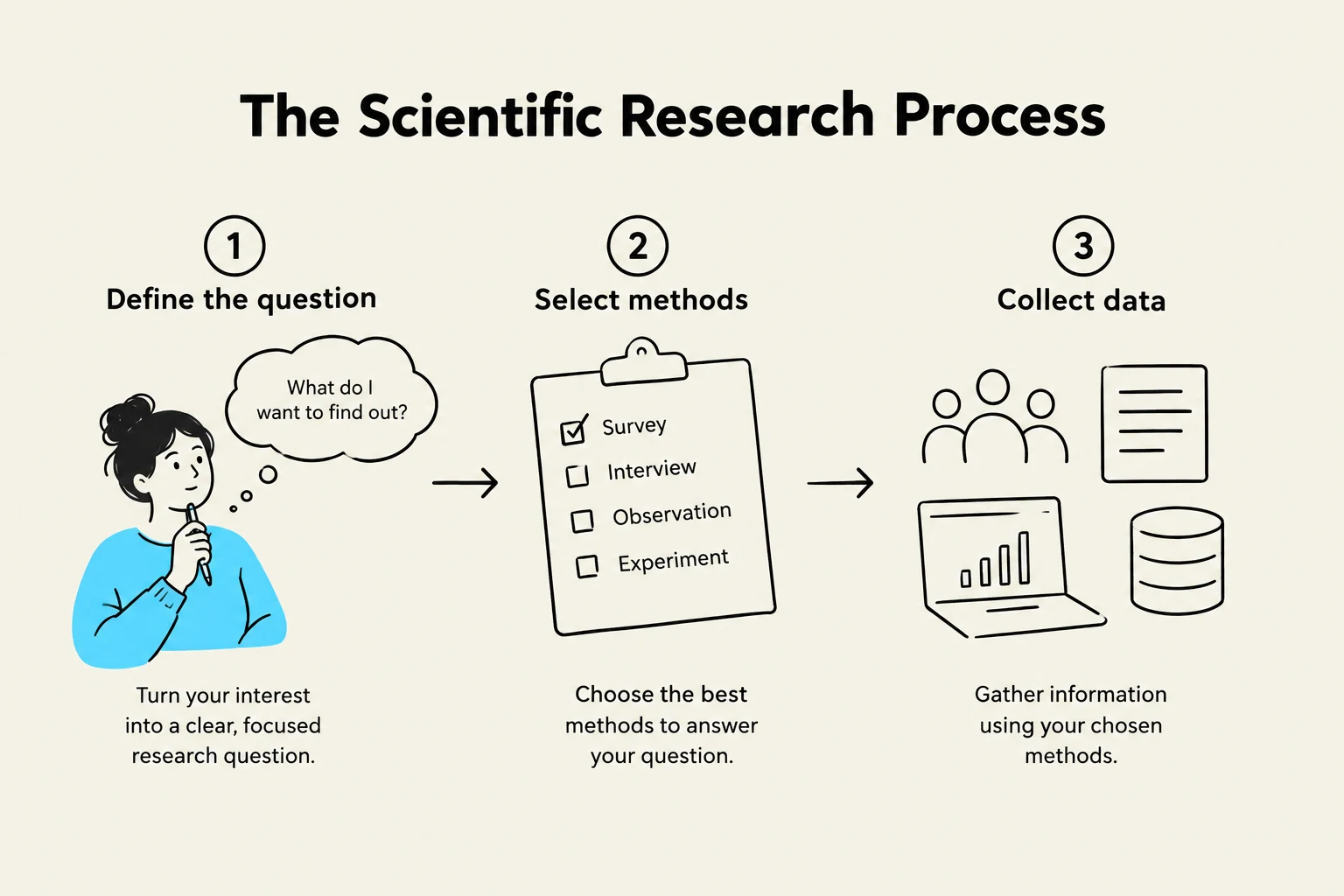
The scientific method is a logical sequence of steps designed to reduce human error and test assumptions or questions. It is not a single action but a continuous cycle of inquiry. In social work, this process is essential for developing evidence-based practice, which means ensuring that the interventions used with clients are supported by a majority of scientific studies proving their effectiveness.

Keep reading for free.
Create an account to finish this reading and make it part of your study routine.
Continue reading freeAlready have an account? Log in
Updated