


The transition from nomadic hunter-gatherer groups to settled, complex societies represents one of the most profound shifts in human history. This evolution was not merely a change in location, but a fundamental transformation in how humans interacted with the physical world. The development of early civilizations was characterized by significant advancements in both the arts and the sciences, which allowed for more stable, sedentary lifestyles and increased agricultural productivity. These innovations served as the building blocks for social stratification, monumental architecture, and long-distance trade.
The Arts of Craftsmanship and Survival
In the context of early civilizations, "art" was often inseparable from utility. The ability to manipulate raw materials into specialized tools and containers allowed humans to move beyond immediate survival and begin accumulating wealth and resources.
Pottery and Resource Management
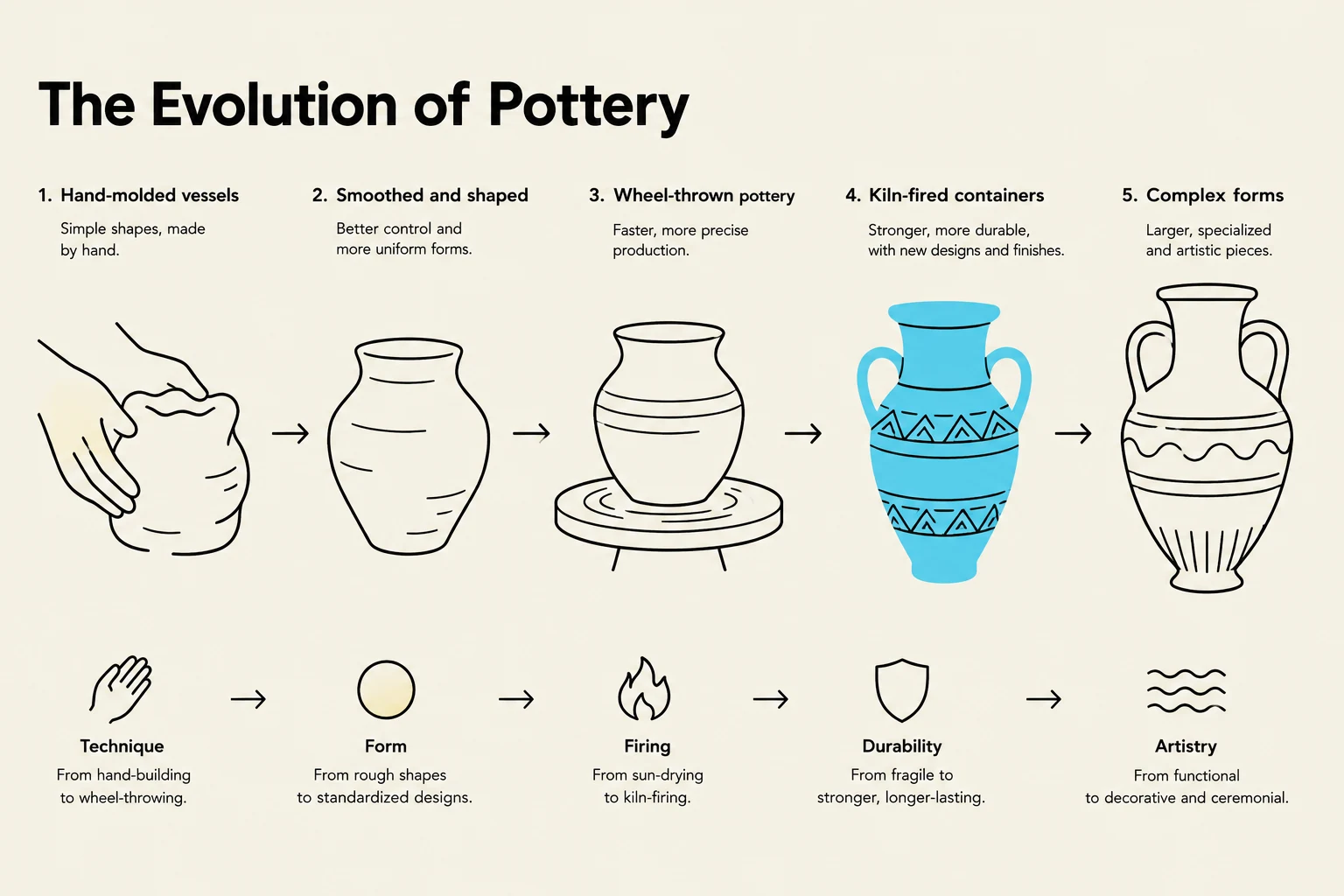
One of the most crucial technological advancements in the realm of the arts was the mastery of pottery. Before the widespread use of ceramics, storing surplus food, water, and oils was a significant challenge. The development of pottery provided a durable, waterproof solution for storage, which was essential for sustaining larger, concentrated populations. Furthermore, pottery became a medium for cultural expression and a vital commodity in the burgeoning trade networks that connected distant settlements.
Obsidian: The Edge of Technology
While pottery managed resources, obsidian—a naturally occurring volcanic glass—revolutionized how humans interacted with their environment through tool-making. Because obsidian can be fractured to create edges that are molecularly thin and extremely sharp, it became a primary material for cutting instruments and weaponry. The trade of obsidian items was a significant component of early economic networks, linking resource-rich volcanic regions to urban centers.
Keep reading for free.
Create an account to finish this reading and make it part of your study routine.
Continue reading freeAlready have an account? Log in
Updated