


Around 516 CE, Benedict of Nursia completed a document that would fundamentally reshape the landscape of Western Christianity: the Rule of Benedict. Transitioning from a life of nobility to one of intense asceticism—the practice of renouncing physical pleasures to pursue spiritual goals—Benedict sought to create a structured communal life. His Rule was not merely a list of prohibitions, but a sophisticated "spiritual art" designed to guide the soul through a disciplined, communal existence.
The Framework of the Rule: Textual Reconstruction
Because the earliest surviving copies of the Rule date to approximately 750 CE, there is a significant gap between its composition and our extant records. Historians must use textual criticism to reconstruct Benedict's original intent. This involves studying recensions (revised versions) and creating a stemma, or a "genealogical tree" of manuscripts.
A key method used by scholars is the "follow the mistakes" technique, where unique spelling errors or idiosyncratic slips are traced to identify a text's lineage. It is important to note that a manuscript's age does not automatically guarantee its authority; a later copy might be more reliable if it belongs to a better-preserved, continuous chain of information.
Dimensions of "Escape" and Disconnection
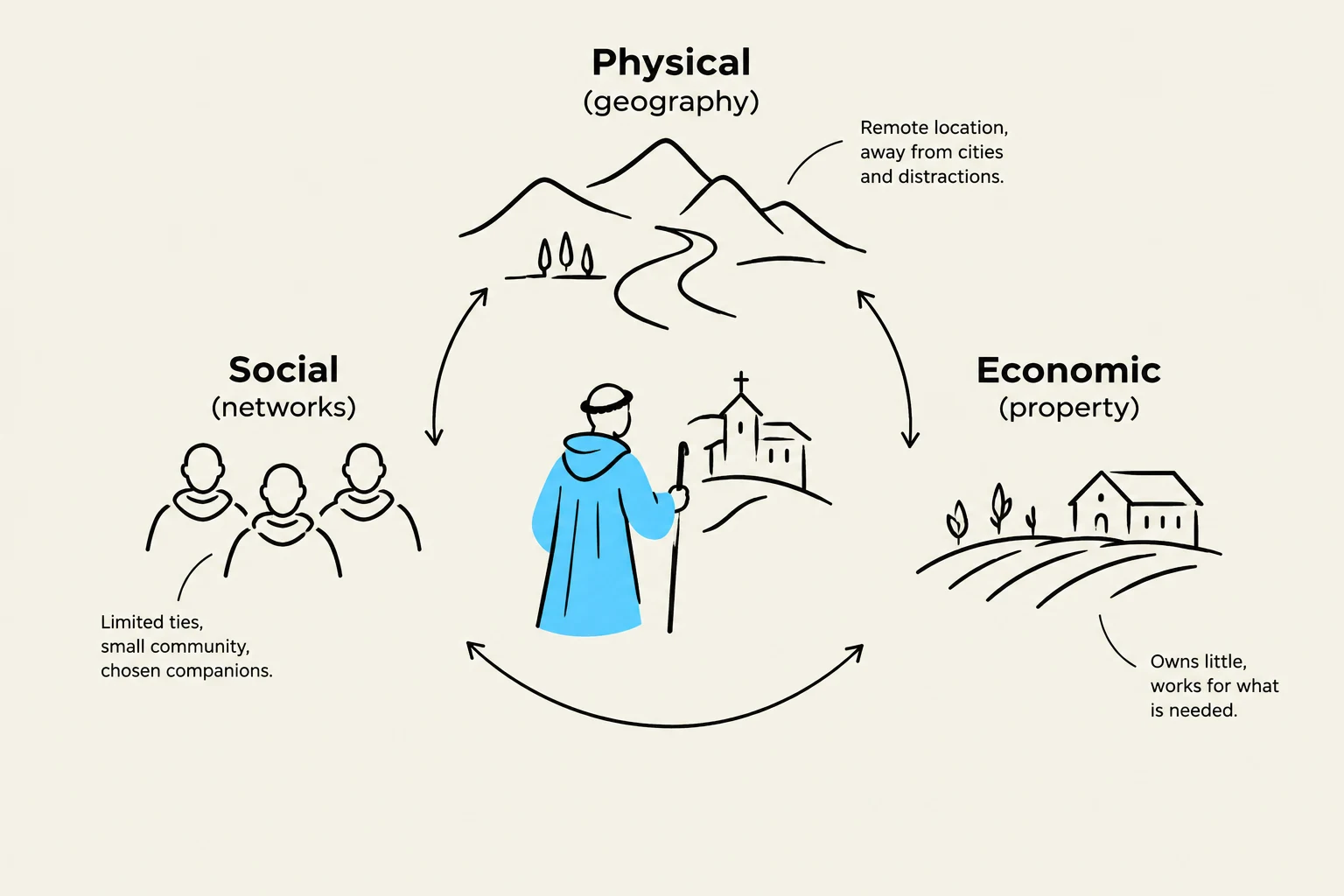
Monasticism offered a way to "escape" the complexities of the secular world through several dimensions: physical isolation, social severance, economic detachment, and spiritual transformation. To ensure these escapes were successful, the Rule implemented specific disconnection strategies:
- Social Disconnection: Rule 54 strictly prohibits monks from sending or receiving letters, mail, or "tokens" of affection to prevent secular attachments. Even travel is regulated; monks sent on business must return the same day to prevent the formation of long-term social ties.
- Material Disconnection: The Rule regulates the intake of outside objects and sensory pleasures to prevent attachment to the material realm.
- Regulated Silence: Silence was used to foster inward focus. In many monastic traditions, excessive speaking was viewed as a lack of faith in divine provision.

Keep reading for free.
Create an account to finish this reading and make it part of your study routine.
Continue reading freeAlready have an account? Log in
Updated