


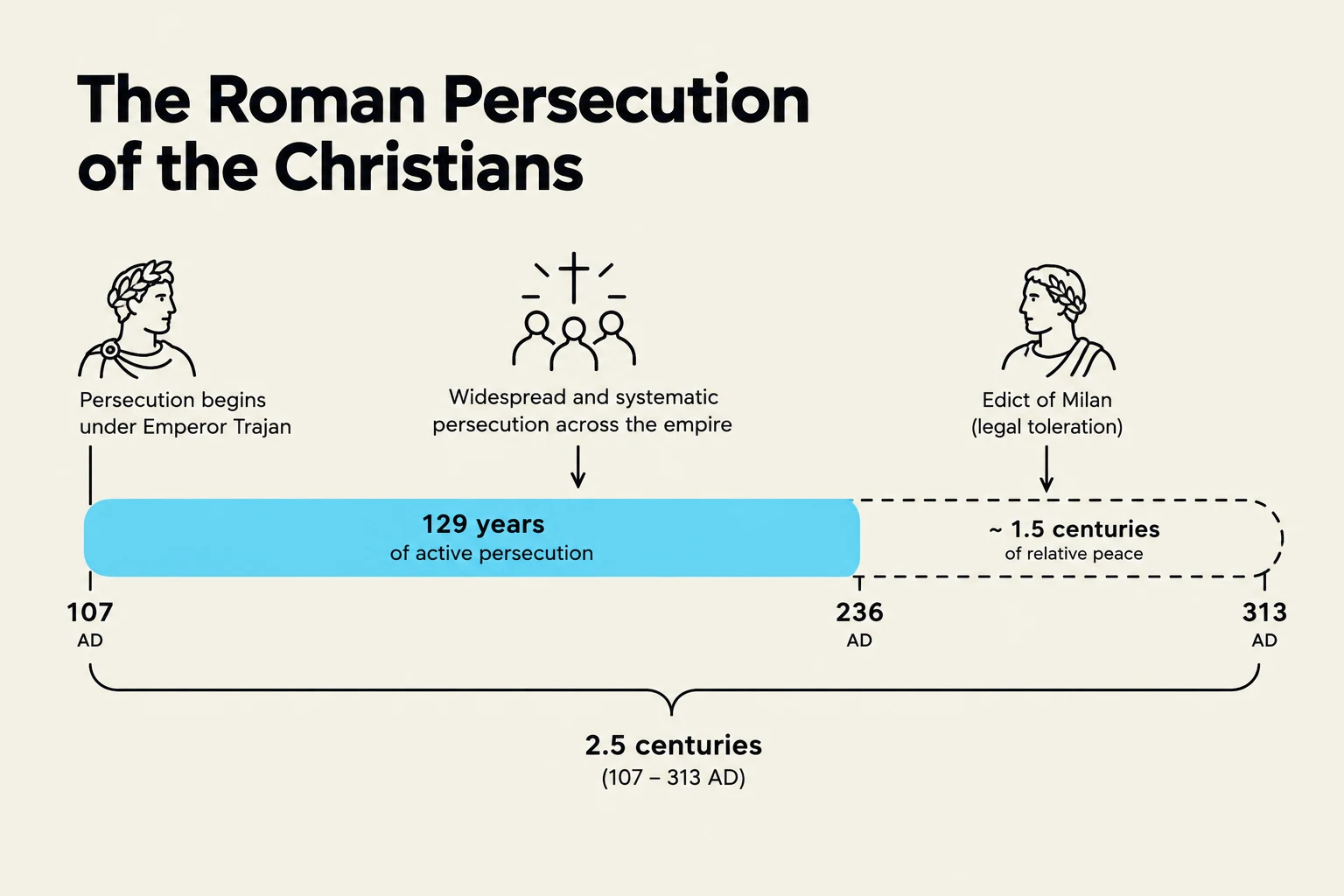
For approximately 250 years, the early Christian movement faced a period of intense struggle against the might of the Roman Empire. This era was not a single, continuous wave of violence, but rather a complex historical process that historians often divide into ten distinct phases. While there were long intervals of comparative peace—lasting roughly 120 years in total—where the Christian population grew significantly, it remained a dangerous time to openly practice the faith.
The Nature and Scope of the Persecution
The primary objective of the Roman authorities during these various stages was the total destruction of Christianity. The persecution was driven by a combination of official government decrees and the unpredictable whims of the public. At times, Emperors or local officials instigated the violence; at other times, the "frenzied, unthinking mob" demanded blood.
Study Tip: When analyzing this era, distinguish between "active persecution" (estimated at 129 years) and "intervals of peace" (estimated at 120 years). This shows that the persecution was episodic rather than a constant, unbroken line of violence.
Core Causes: Religion, State, and Law
The friction between Rome and the early Christians was not merely a matter of differing beliefs; it was a fundamental clash of societal structures.
The Conflict of State Religion
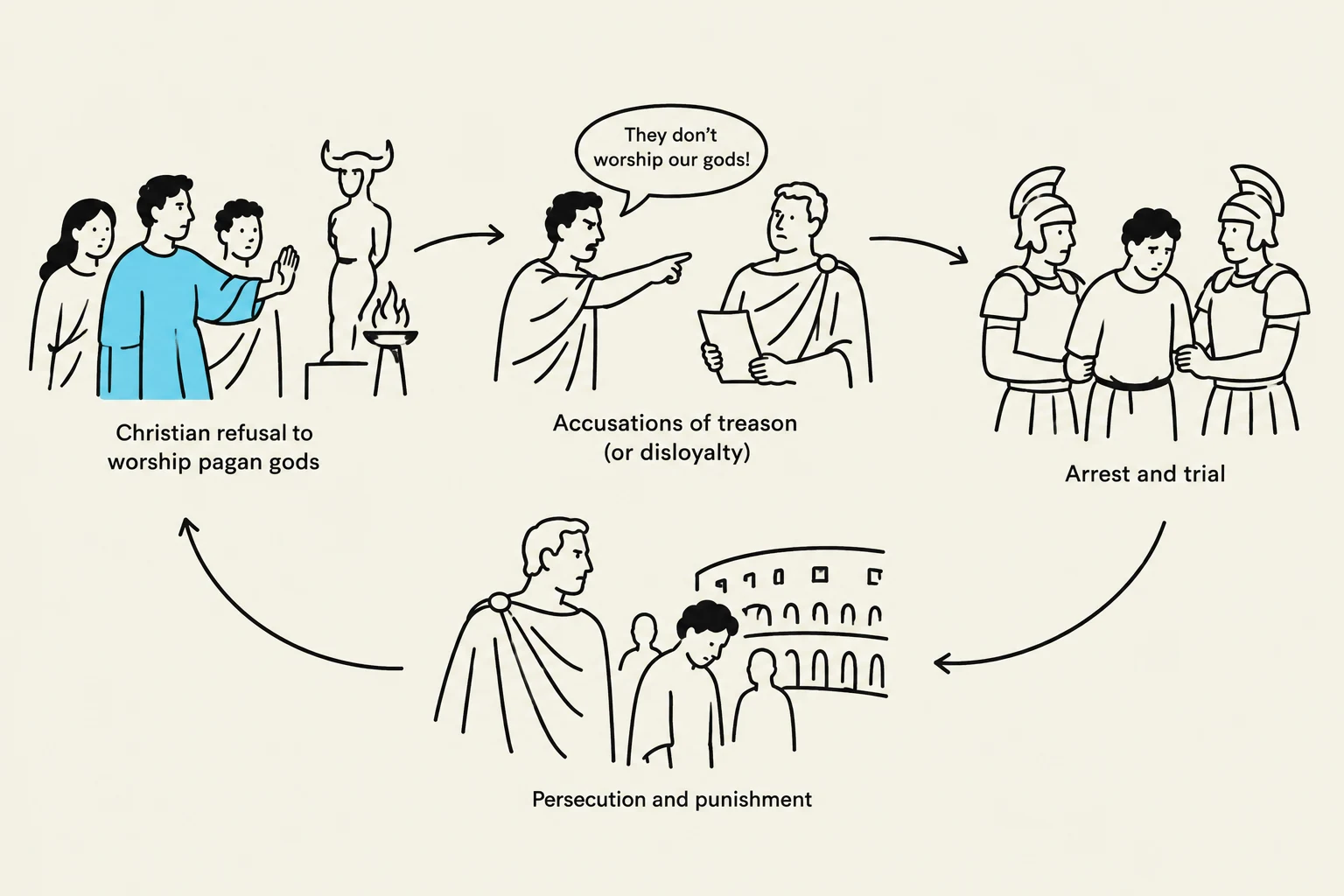
In the Roman Empire, religion and citizenship were deeply intertwined. The Roman pagan religion functioned as a state religion, meaning every "good citizen" was expected to participate in public rites, such as burning incense and offering sacrifices to the gods. Because Christians worshipped only one God, they refused to participate in these civic duties.
Keep reading for free.
Create an account to finish this reading and make it part of your study routine.
Continue reading freeAlready have an account? Log in
Updated