The Role of the U.S. Cabinet and the Principal-Agent Problem
Explains the composition and function of the U.S. Cabinet, the 15 executive departments, and the principal-agent problem in the context of presidential delegation and bureaucratic governance.
When we think of the President of the United States, we often imagine a single individual making monumental decisions in the Oval Office. However, the reality of governing a massive, modern nation is far more complex. No single person can possess expert knowledge on every subject, from nuclear energy policy to student loan programs. To manage this complexity, the President relies on a specialized group of advisors and administrators known as the Cabinet.
The Cabinet serves as the bridge between the President’s high-level political goals and the practical, day-to-day administration of the country. By delegating authority to heads of major departments, the President can implement policy across a vast landscape of specialized fields.
Defining the Cabinet and Executive Departments
The Cabinet is composed of the Vice President and the heads of the 15 executive departments. These department heads, often referred to as "Secretaries" (with the exception of the Attorney General), are appointed by the President and must be confirmed by the Senate.
Each department is responsible for a specific area of public policy. For example:
The Department of Education manages federal assistance to schools and oversees national education policy.
The Department of Energy handles issues regarding nuclear safety, energy conservation, and the development of new energy technologies.
The Department of State manages foreign affairs and international diplomacy.
While the Cabinet is often discussed as a single unit, it functions more as a collection of distinct agencies that work under the umbrella of the Executive Branch.
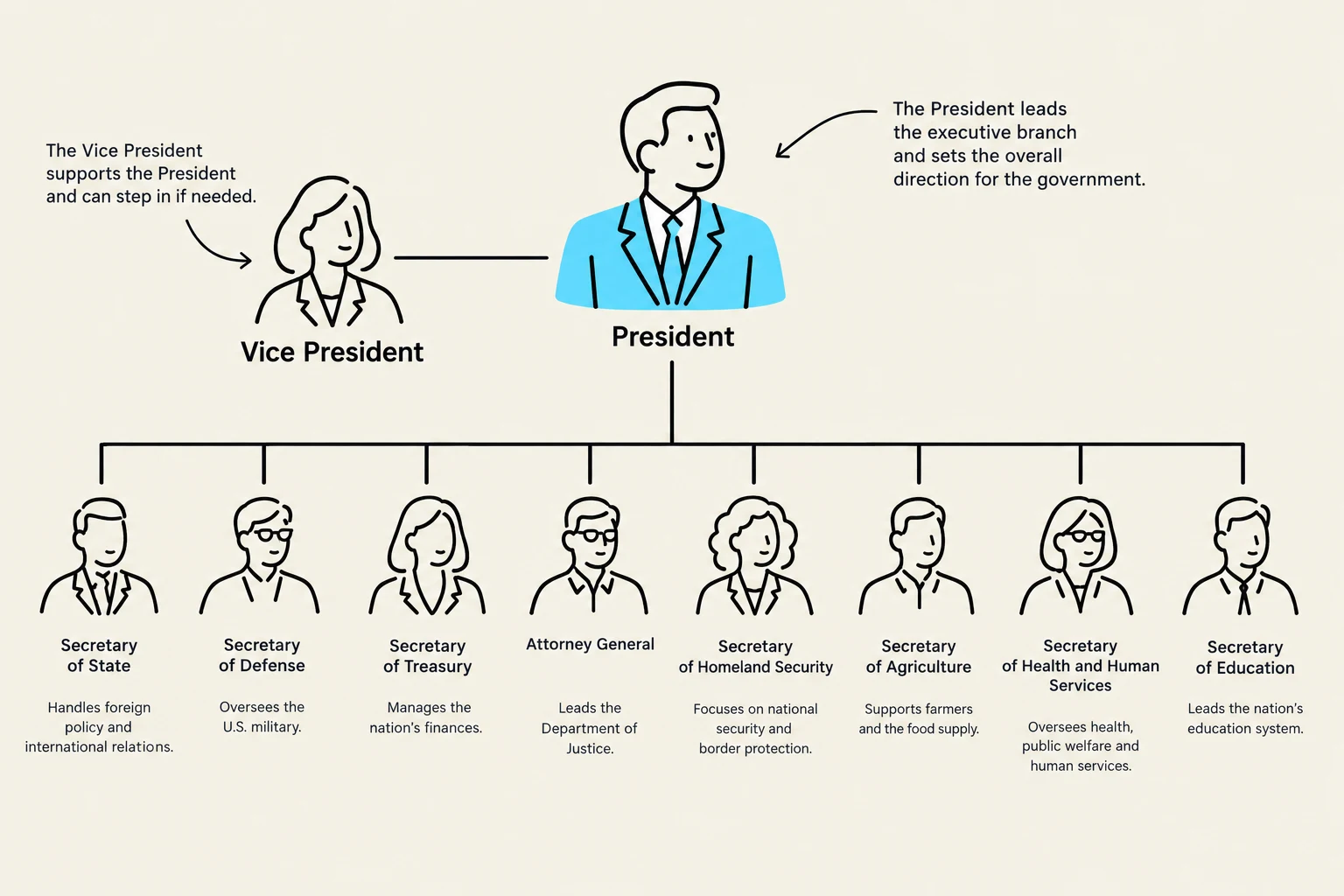
This diagram illustrates the structure of the executive branch of the U.S. government, showing the President, Vice President, and various cabinet secretaries and their roles.
The Principal-Agent Problem in the Bureaucracy
As the President delegates power to these department heads and the massive bureaucracies they lead, a fundamental challenge arises in political science: the Principal-Agent Problem.
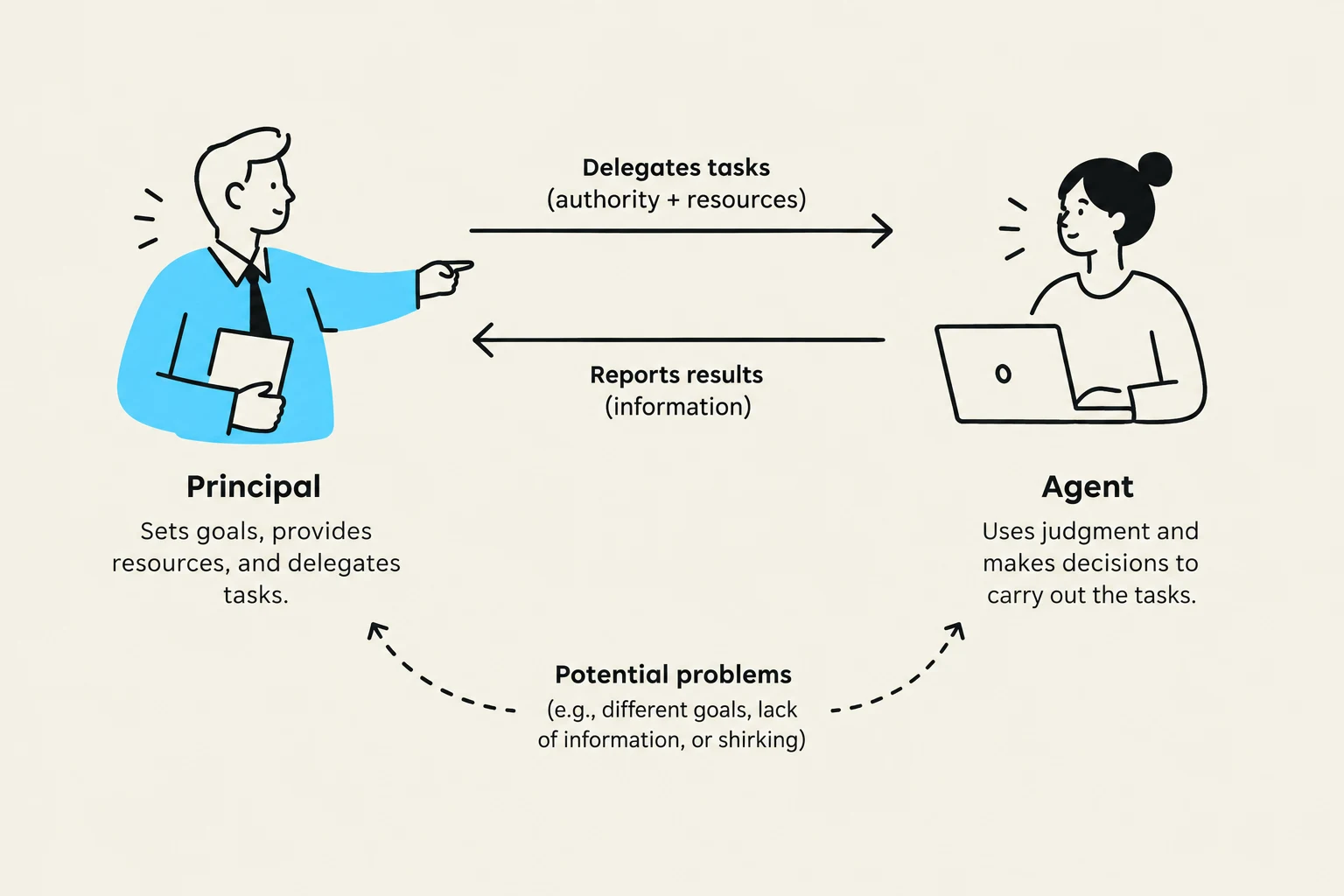
In this relationship, the President (the "Principal") hires a Secretary or a department official (the "Agent") to carry out specific tasks. The goal is for the Agent to act exactly as the Principal desires. However, because the Agent has more specialized information and different personal or professional interests, they may not always act in the Principal's best interest.
This can manifest in several ways:
Information Asymmetry: The department head knows much more about the technical details of energy or education than the President does, making it difficult for the President to monitor every decision.
Goal Divergence: A Secretary might prioritize the long-term stability of their department or their own political career over the immediate policy shifts the President wants to implement.
Exam Tip: If a question asks why a President might struggle to implement a new policy even after appointing a loyal Secretary, look for answers involving "bureaucratic autonomy" or the "principal-agent problem."
This diagram illustrates the principal-agent problem in economics, showing the relationship between a principal who delegates tasks and an agent who carries them out, along with potential issues that can arise.
How the President Manages the Cabinet
To mitigate the risks of the principal-agent problem, Presidents use several tools to ensure their Cabinet remains aligned with their administration's goals.
1. Appointment and Confirmation
The first line of defense is the selection process. By choosing individuals whose ideologies closely match their own, a President can reduce the likelihood of goal divergence. The Senate's "advice and consent" role acts as a check, ensuring that these appointees are qualified and not purely partisan tools.
2. Oversight and Reporting
Presidents use the Executive Office of the President (EOP) to monitor departmental activities. This creates a layer of professional staff whose sole job is to watch the Cabinet and report back to the President.
3. Budgetary Control
The President influences departments through the budget process. By allocating more or less funding to specific initiatives within the Department of Education or the Department of Energy, the President can signal which priorities are most important.
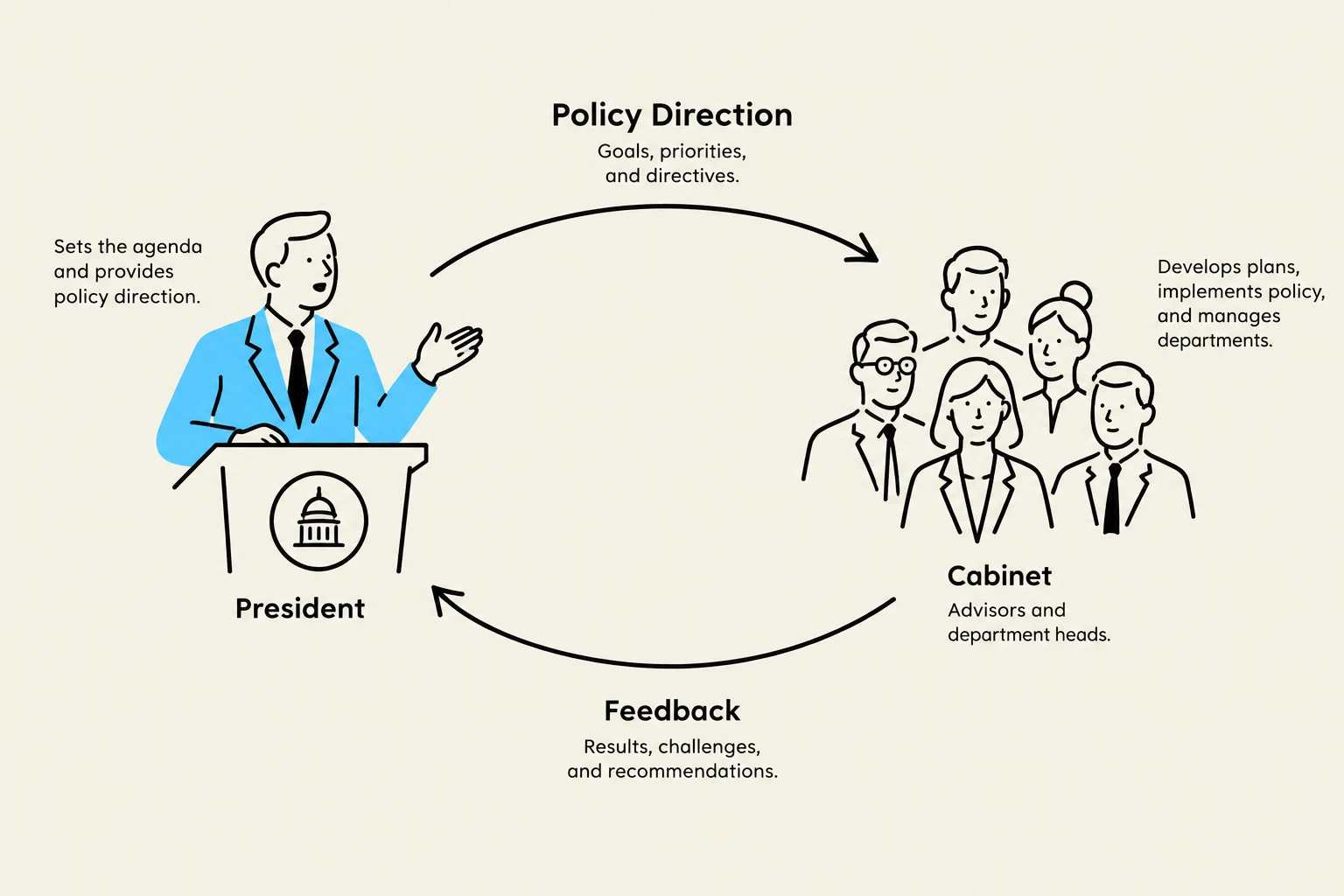
This diagram illustrates the policy direction process, showing the President setting the agenda and providing policy direction to the Cabinet, who then develop plans and manage departments. Feedback from the Cabinet, including results and recommendations, is then provided back to the President.
Summary Table: Major Departments and Functions
To help visualize the scope of the Cabinet, consider the following breakdown of key departments:
Department
Head Title
Primary Focus
State
Secretary of State
Foreign policy and international relations
Treasury
Secretary of the Treasury
Economic policy, taxation, and currency
Defense
Secretary of Defense
Military and national security
Justice
Attorney General
Law enforcement and legal affairs
Energy
Secretary of Energy
Energy policy and nuclear security
Education
Secretary of Education
Student aid and national education standards
Conclusion
The Cabinet is much more than a group of advisors; it is the engine of the Executive Branch. While the President sets the direction, the Cabinet departments provide the expertise and the manpower to move the nation. Understanding the tension between the President's goals and the autonomy of these departments—the principal-agent problem—is essential to understanding how the American government actually functions in practice.
Keep reading for free.
Create an account to finish this reading and make it part of your study routine.