


In the complex ecosystem of modern commerce, information is the most valuable currency. However, for this information to be useful, it must be reliable. This is where auditing enters the frame. Far from being a mere "check-the-box" exercise, auditing is a sophisticated process that serves as a bridge of trust between those who manage a company and those who own it or invest in it. By examining financial records against established standards, auditors provide the credibility necessary for the global economy to function smoothly.
Auditing as a Process of Review
At its most fundamental level, auditing is a systematic process of reviewing the financial statements and supporting documentation prepared by a company's management. The primary objective is to determine if these statements comply with an applicable financial reporting framework—such as the Malaysian Financial Reporting Standards (MFRS) or International Financial Reporting Standards (IFRS)—and whether they are free from material misstatement.
It is crucial to distinguish between accounting and auditing. While accountants use standards to prepare financial statements, auditors use auditing standards (such as the International Standards on Auditing, or ISAs) to examine those statements.
| Feature | Accounting Standards | Auditing Standards |
|---|---|---|
| Primary Goal | Guide the preparation of financial statements | Guide the audit of financial statements |
| Main Users | Management and accountants | External auditors |
| Output | Financial statements | Auditor’s report and opinion |
Exam Tip: Remember that auditors do not provide absolute assurance. Because of the use of sampling, the need for cost-effectiveness, and the inherent limitations of detecting sophisticated fraud, auditors aim to provide reasonable assurance—a high, but not absolute, level of confidence.
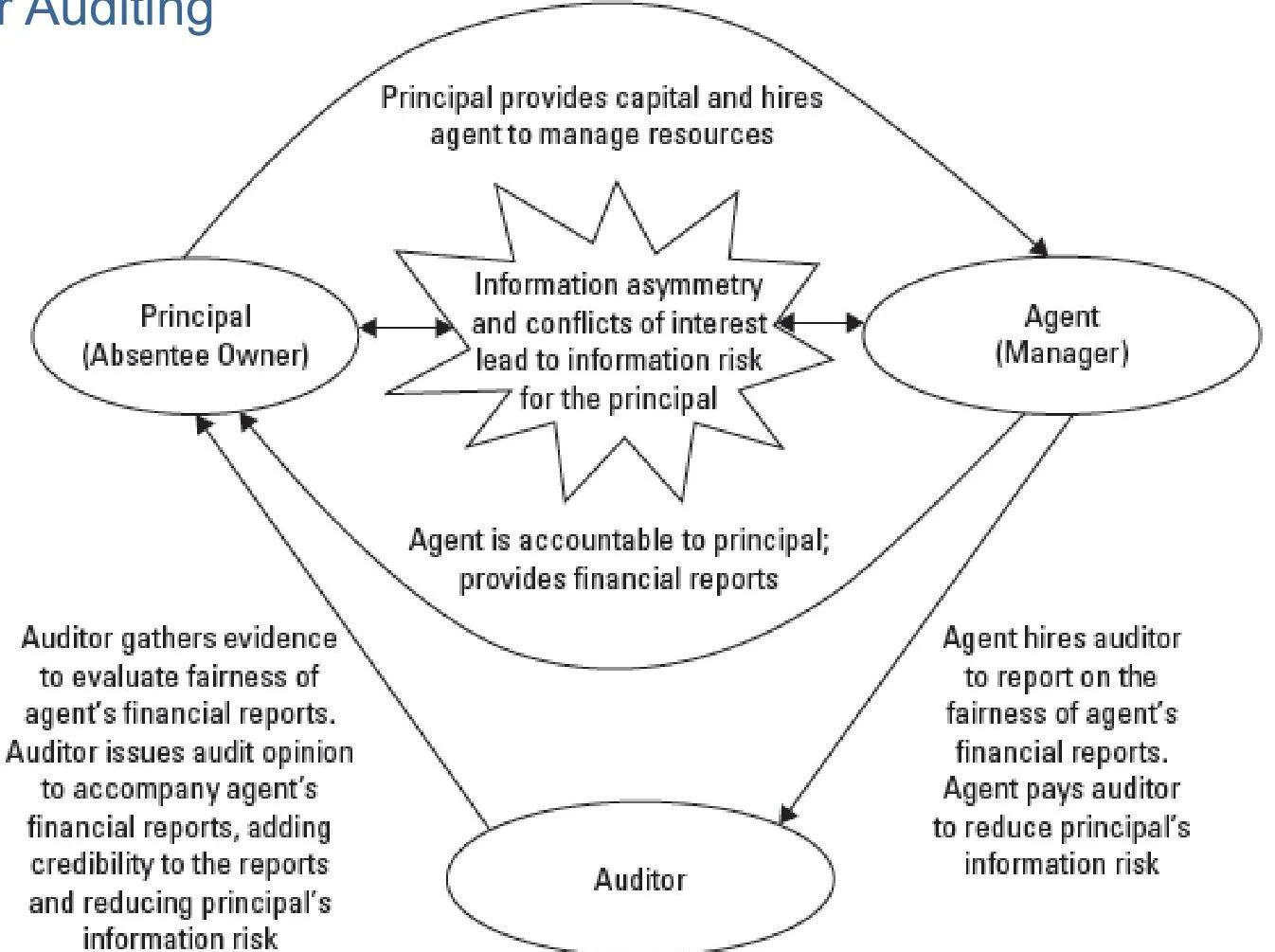
The Principal-Agent Relationship and Stewardship
To understand why we need auditors, we must look at the "Principal-Agent" relationship. In a public company, the owners (the Principals) are often not the ones running the business day-to-day. Instead, they hire professional managers (the Agents) to run the company on their behalf.
Keep reading for free.
Create an account to finish this reading and make it part of your study routine.
Continue reading freeAlready have an account? Log in
Updated