


The renal system is a sophisticated biological network essential for maintaining homeostasis. While often simplified as a mere waste-disposal system, it is actually a highly integrated regulatory hub that manages fluid volumes, electrolyte concentrations, acid-base balance, and blood pressure, while also performing critical endocrine functions. By filtering the blood and secreting specific hormones, the kidneys ensure the chemical stability of the internal environment required for survival.
Renal Anatomy
The urinary tract is composed of several key structures that facilitate the movement of waste from the blood to the external environment. The primary organs are the kidneys, which are connected to the ureters, leading to the urinary bladder, and finally exiting through the urethra.
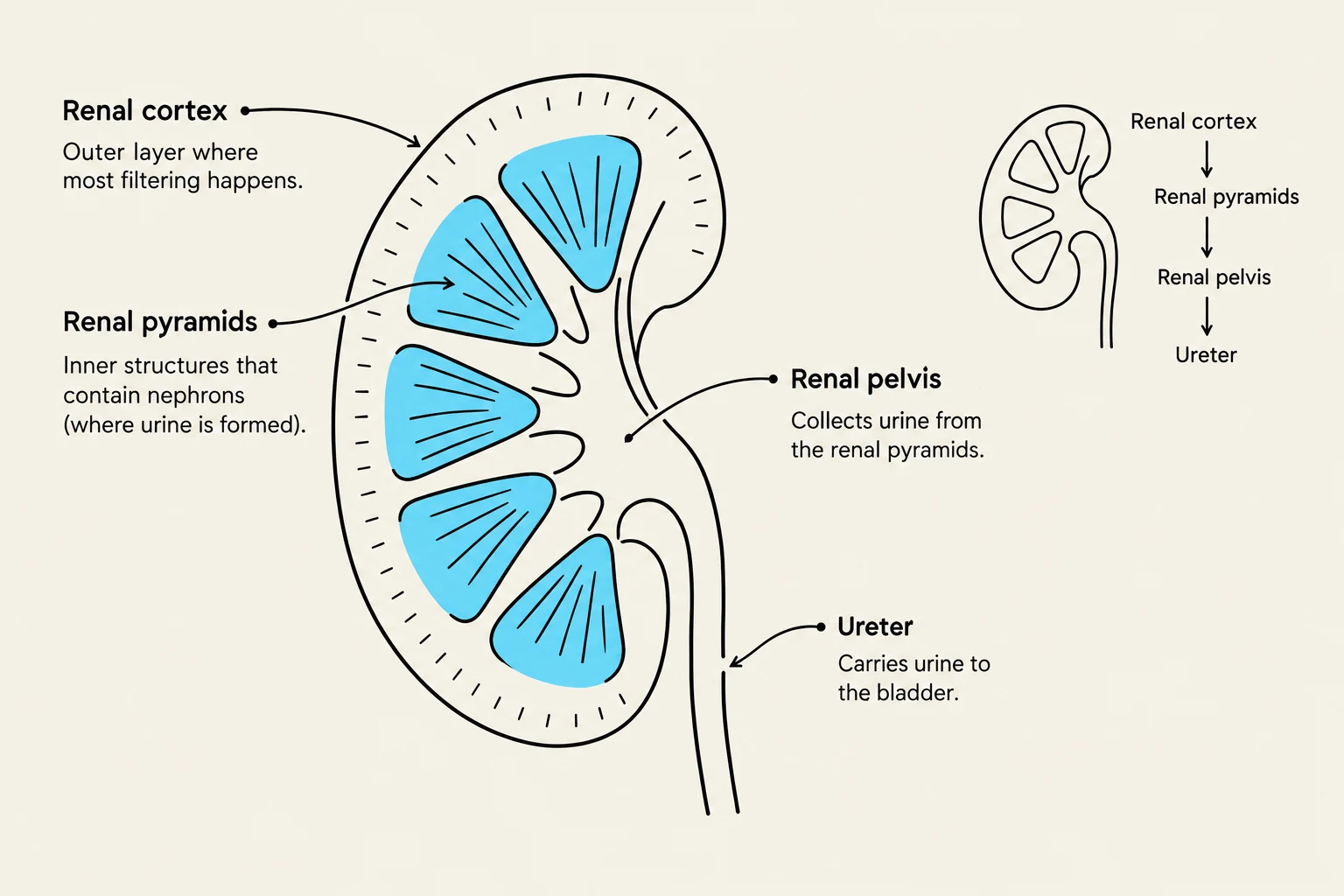
The kidneys themselves are organized into distinct anatomical regions that allow for complex filtration processes. The outer layer is known as the renal cortex, while the inner region contains the renal pyramids. All processed fluid eventually collects in the renal pelvis before entering the ureter.
Physiological Processes: Filtration and Excretion
The core mission of the kidney is the continuous processing of blood to maintain a healthy internal state. This is achieved through several interconnected mechanisms:
Urine Formation and Renal Clearance
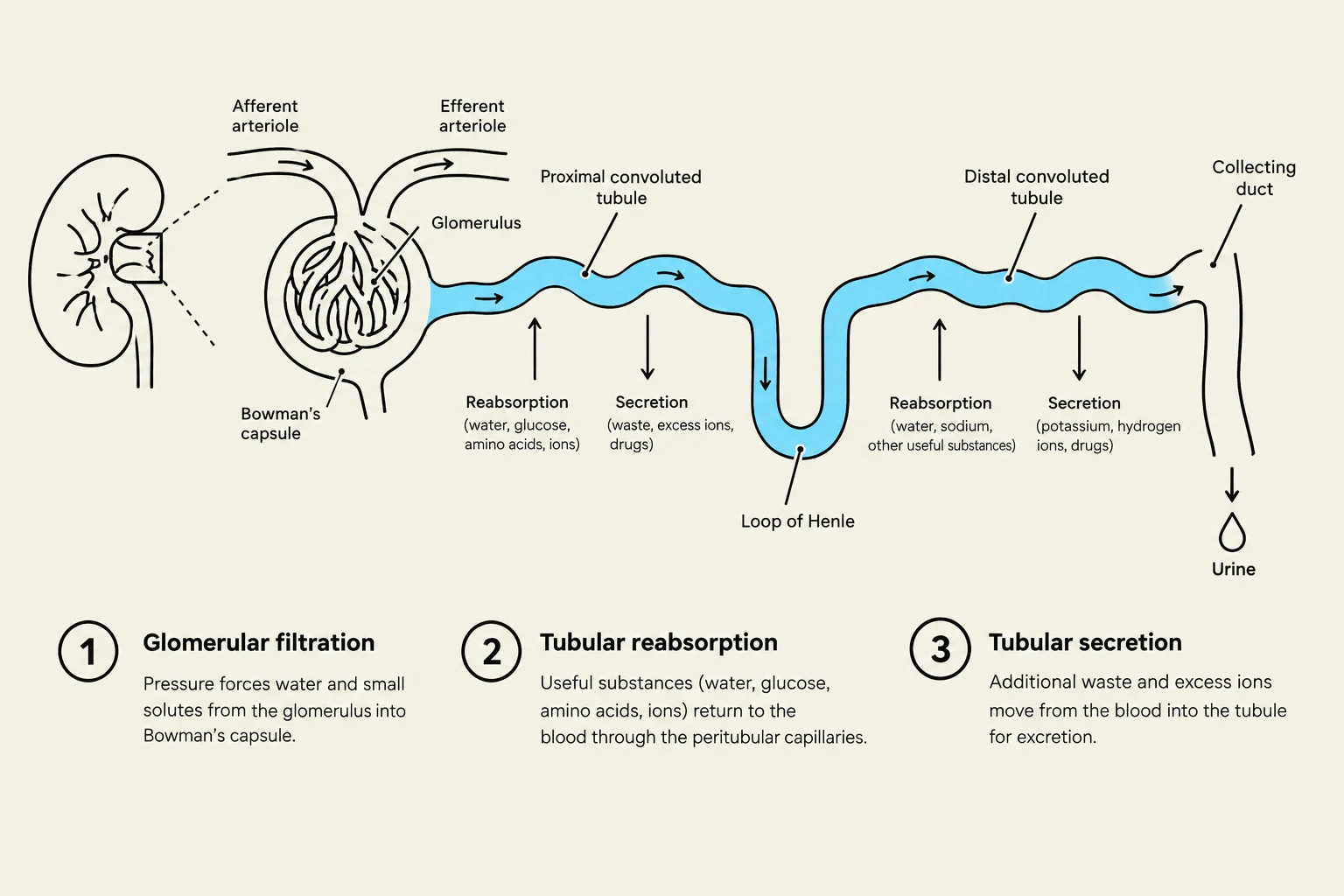
Urine formation is a continuous process of filtering blood to produce urine. This involves renal clearance, which is the rate at which a substance is removed from the plasma through the kidneys. Through this process, the system ensures the excretion of waste products, specifically metabolic byproducts and nitrogenous wastes like urea.
Keep reading for free.
Create an account to finish this reading and make it part of your study routine.
Continue reading freeAlready have an account? Log in
Updated