


To see the world clearly, our eyes must do more than simply collect light; they must bend it. This process of bending light rays is known as refraction. While the cornea provides the majority of the eye's refractive power, the lens serves as the "fine-tuner," allowing us to shift our focus between a distant mountain range and the text on a smartphone screen. Understanding how the lens manipulates light through accommodation is fundamental to understanding visual acuity and common ocular conditions.
The Physics of Refraction
Refraction occurs when light passes from one medium into another of a different density, causing the light to change speed and direction. In the human eye, light travels from the air, through the cornea, through the aqueous humor, through the lens, and finally through the vitreous humor before hitting the retina.
The degree to which light bends depends on the refractive index of the media involved. For a lens to focus light precisely onto the retina, the light rays must converge at a single point. If the light converges too early (in front of the retina) or too late (behind the retina), the resulting image will be blurred.
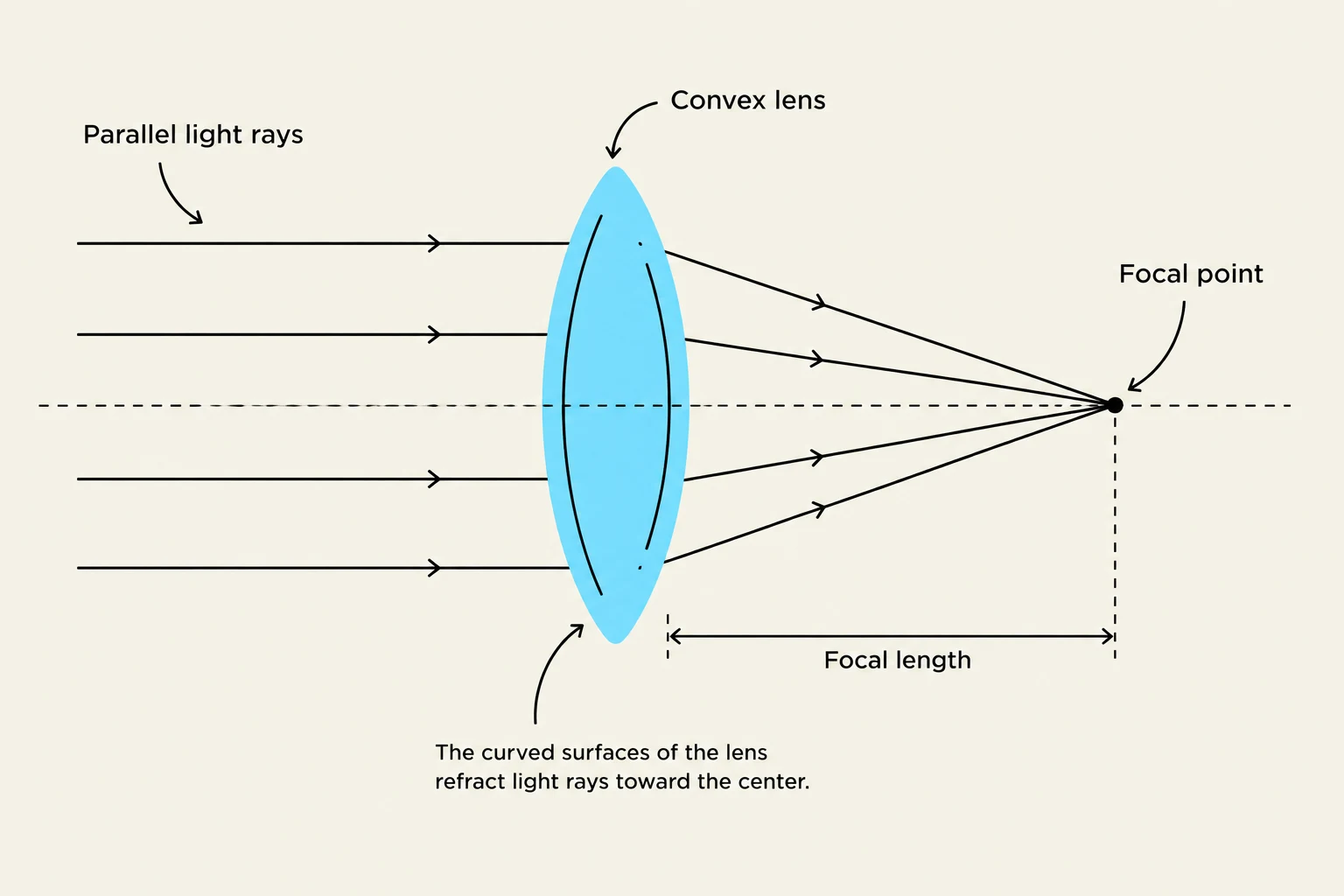
The Anatomy of the Crystalline Lens
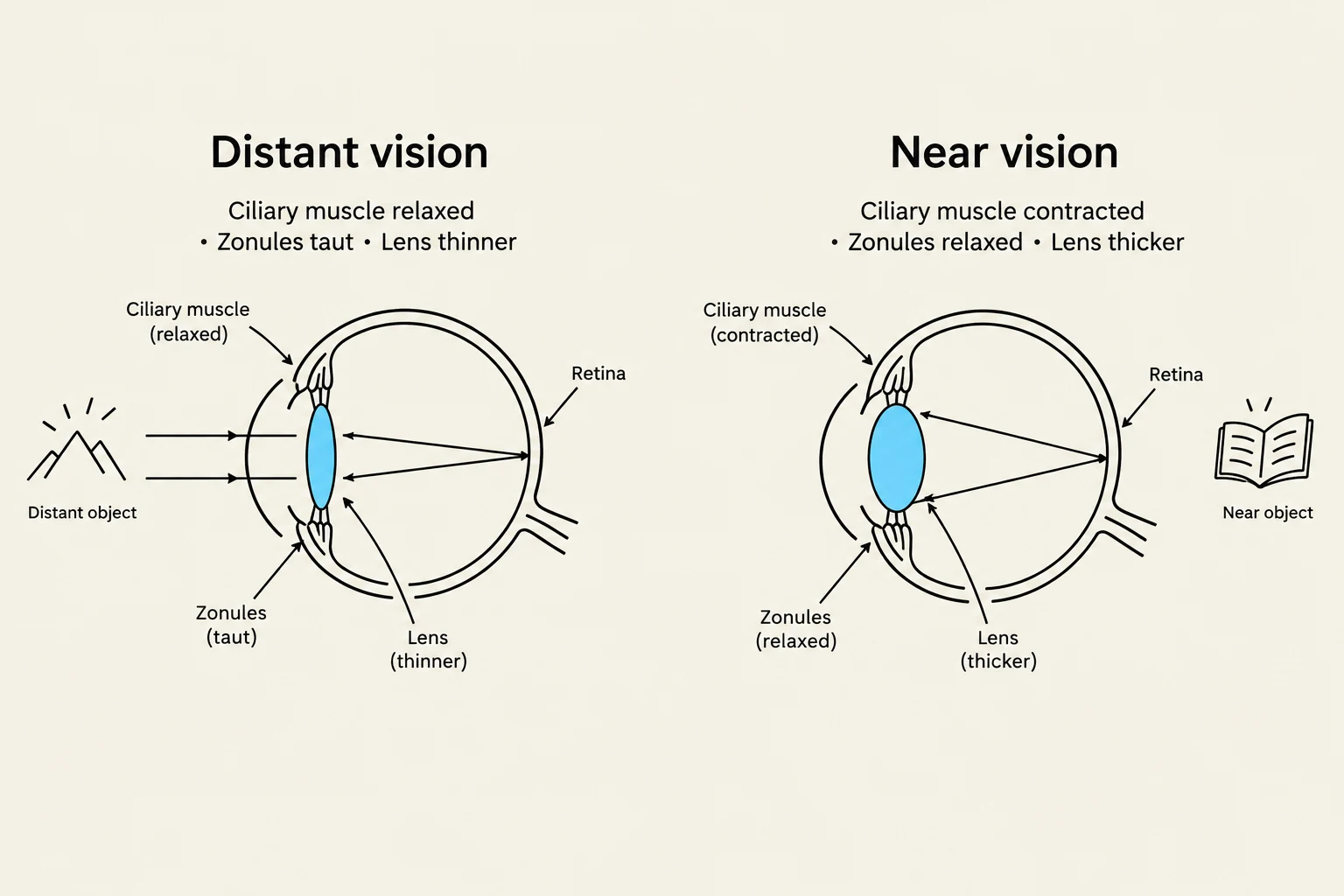
The lens is a transparent, biconvex structure located behind the iris and the pupil. Unlike the cornea, which is a fixed structure, the lens is highly flexible. This flexibility is essential for its primary function: changing its shape to adjust focal length.
Keep reading for free.
Create an account to finish this reading and make it part of your study routine.
Continue reading freeAlready have an account? Log in
Updated