


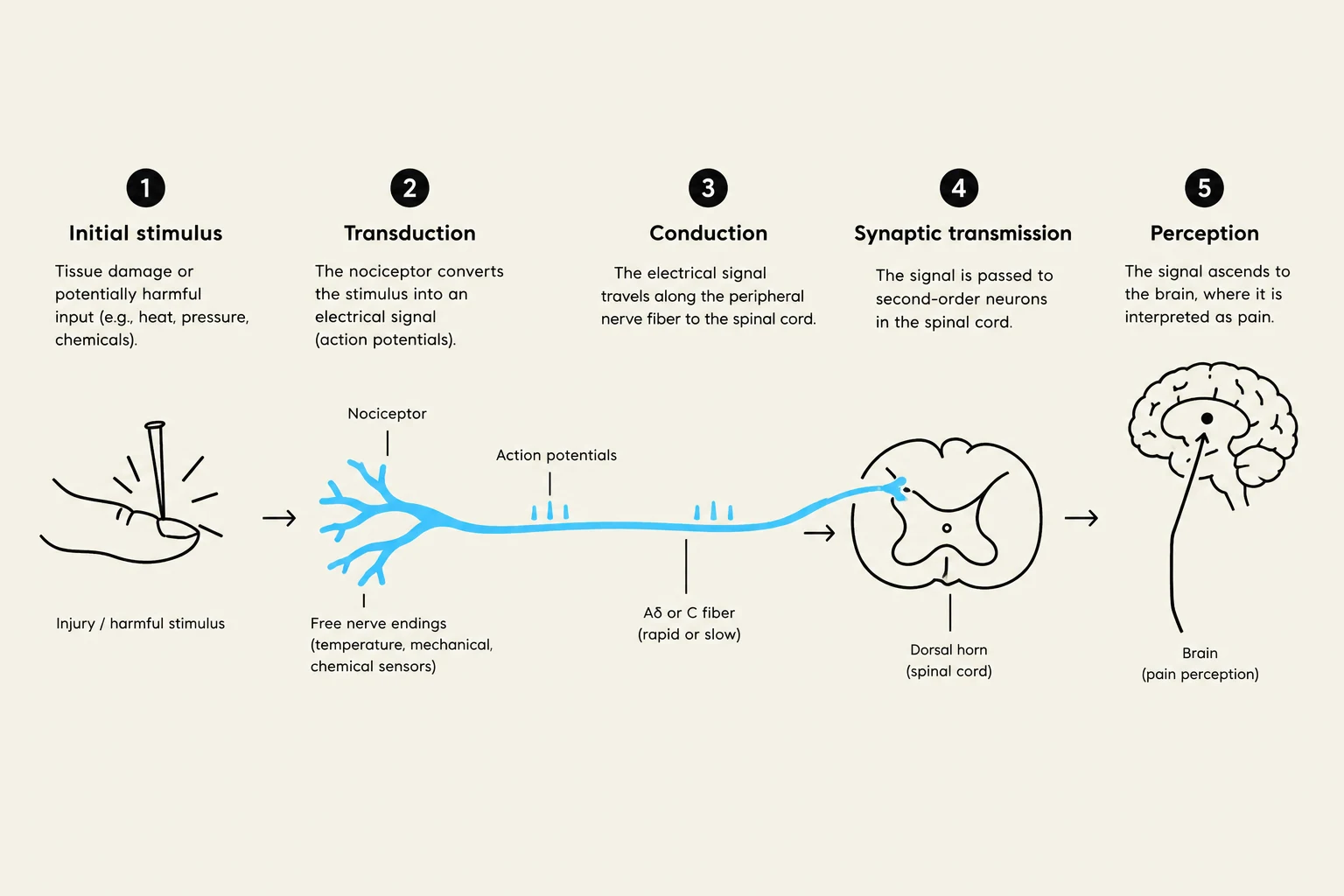
The peripheral nervous system (PNS) serves as the vital communication bridge between the central nervous system (CNS) and the rest of the body. It is responsible for two primary functions: gathering sensory information from the environment (afferent input) and executing motor commands to control movement (efferent control). Understanding how these systems interact is essential for grasping how we perceive the world and, more critically, how we experience pain—a complex process known as nociception.
Somatic Sensory and Motor Control
The PNS is organized into distinct pathways that carry information in specific directions. Somatic sensory (afferent) neurons carry information from the skin, joints, and muscles toward the brain. These neurons are typically pseudounipolar, with their cell bodies located in the dorsal root ganglia (DRG) just outside the spinal cord.
In contrast, somatic motor (efferent) control involves neurons that carry commands from the CNS to the skeletal muscles to produce voluntary movement. A key component of this system is the neuromuscular junction, where the motor neuron communicates with the muscle fiber using the neurotransmitter acetylcholine.
Sensory Modalities and Pathways
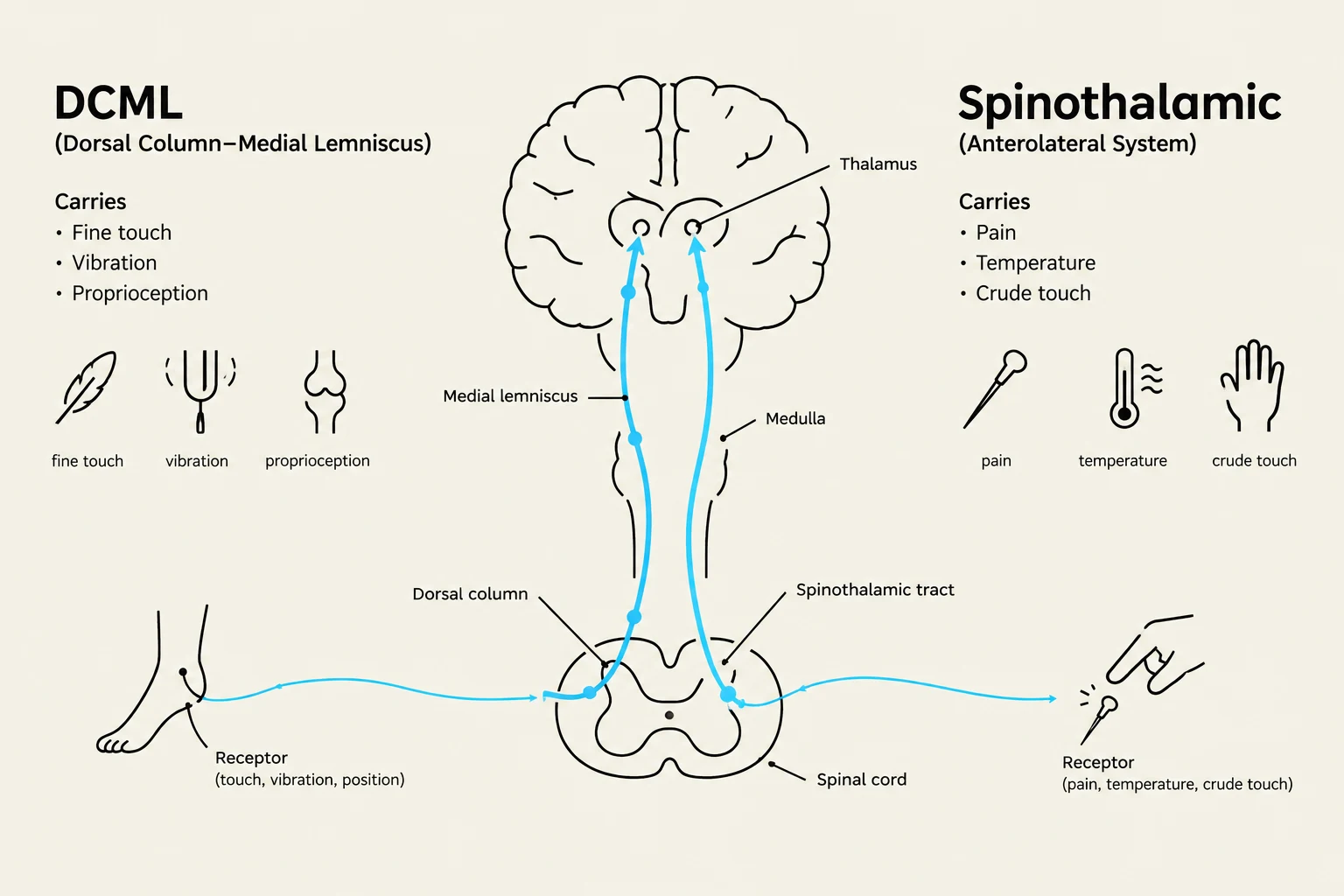
Not all sensory information is processed the same way. The body uses different ascending tracts to transport various modalities:
- Dorsal Column Medial Lemniscus (DCML) Tract: This pathway carries "fine" sensations, including fine touch (two-point discrimination), vibration, proprioception (joint position), and crude touch. These signals ascend on the same side of the spinal cord before crossing in the medulla to reach the thalamus.
- Anterolateral Spinothalamic Tract (STT): This pathway is primarily responsible for nociception (pain), temperature (hot/cold), and crude touch. Unlike the DCML, these signals synapse in the dorsal horn of the spinal cord and then immediately cross (decussate) to the opposite side before ascending to the thalamus.
Keep reading for free.
Create an account to finish this reading and make it part of your study routine.
Continue reading freeAlready have an account? Log in
Updated