


The human nervous system is a complex network designed for communication and control. While much of our focus often lands on the "command center"—the brain and spinal cord—the system cannot function without the vast network of nerves that extends to our fingertips, toes, and internal organs. This network is known as the Peripheral Nervous System (PNS).
The Peripheral Nervous System (PNS)
The term "peripheral" literally denotes its position "outside the center". While the Central Nervous System (CNS) acts as the processing hub, the PNS serves as the essential communication bridge. It consists of all the nerves located outside of the brain and spinal cord, ensuring that the CNS remains in constant contact with the rest of the body.
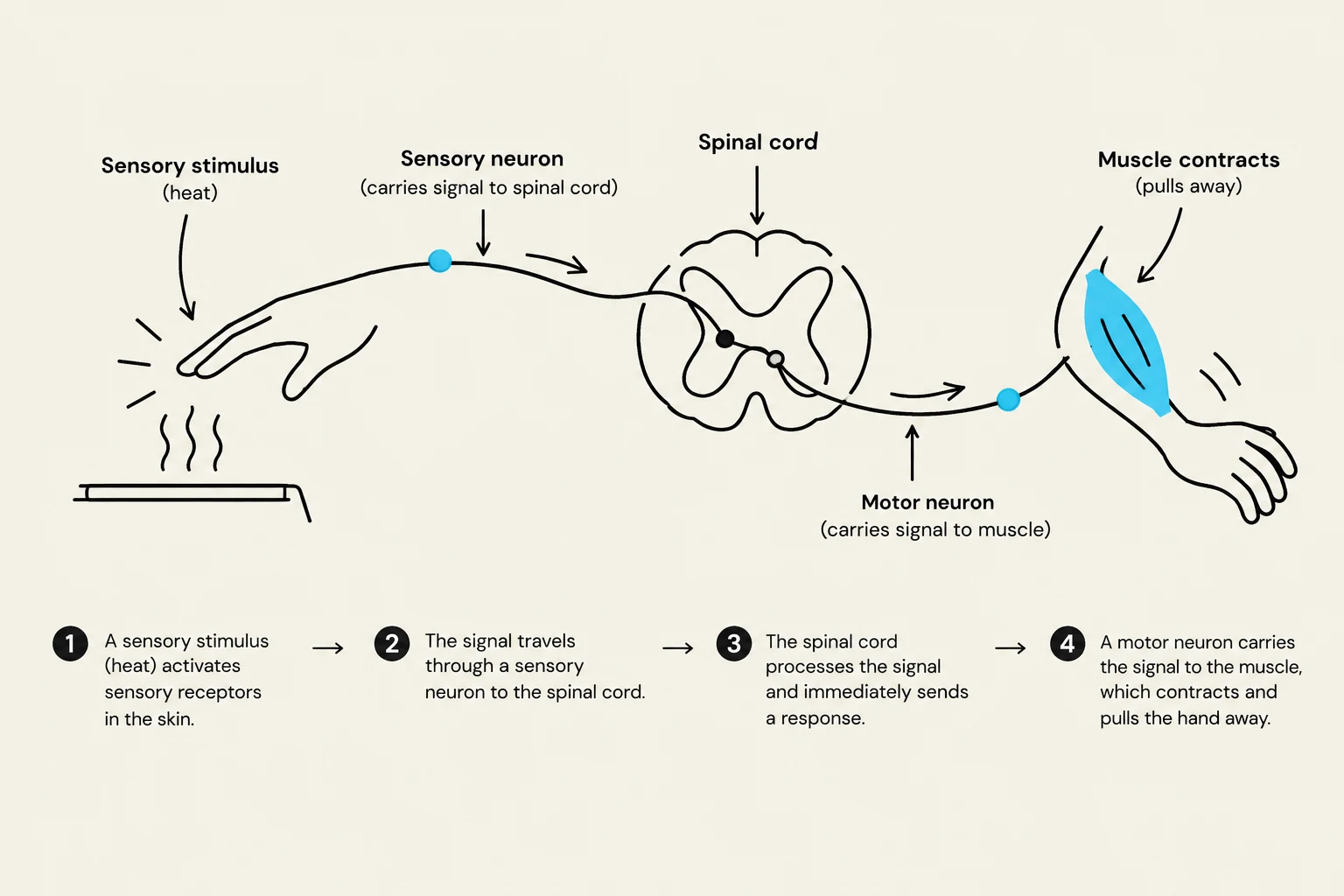
The operation of the PNS relies on a continuous, two-way exchange of information through two primary pathways: the sensory pathway and the motor pathway.
The Sensory Pathway
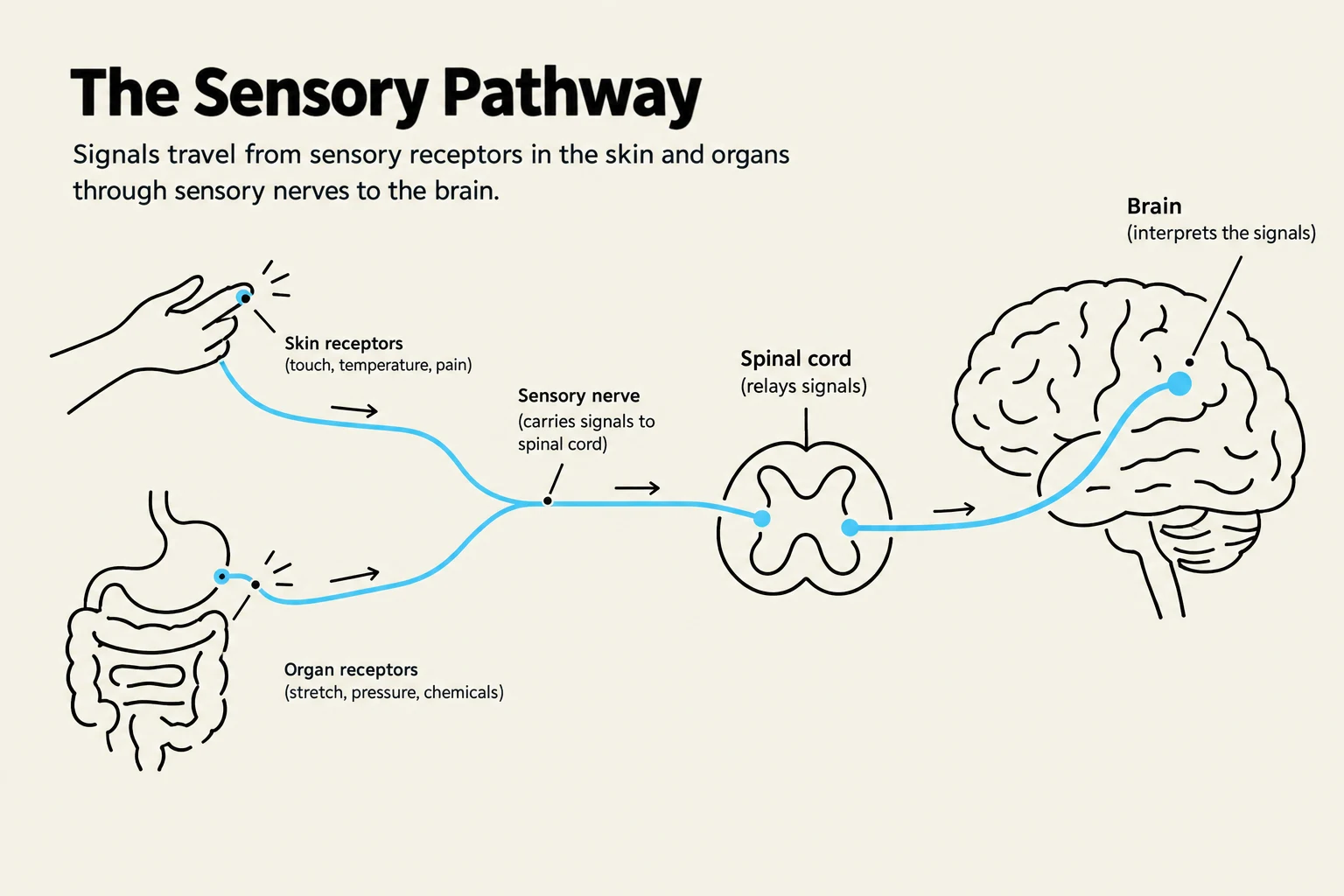
The sensory pathway is responsible for "input." It involves signals traveling from sensory receptors throughout the body via sensory nerves toward the brain. This pathway allows the brain to receive vital information about both the body's internal state and the external environment.
The Motor Pathway
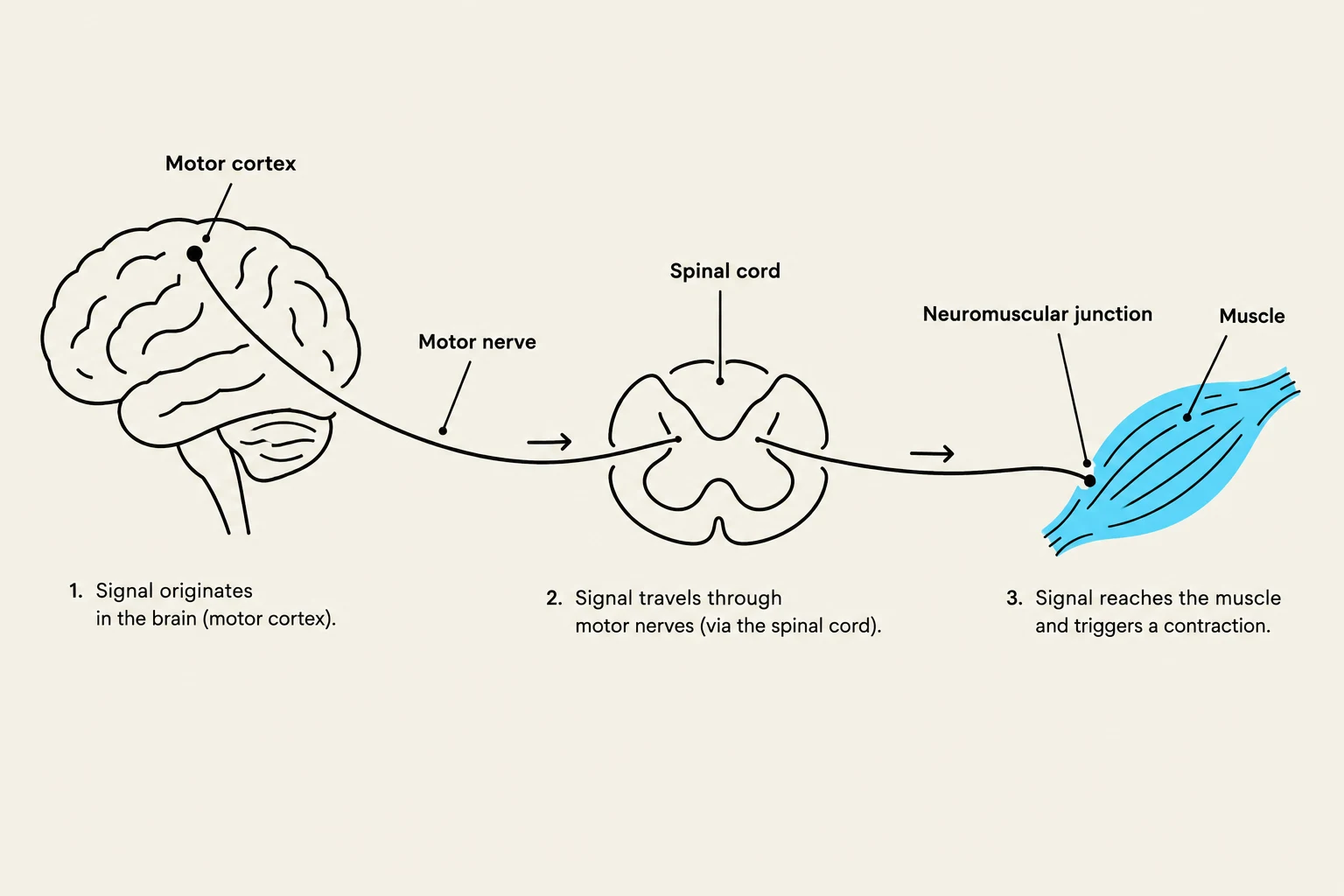
If the sensory pathway is the "input," the motor pathway is the "output". This pathway involves signals traveling from the brain away from the CNS toward muscles or glands. These signals are used to influence behavior and trigger physiological responses.
Keep reading for free.
Create an account to finish this reading and make it part of your study routine.
Continue reading freeAlready have an account? Log in
Updated