


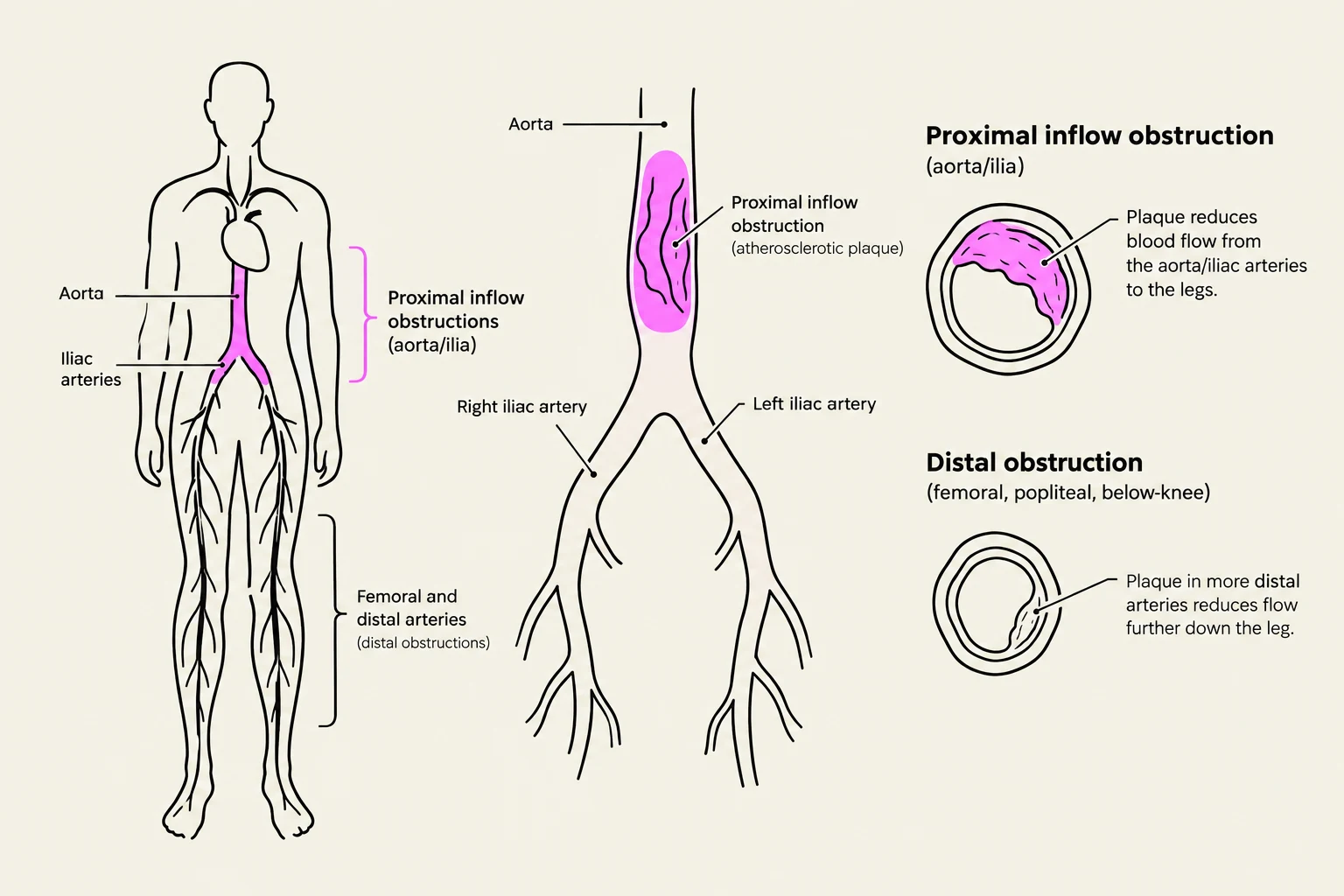
Peripheral Artery Disease (PAD) is a systemic manifestation of vascular dysfunction, primarily characterized by the narrowing or occlusion of arteries that supply the limbs. While often discussed in the context of leg pain (claudication), the underlying mechanisms are complex, involving a combination of structural changes in the vessel walls and systemic alterations in arterial mechanics. Understanding the pathophysiology of PAD requires a deep dive into the progression of atherosclerosis, the role of arterial stiffening, and the critical clinical distinction between inflow and outflow disease.
The Foundation: Atherosclerosis
The primary driver of PAD is atherosclerosis, a chronic inflammatory process that affects the tunica intima of the arterial walls. This process begins when the endothelial lining—the single layer of cells responsible for regulating vascular tone and preventing clotting—becomes damaged due to factors such as hypertension, smoking, or hyperglycemia.
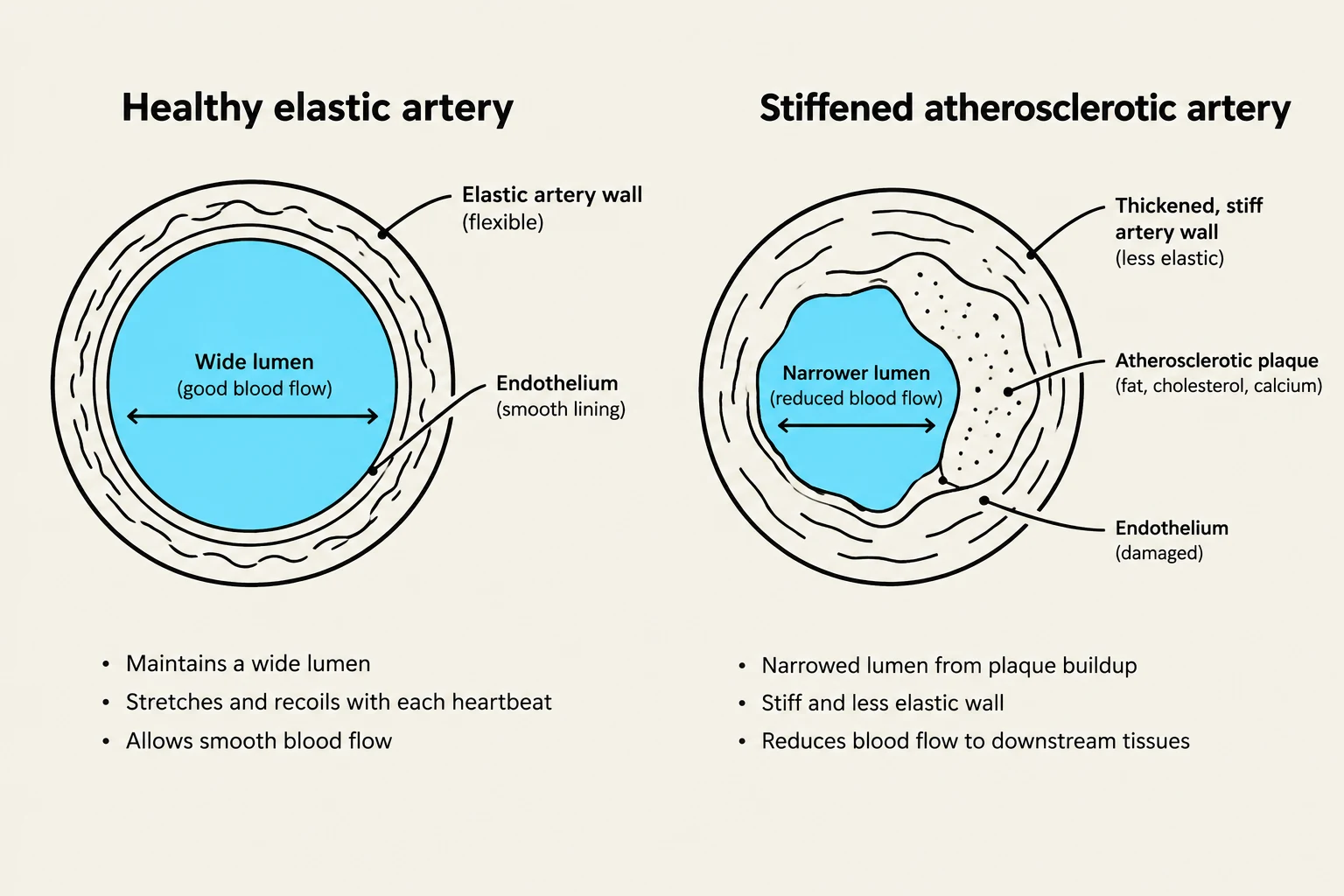
Once the endothelium is compromised, low-density lipoproteins (LDL) can penetrate the vessel wall, where they become oxidized. This triggers an immune response: macrophages ingest the oxidized LDL, transforming into "foam cells." As these cells accumulate, they form fatty streaks, which eventually progress into complex fibroatheromatous plaques. These plaques can narrow the arterial lumen (stenosis) or rupture, leading to acute thrombosis.
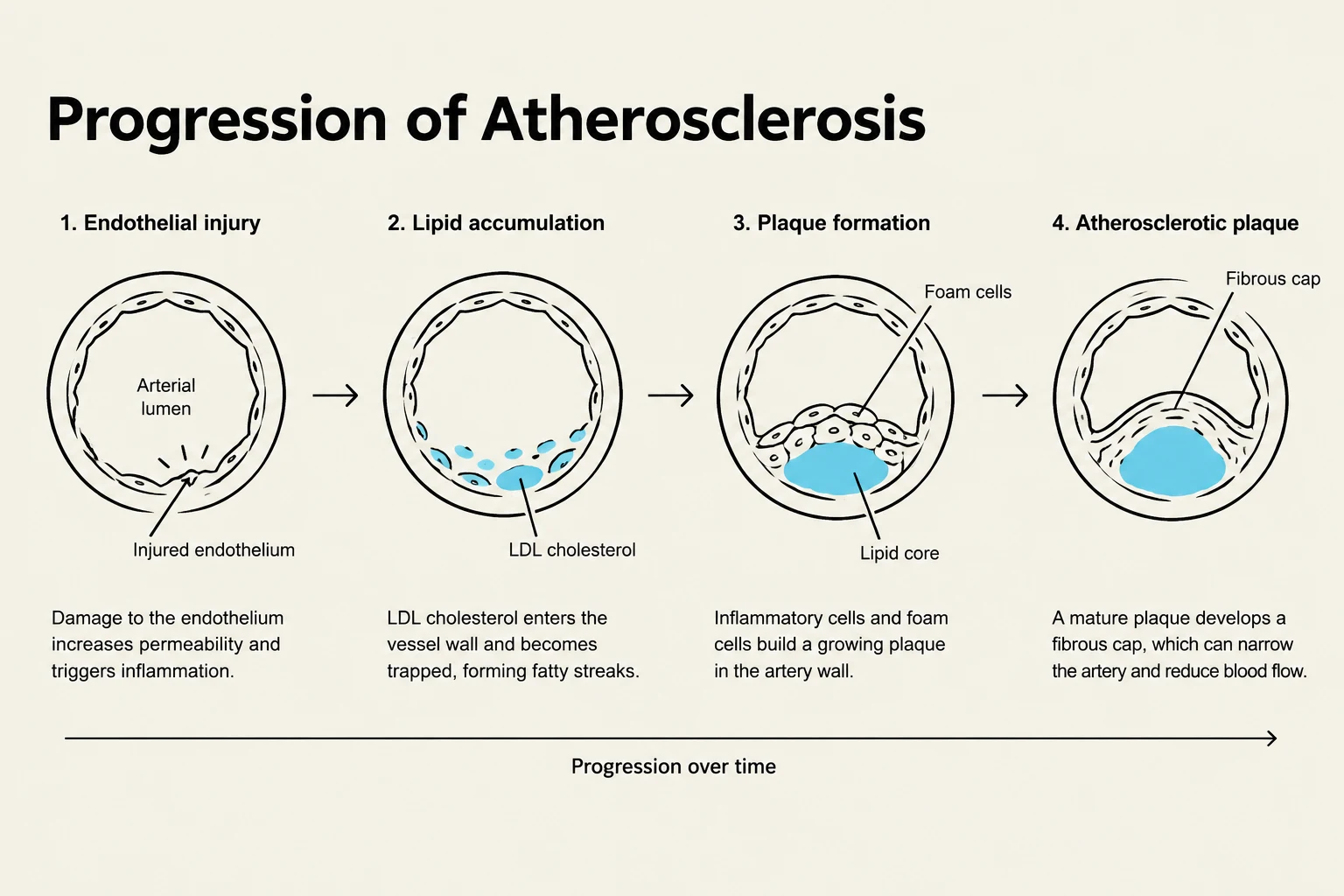
Exam Tip: Remember that atherosclerosis is not just a "clogging of the pipes." It is an active, inflammatory disease of the vessel wall. If a question asks about the primary mechanism of PAD, look for "atherosclerosis" or "intimal thickening."
Keep reading for free.
Create an account to finish this reading and make it part of your study routine.
Continue reading freeAlready have an account? Log in
Updated