


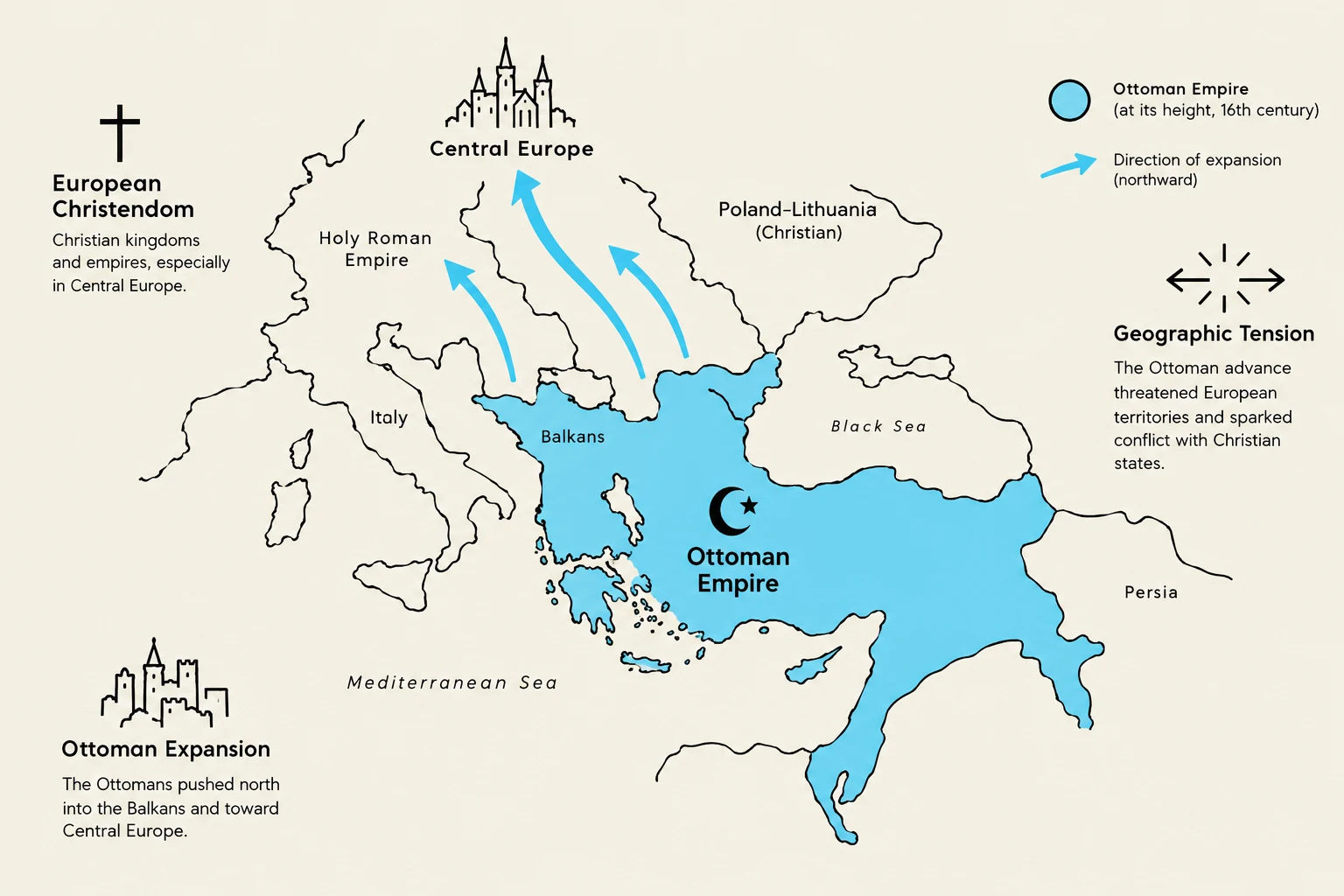
The history of the Ottoman Empire is often framed as a binary struggle between Islam and Christianity. However, the reality of Ottoman rule was a complex tapestry of religious accommodation, administrative pragmatism, and intense military confrontation. While the empire expanded deep into the heart of Europe, its relationship with Christian subjects in the Balkans was characterized by a unique level of religious autonomy, even as its military ambitions eventually brought it into a decisive clash with the powers of Central Europe at the gates of Vienna.
The Ottoman Balkans: A Landscape of Coexistence
In the southeastern European domains known as the Balkans, the Ottoman encounter with Christian peoples differed significantly from the empire's experience in Anatolia. Unlike the Anatolian heartland, where Muslim populations were more concentrated, the Balkans remained overwhelmingly Christian due to a scarcity of Turkish settlers.
By the early sixteenth century, the demographic breakdown of the region reflected this reality: only approximately 19 percent of the population was Muslim, while a vast 81 percent remained Christian. This demographic reality forced the Ottoman administration to adopt a governance model that could manage a non-Muslim majority without triggering constant rebellion.
Study Tip: When analyzing Ottoman expansion, remember that "conquest" did not always mean "conversion." In many regions, the Ottomans prioritized tax revenue and stability over religious uniformity.

Religious Autonomy and the Millet System
To maintain order, the Ottoman authorities granted considerable religious autonomy to Christian communities. This allowed major religious bodies, such as the Eastern Orthodox Church and the Armenian Church, to regulate their own internal affairs. This autonomy extended to several key areas of social life:

Keep reading for free.
Create an account to finish this reading and make it part of your study routine.
Continue reading freeAlready have an account? Log in
Updated