


The nursing process is a continuous, dynamic cycle designed to ensure that patient care is individualized, safe, and evidence-based. While assessment and diagnosis identify what is happening with a patient, the subsequent stages—planning, implementation, and evaluation—are where the nurse translates clinical reasoning into action. Central to this process is the formal care plan, which serves as a roadmap to individualize care, establish priorities, facilitate communication among the healthcare team, and provide a legal and research record.
Outcome Identification and Planning
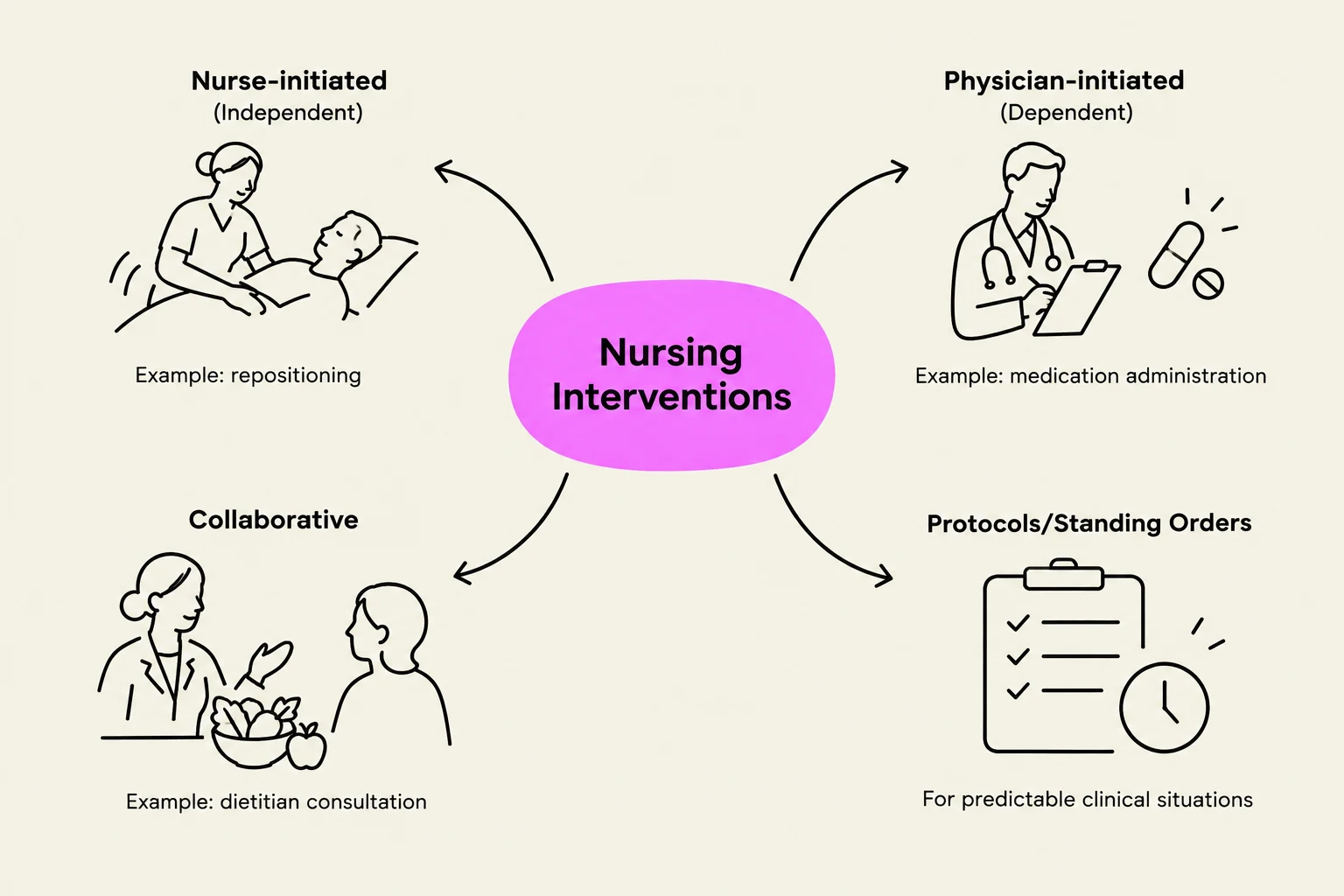
Once a nursing diagnosis has been established, the nurse moves into the planning phase. The primary goals of this stage are to establish priorities, identify expected patient outcomes, select evidence-based interventions, and communicate the plan to the healthcare team.
Establishing Priorities
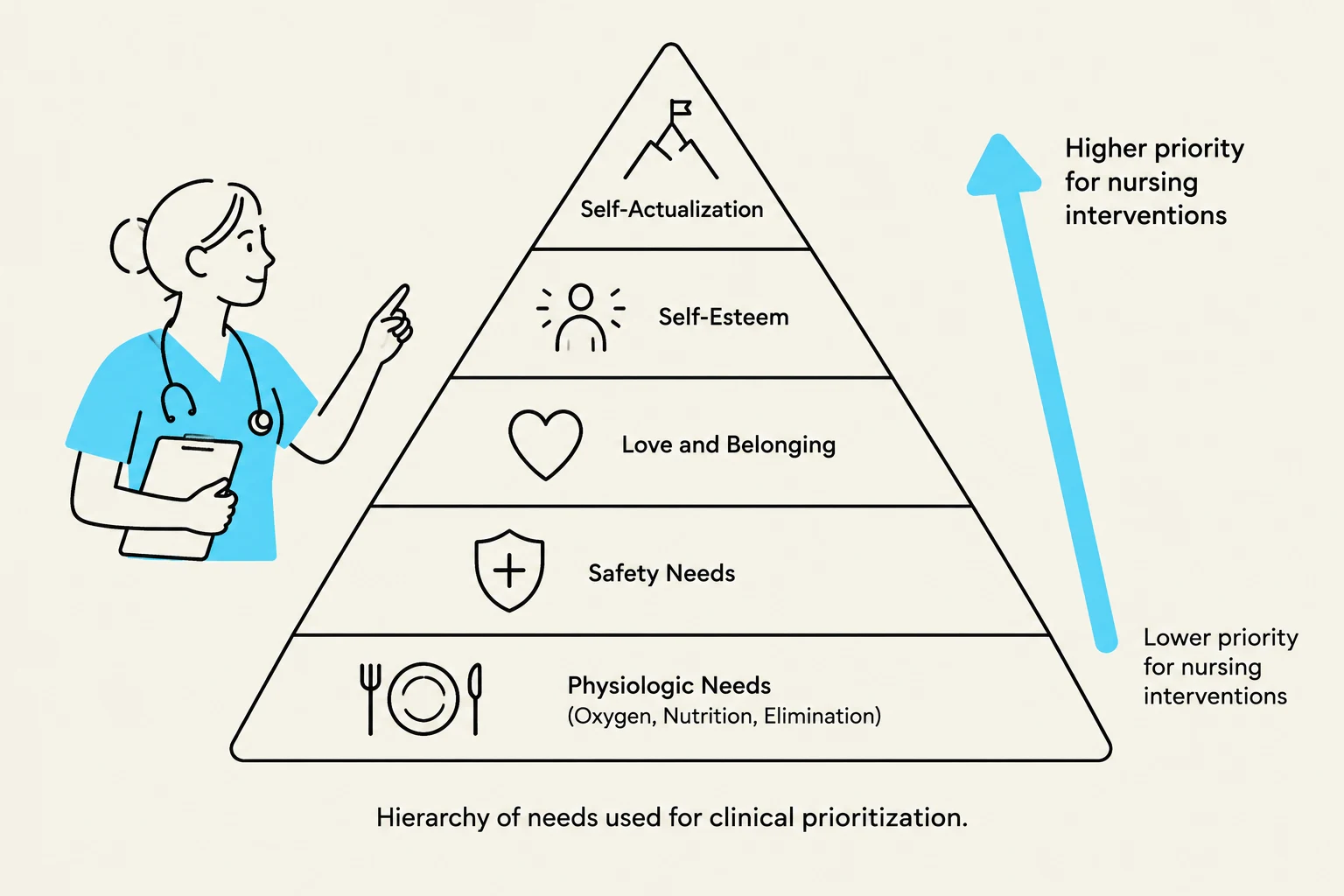
- Physiologic needs (e.g., oxygen, nutrition, elimination)
- Safety needs
- Love and belonging needs
- Self-esteem needs
- Self-actualization needs
In acute clinical settings, nurses frequently apply the ABCs (Airway, Breathing, and Circulation) to prioritize life-threatening issues. For example, a patient experiencing impaired gas exchange is a much higher priority than a patient experiencing a disturbed personal identity. Other factors in prioritization include patient preferences and the anticipation of potential future problems.
Categorizing Outcomes
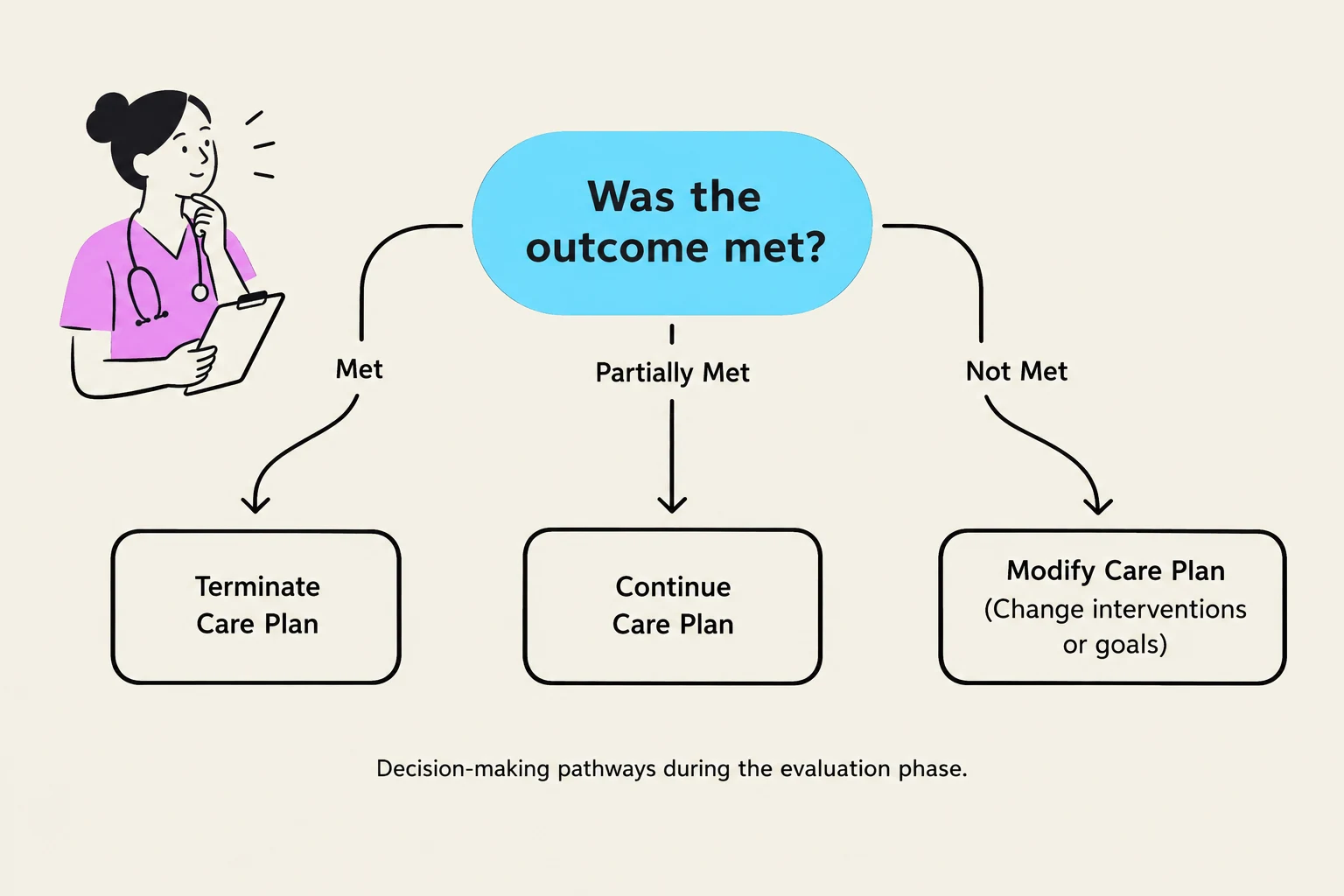
Outcomes are the measurable changes in a patient's status that indicate whether the nursing interventions are working. These are categorized into four distinct types:
Keep reading for free.
Create an account to finish this reading and make it part of your study routine.
Continue reading freeAlready have an account? Log in
Updated