


In the field of nursing, clinical excellence is not just about performing tasks; it is about applying a systematic, organized method of thinking to ensure patient safety and optimal outcomes. This method is known as the Nursing Process, often referred to by the acronym AADPIE. The nursing process is a continuous, cyclical framework that allows nurses to provide individualized, client-centered care. Rather than a linear checklist, it is a dynamic loop: new data collected during one stage can send the nurse back to an earlier stage to revise the entire plan of care.
Assessment: Gathering the Foundation
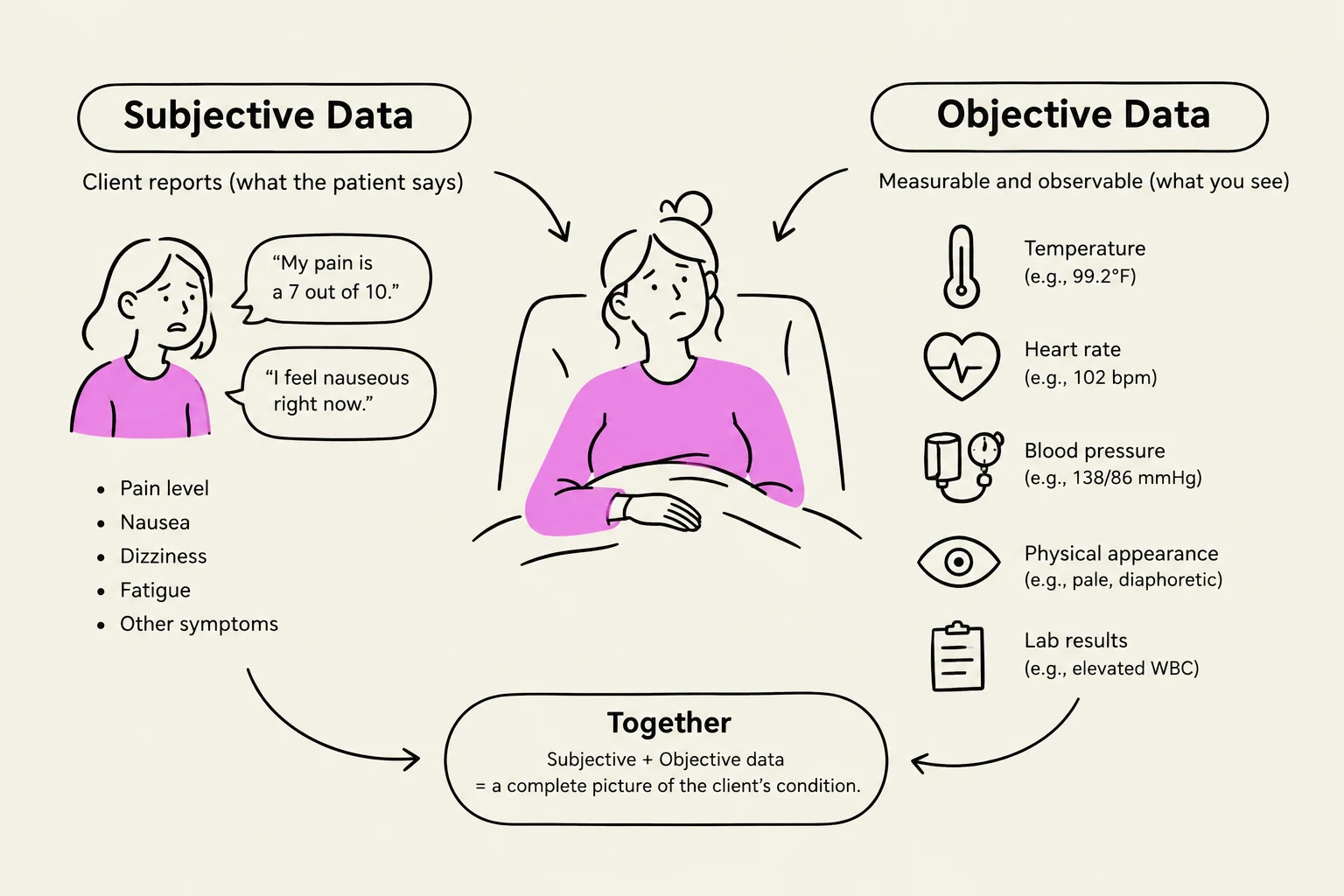
The first step in the cycle is Assessment, which involves collecting a complete and accurate picture of the client. This stage is divided into two critical types of data: Subjective and Objective.
- Subjective Data: This is what the client or a family member reports. It includes feelings, perceptions, and symptoms that cannot be measured by the nurse, such as "I feel dizzy" or "My pain is an 8/10". When documenting subjective data, it is helpful to use quotation marks to capture the client's exact words.
- Objective Data: This is what the nurse observes, measures, or verifies through physical examination or diagnostic tools. Examples include blood pressure readings, a visible rash, or observing a patient sway while standing.
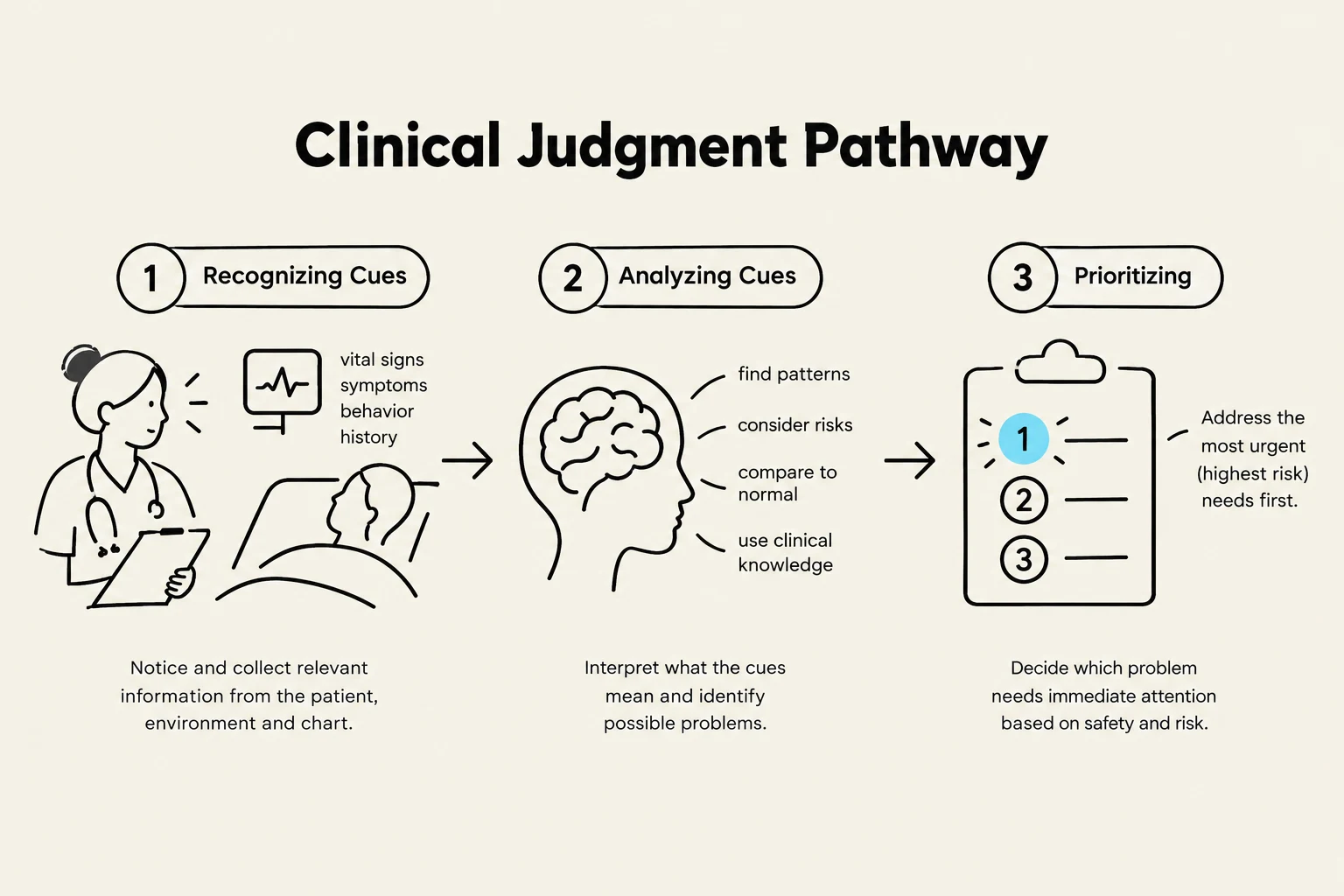
Exam Tip: When a question asks, "What should the nurse do first?", look for assessment opportunities. However, do not delay emergency action (like addressing an airway obstruction) just to collect routine data.
Keep reading for free.
Create an account to finish this reading and make it part of your study routine.
Continue reading freeAlready have an account? Log in
Updated