This content explains the foundational phase of the nursing process: health assessment. It details the sequence of assessment, distinguishes between subjective and objective data, and outlines different types of health assessments. It also emphasizes the importance of clinical judgment and objectivity in nursing practi
The nursing health assessment is the foundational phase of the nursing process, serving as the critical starting point for all subsequent clinical decisions. Rather than being a simple checklist, a high-quality assessment allows a nurse to collect a comprehensive database of information to determine a client's overall level of functioning. By synthesizing various data points, the nurse is able to make professional clinical judgments that guide the entire trajectory of patient care.
The Foundation: The Nursing Process
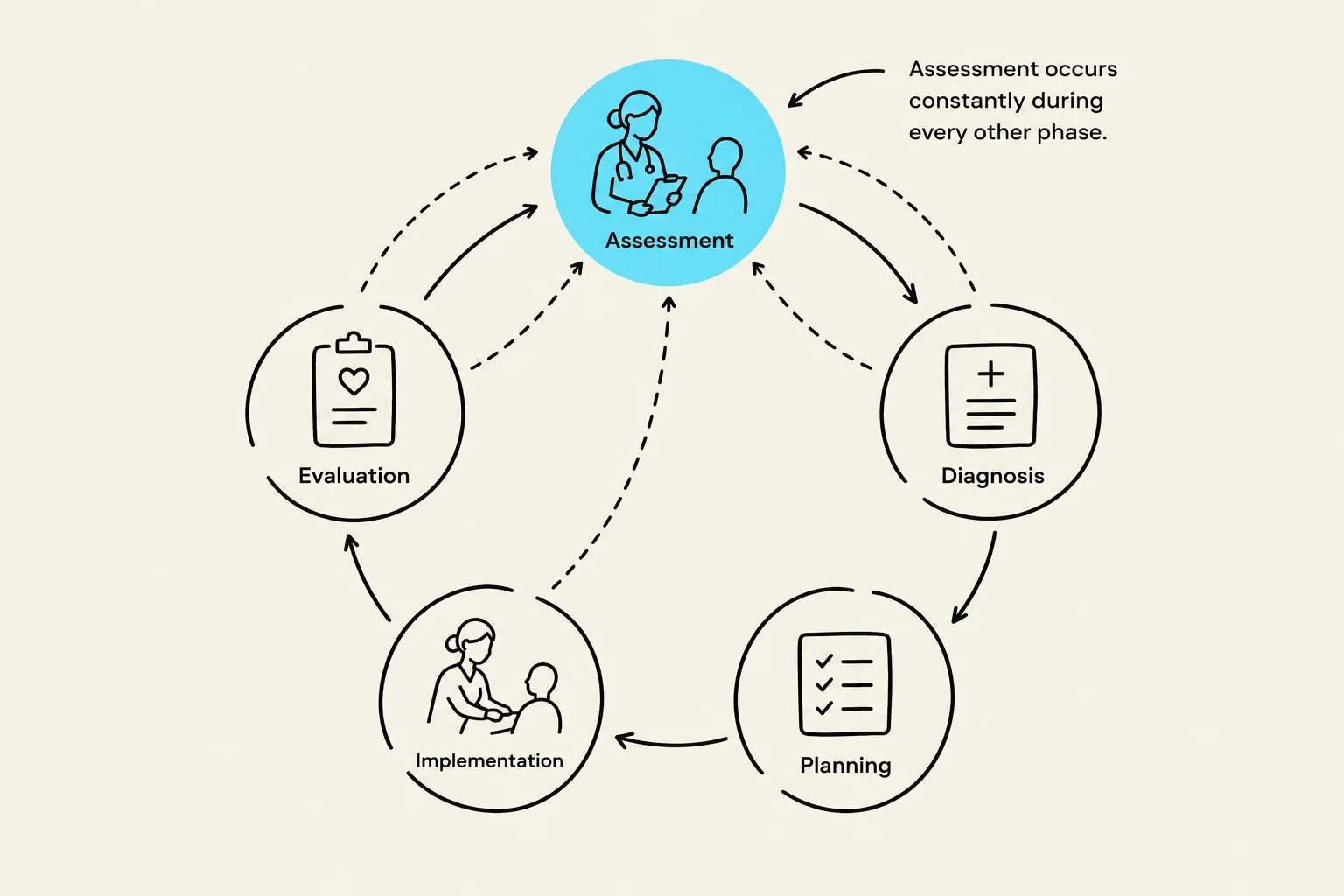
This diagram illustrates the cyclical process of patient care, including assessment, diagnosis, planning, implementation, and evaluation.
It is a common misconception that the nursing process is a linear, one-way street. In practice, the nursing process is circular and continuous. While assessment is the first formal step, nurses are constantly assessing the client throughout every other phase of care.
To perform an effective assessment, the nurse follows a specific sequence:
Review the Medical Record: Before meeting the client, the nurse should review the existing medical record to obtain background information, such as chronic diseases and biographic data.
Collect Subjective Data: Gathering the client's personal perspective.
Collect Objective Data: Performing physical observations and measurements.
Validation: Ensuring the data collected is accurate and consistent.
Documentation: Recording the findings to form the database for the rest of the healthcare team.
Exam Tip: The Sequence Matters
If asked about the steps of the assessment phase, remember the order: Subjective data is collected first, followed by objective data, then validation, and finally documentation.
Data Types: Subjective vs. Objective
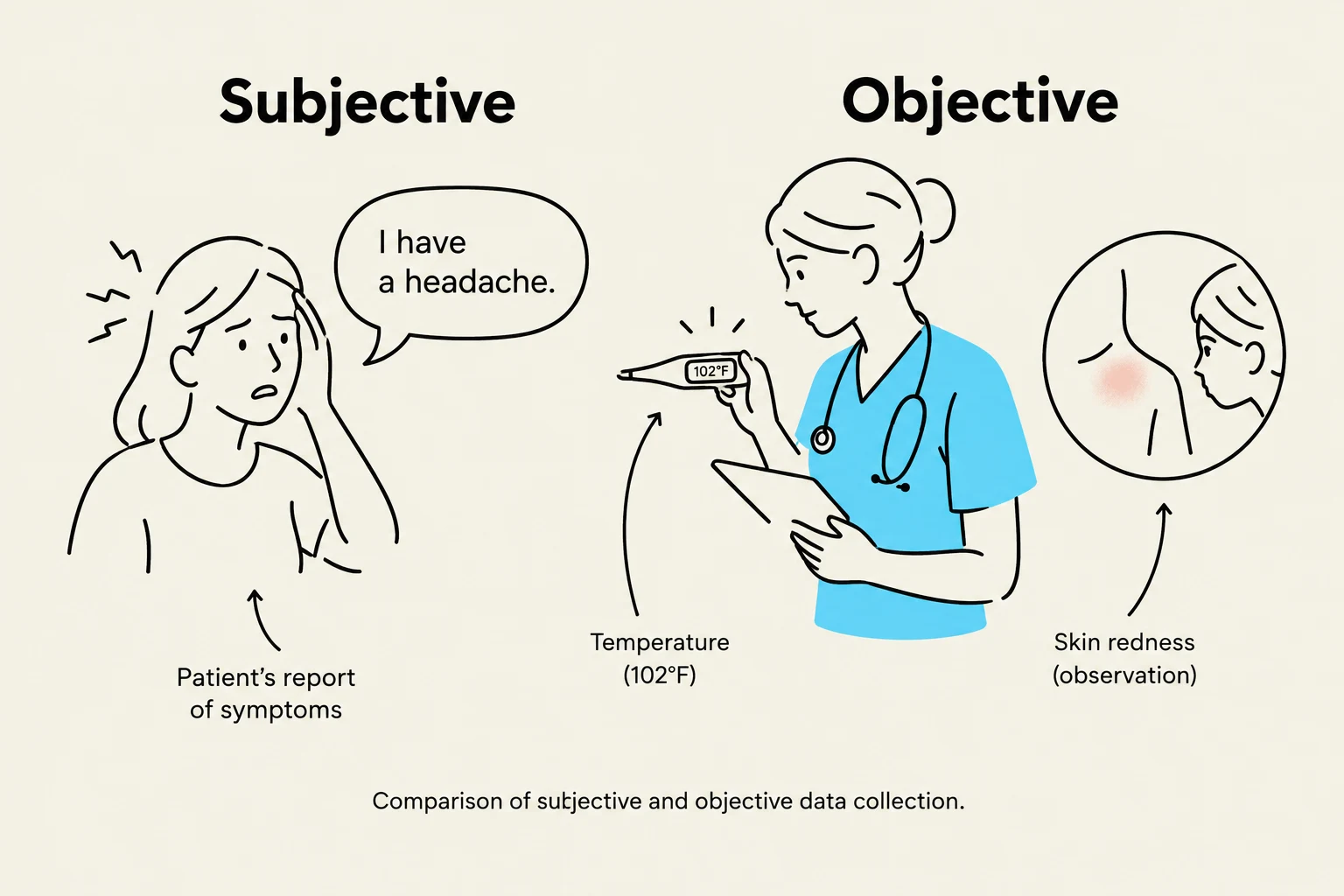
Comparison of subjective and objective data collection in healthcare, illustrating patient-reported symptoms versus observable medical findings like temperature and skin redness.
A core skill for any nurse is distinguishing between what a patient says and what a nurse observes.
Subjective Data
Subjective data consists of information that is elicited and verified only by the client. It includes the client's perceptions, feelings, sensations, beliefs, and personal history.
Examples: "I feel very tired," "My head hurts," or a client's report of their family medical history.
Objective Data
Objective data is observable and measurable information obtained through direct observation or physical examination. This data can also be found in the medical record, such as physician reports or laboratory results.
Physical Examination Techniques: To collect objective data, nurses use four primary techniques:
Inspection: Visual observation of the client.
Palpation: Using touch to assess texture, temperature, or organ location.
Percussion: Tapping body parts to assess underlying structures.
Auscultation: Listening to sounds produced by the body (e.g., heart or lung sounds).
Types of Health Assessments
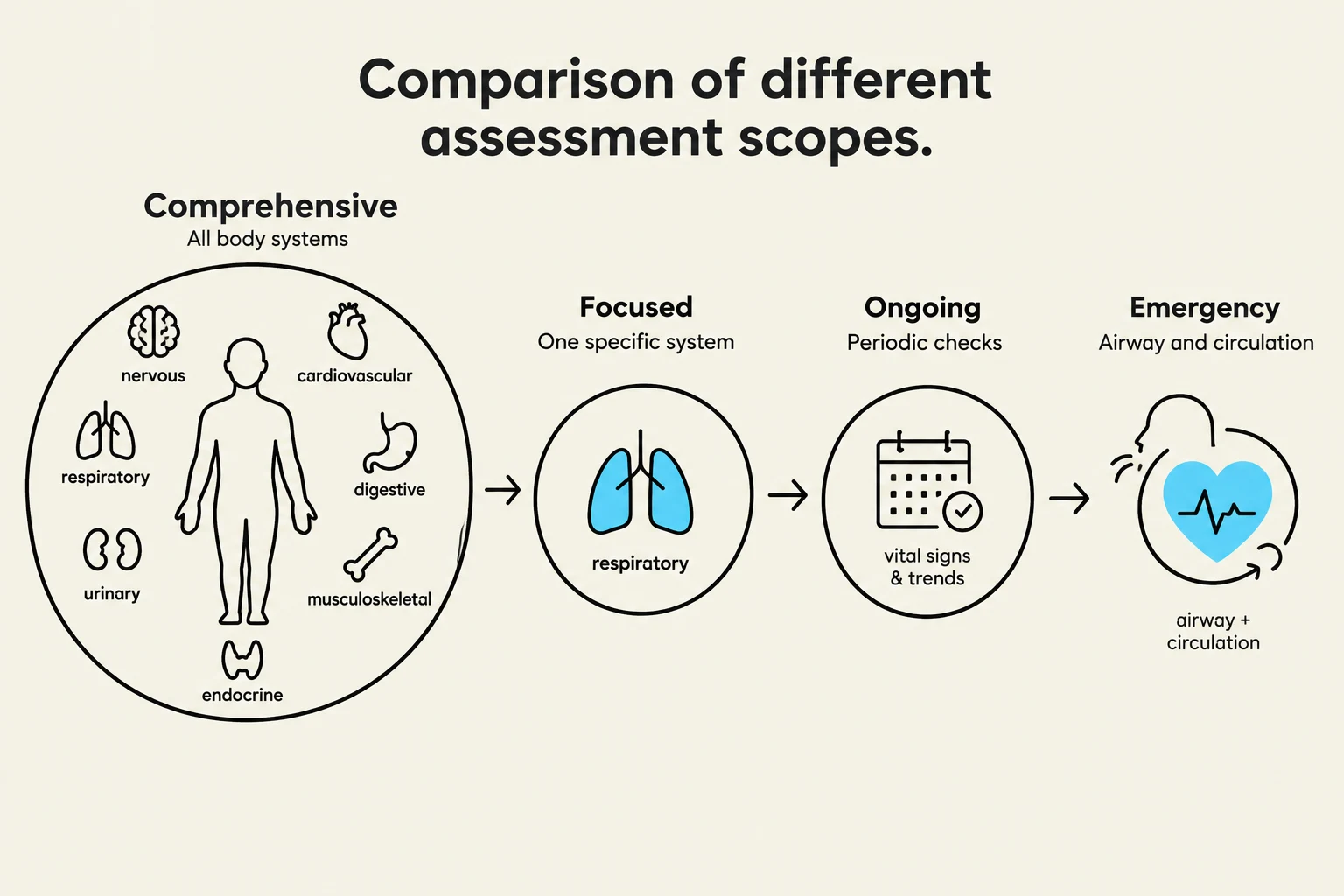
This diagram illustrates different scopes of assessment, ranging from comprehensive body system evaluation to focused, ongoing, and emergency assessments.
Nurses do not use the same approach for every encounter. The scope of the assessment changes based on the client's situation and the clinical setting.
Assessment Type
Scope and Purpose
Comprehensive
A broad, detailed evaluation of all body systems and holistic patterns (physiologic, psychological, sociocultural, developmental, and spiritual). It focuses on how health affects Activities of Daily Living (ADLs).
Focused
A smaller-scope assessment that is more in-depth regarding a specific problem or one or two body systems.
Emergency
A rapid evaluation performed in life-threatening situations to prioritize life-sustaining functions (e.g., airway, breathing, and circulation).
Ongoing (Partial)
A periodic "mini-overview" used to reassess previously detected problems and monitor for changes from the baseline.
Professional Roles and Clinical Judgment
Once the data is collected, the nurse must move from "gathering" to "analyzing." This is where the nurse's professional expertise becomes vital.
Making Clinical Judgments
The ultimate goal of assessment is to make informed clinical judgments. This involves identifying:
Independent Nursing Concerns: Issues that the nurse can manage autonomously, such as hygiene, nutrition, or skin care.
Collaborative Problems: Physiologic complications that require both physician-prescribed and nurse-prescribed interventions, such as monitoring blood glucose levels in a diabetic patient.
Referrals: Identifying when a client needs specialized assistance from other healthcare professionals, such as a diabetes educator.
Maintaining Objectivity
To ensure that clinical judgments are accurate, nurses must engage in self-reflection. This process helps the nurse recognize personal biases or feelings that might lead to premature or inaccurate judgments, ensuring that the care provided remains objective and client-centered.
Keep reading for free.
Create an account to finish this reading and make it part of your study routine.