


For decades, psychologists and scientists have grappled with one of the most fundamental questions in human biology: What makes us who we are? When we look at differences in intelligence—specifically how people perform on intelligence tests—we are forced to confront the "nature-nurture debate". Is our cognitive potential hardwired into our DNA from the moment of conception, or is it a flexible capacity shaped by the world around us?
The Core of the Debate: Nature vs. Nurture
The debate centers on the relative contributions of two distinct forces: genetics and environment.
- Nature (Genetics/Heredity): This refers to the biological instructions passed down from parents to offspring. It suggests that intelligence is a trait determined by our genetic makeup.
- Nurture (Environment/Experience): This refers to the external influences that shape an individual. This includes everything from the quality of schooling and nutrition to the emotional support and social experiences a person encounters throughout their life.
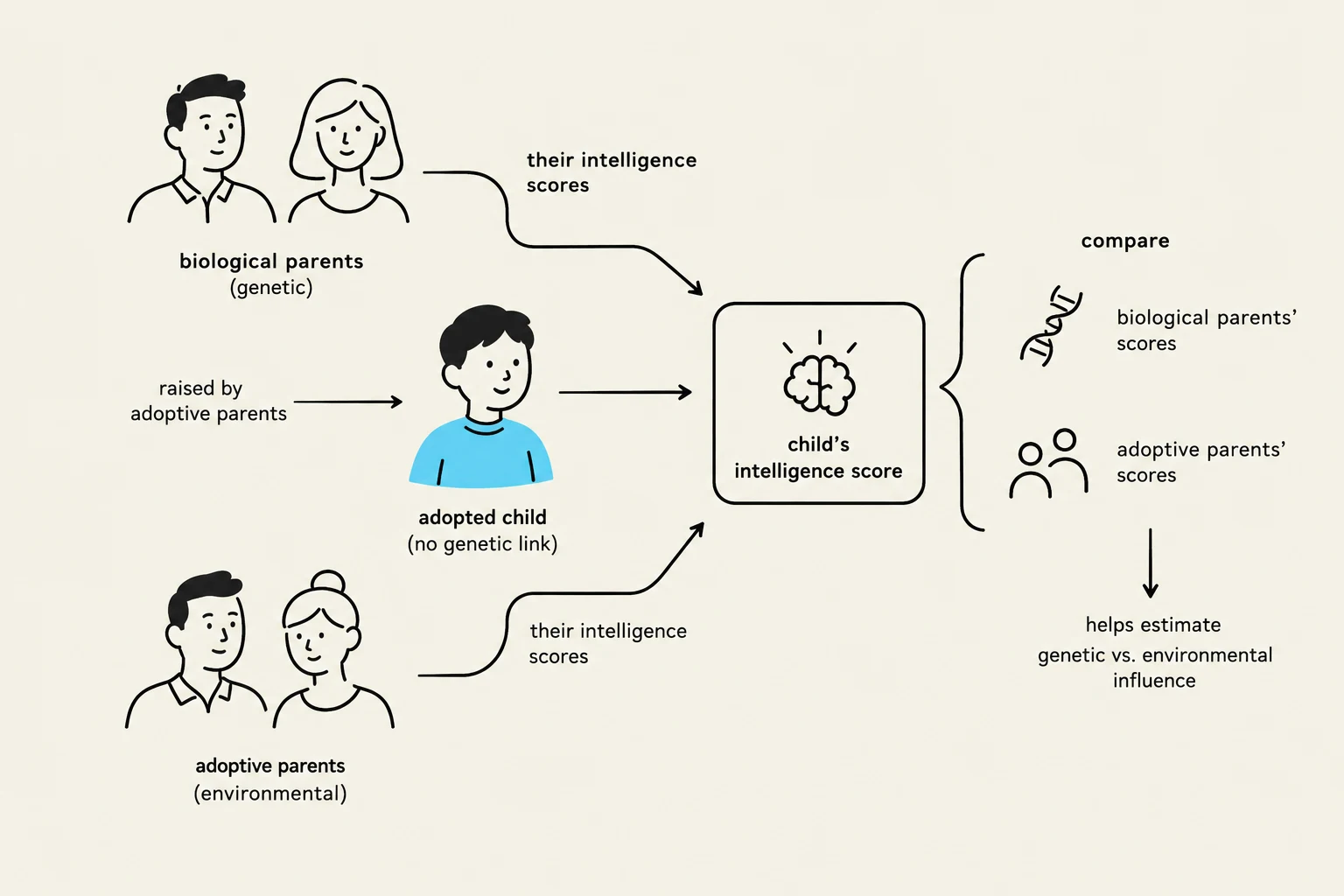
To understand intelligence-test performance, researchers don't just look at individuals in isolation; they look at how intelligence correlates across different groups to see which force—nature or nurture—has a stronger pull.
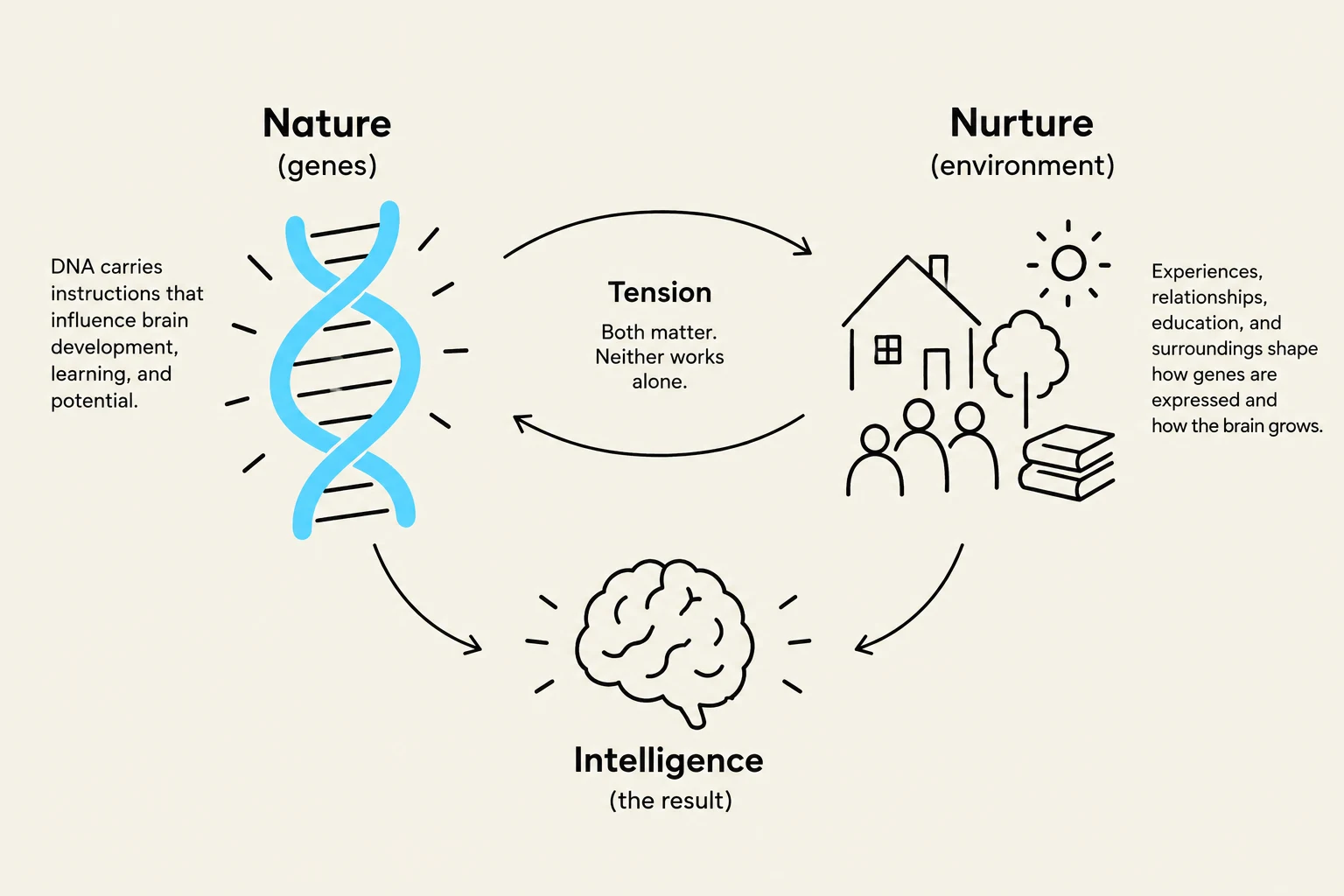
Exam Tip: When you see "nurture" in a psychology question, immediately think of "environment" or "experience." When you see "nature," think "genetics" or "heredity."
Investigating Heredity through Twin Studies
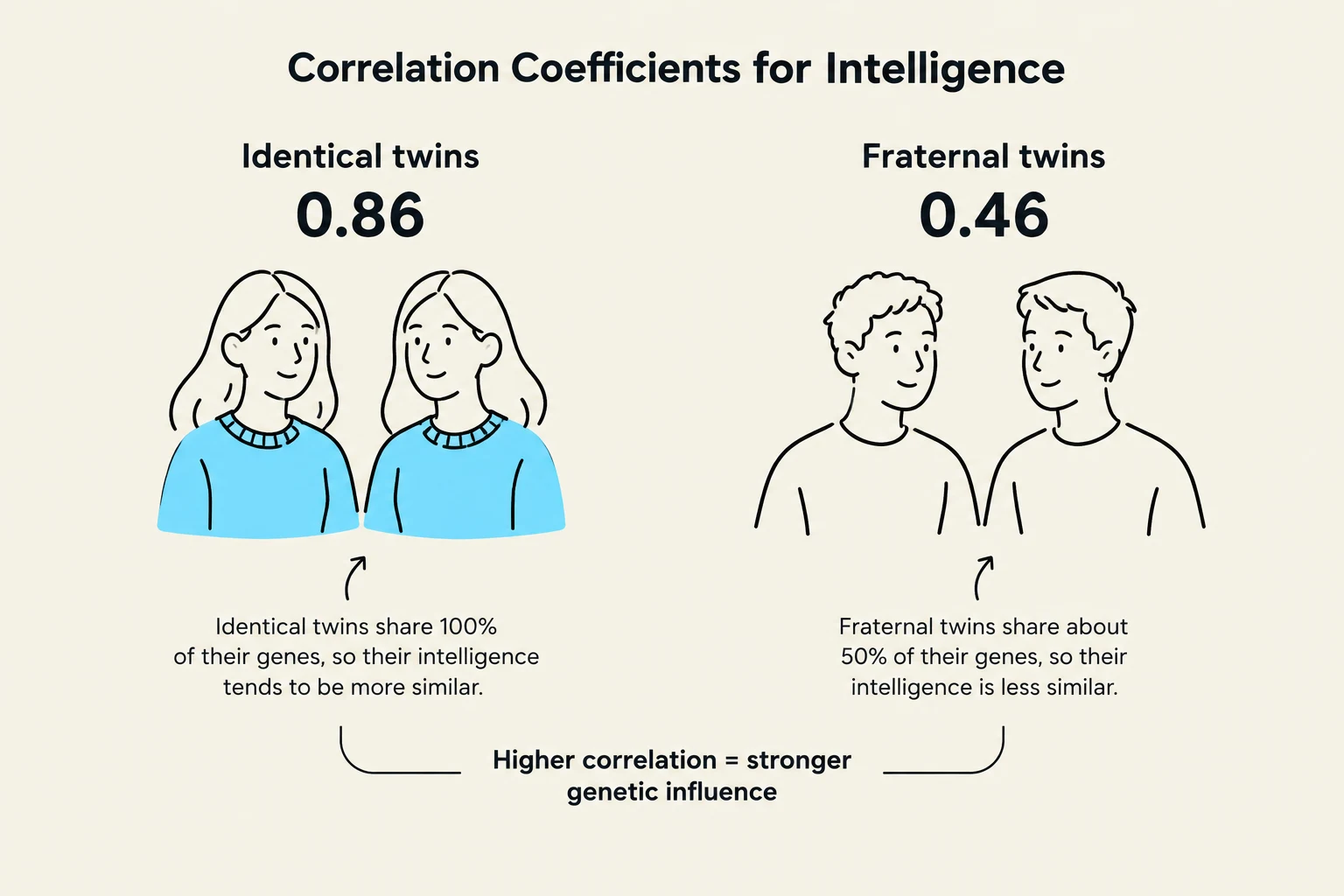
One of the most effective ways to untangle the influence of genetics from the influence of environment is through twin studies. Because twins share different amounts of genetic material, they provide a "natural experiment" for researchers.
Keep reading for free.
Create an account to finish this reading and make it part of your study routine.
Continue reading freeAlready have an account? Log in
Updated