


In the world of microbiology, precision is a matter of survival. For a bacterium like Escherichia coli, the ability to divide accurately depends on knowing exactly where the "middle" is. If a cell divides at the wrong location—such as near the poles—it can result in asymmetric daughter cells, one of which may be too small to survive. To prevent this, bacteria utilize a sophisticated spatial regulation mechanism known as the Min system. This system uses a trio of proteins to create a dynamic, oscillating gradient that ensures the division machinery is restricted to the cell center.
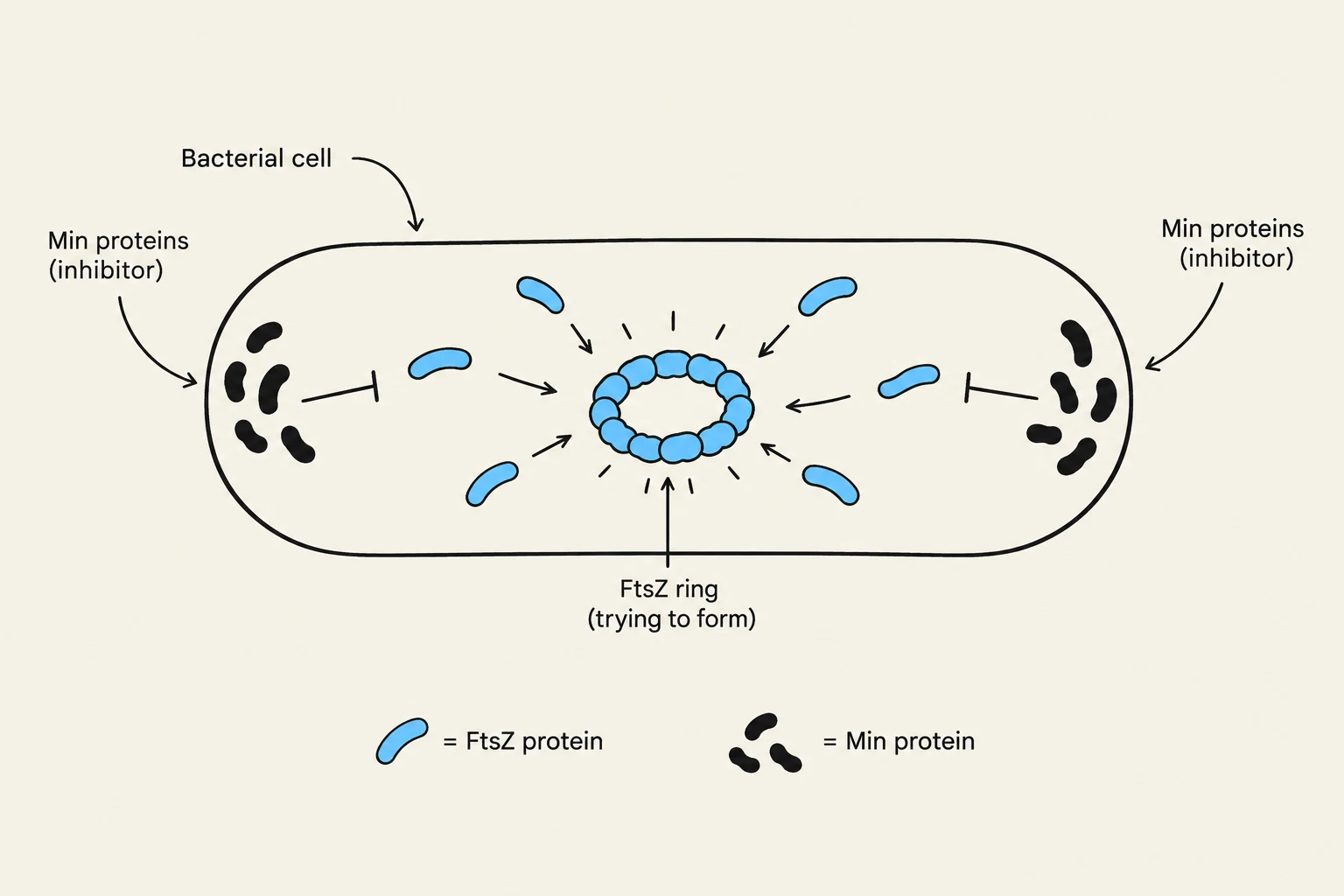
The Goal: Inhibiting FtsZ at the Poles
To understand the Min system, we must first understand what it is trying to control: FtsZ. FtsZ is a tubulin-like protein that is essential for bacterial cytokinesis. It polymerizes to form a structure called the Z-ring at the site of division.
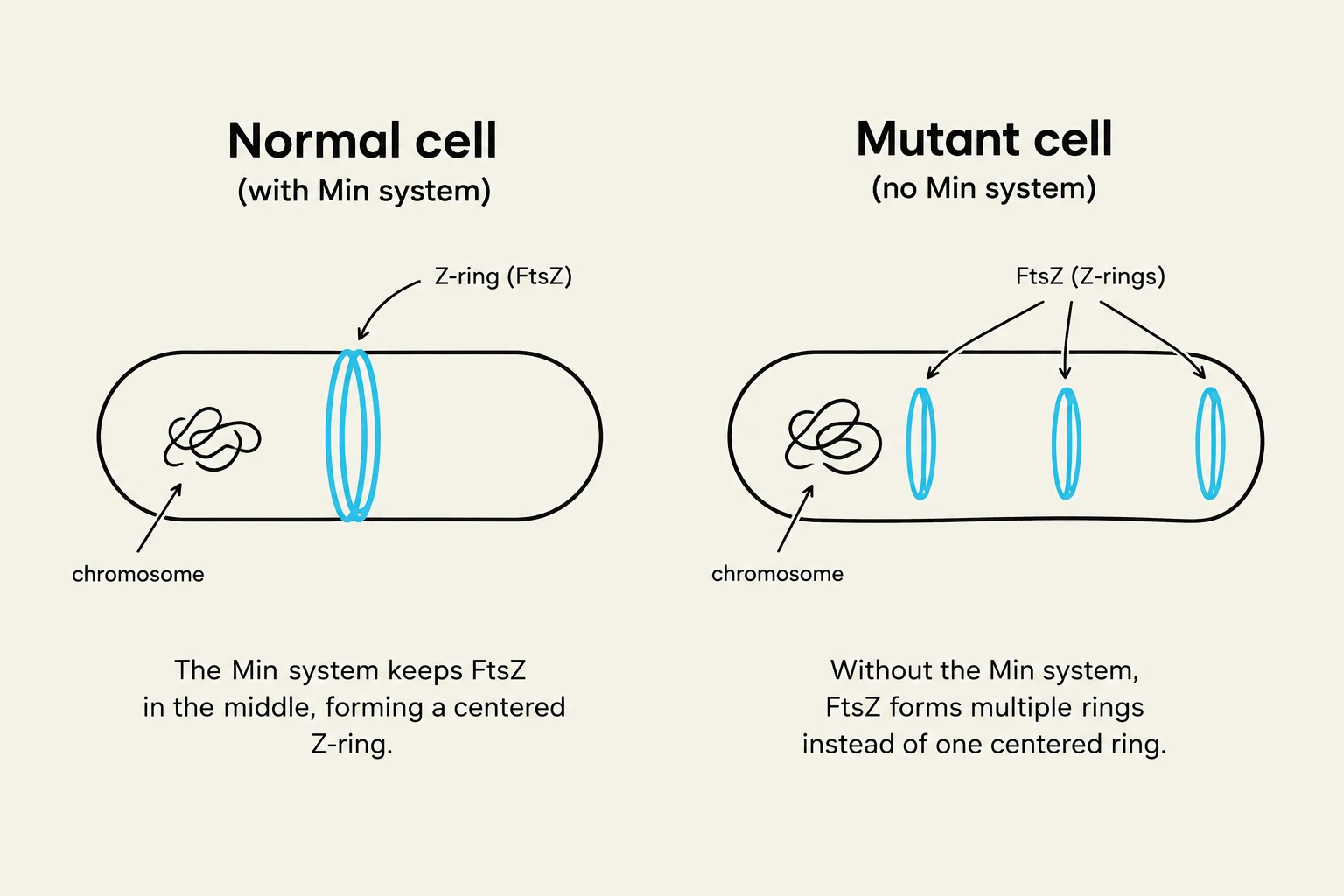
If FtsZ were allowed to polymerize anywhere, the Z-ring might form at the poles of the cell. To prevent this, the cell employs the Min system to act as a "spatial inhibitor." The primary job of the Min system is to prevent FtsZ from assembling at the cell poles, thereby forcing the Z-ring to form only at the geometric center where the concentration of Min proteins is lowest.
The Players: MinC, MinD, and MinE
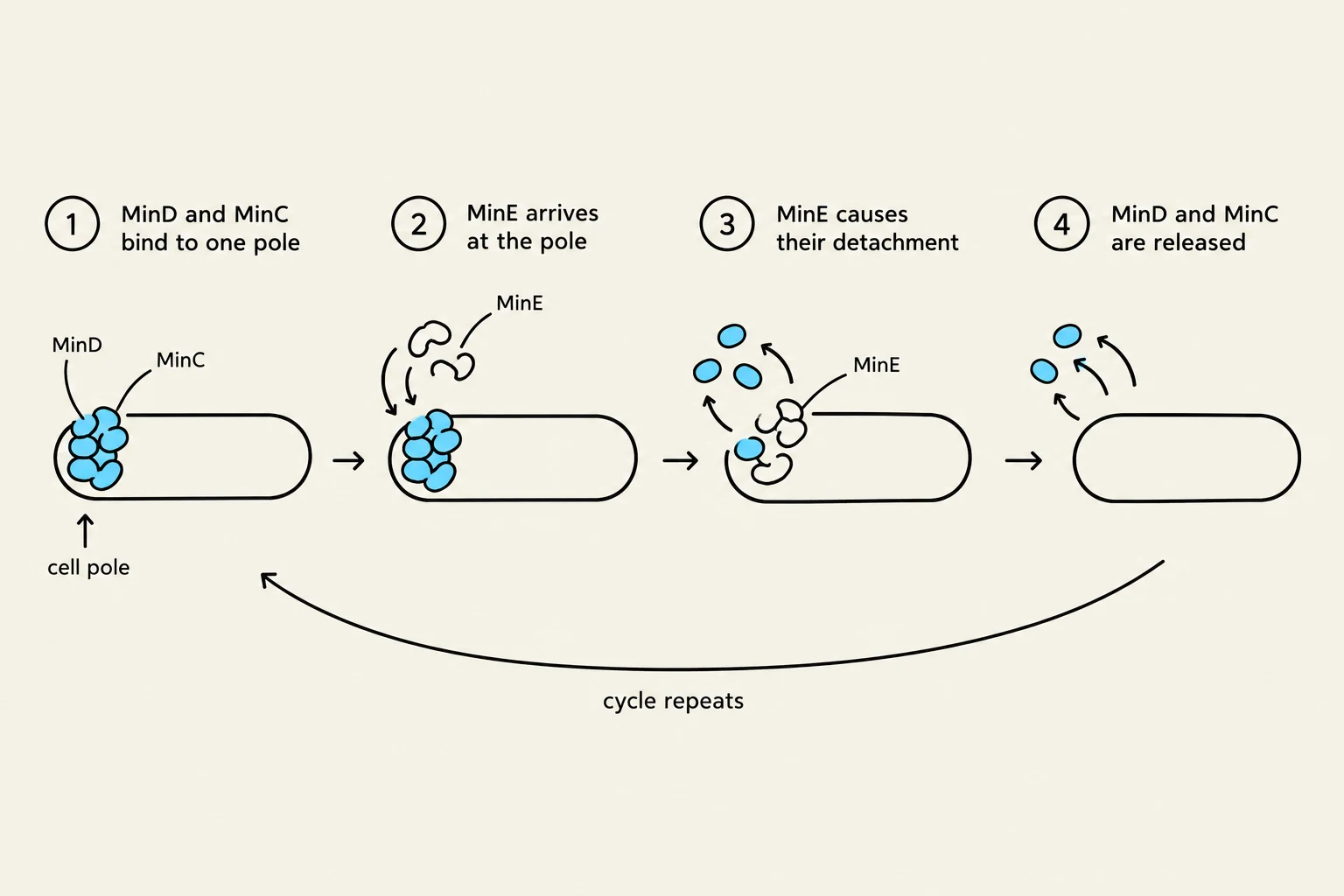
The Min system relies on the coordinated interaction of three specific proteins: MinC, MinD, and MinE.
Keep reading for free.
Create an account to finish this reading and make it part of your study routine.
Continue reading freeAlready have an account? Log in
Updated