


The Mediterranean Sea has become the world’s deadliest migration route, a maritime graveyard where thousands of individuals risk their lives to reach the European Union. While migration across these waters has occurred for decades, recent years have seen unprecedented surges driven by systemic instability, war, and human rights abuses in countries of origin. This article analyzes the drivers of this crisis, the vulnerability of specific populations, and the complexities of the European Union's policy responses.
The Drivers of Displacement: Why People Flee
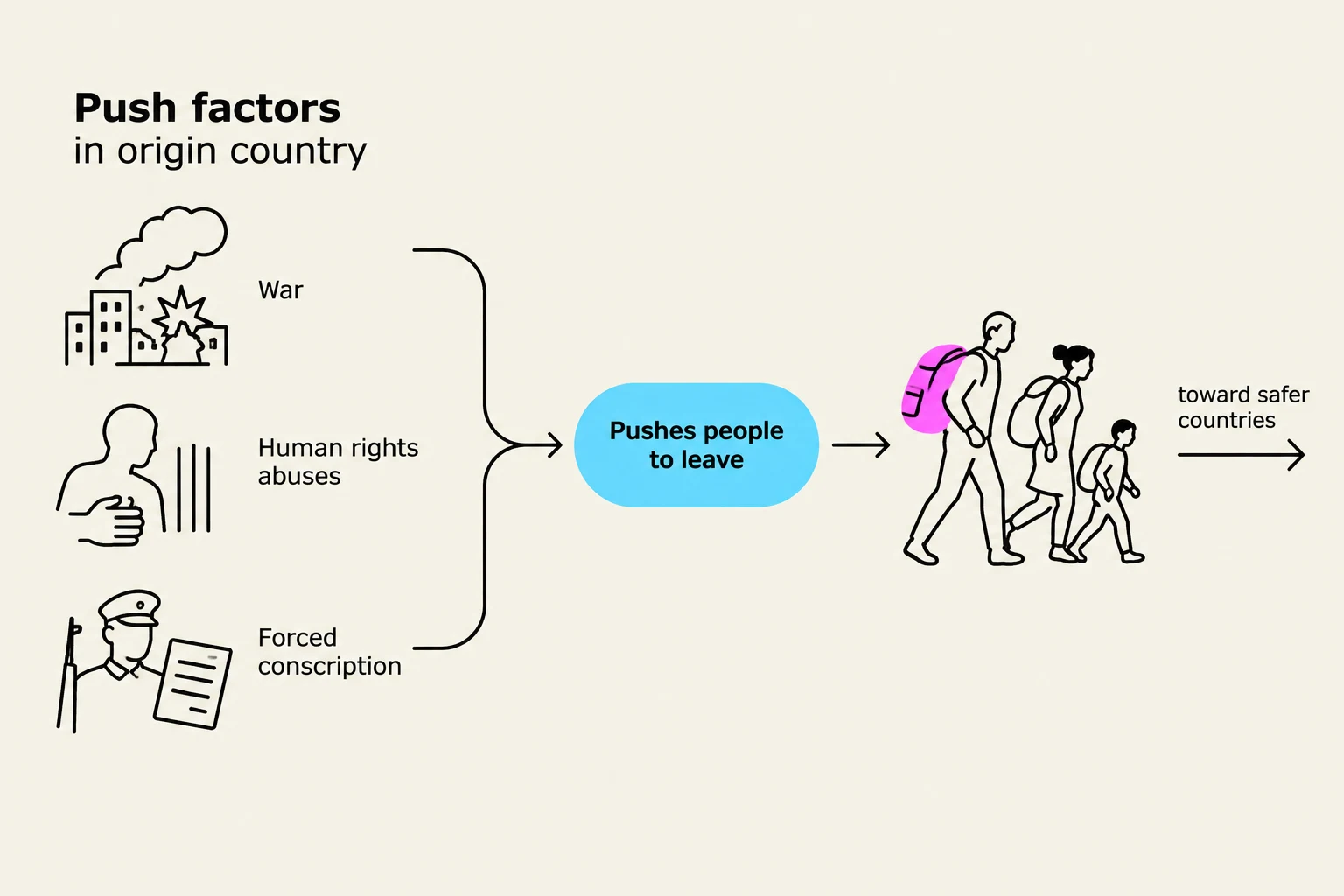
The Mediterranean migration crisis is not merely a matter of "irregular migration" or economic movement; it is deeply rooted in profound humanitarian crises. For many, the journey is a desperate attempt to escape forced displacement and systematic violence.
Data from the first five months of 2015 indicated that approximately 60 percent of those making the sea crossing originated from Syria, Somalia, and Afghanistan—nations characterized by war and generalized violence. Other significant flows come from Eritrea, driven by repressive governance and indefinite military conscription, and Libya, where political turmoil and lawlessness create a climate of extreme insecurity.
Regional Case Studies in Instability
- Syria: The conflict has created what the UNHCR calls "the biggest humanitarian emergency of our era". Civilians face indiscriminate attacks, arbitrary arrests, and the use of child soldiers by both government and non-state actors.
- Afghanistan: Increasing pressure from the Taliban and other insurgents has led to a rise in civilian casualties and kidnappings. Many flee to avoid forced recruitment or to escape the pervasive threat of suicide bombings.
- Eritrea: The primary driver of flight is the "indefinite" national service, which many describe as a form of forced labor or even slavery.
- Libya: Following the 2011 uprising, the collapse of central authority has left migrants vulnerable to extortion, kidnapping, and torture in unregulated detention centers.
Keep reading for free.
Create an account to finish this reading and make it part of your study routine.
Continue reading freeAlready have an account? Log in
Updated