


While the cardiovascular system is often the primary focus of circulatory studies, the lymphatic system serves as an equally vital "secondary" circulatory loop. Its primary mission is to maintain fluid homeostasis and provide a dedicated pathway for immune surveillance. Unlike the heart, which acts as a centralized pump for blood, the lymphatic system is a one-way drainage network that collects excess interstitial fluid and returns it to the venous circulation.
The Starting Point: Interstitial Fluid and Afferent Vessels
The process begins at the microscopic level within the tissues. As blood circulates through capillaries, high hydrostatic pressure forces plasma out of the blood vessels and into the spaces between cells. This fluid, now known as interstitial fluid, bathes the cells, delivering nutrients and removing metabolic waste.
If this fluid were not removed, tissues would swell rapidly (a condition known as edema). To prevent this, lymphatic capillaries—which are highly permeable, blind-ended tubes—collect the excess fluid. Once the fluid enters these lymphatic capillaries, it is officially termed lymph.
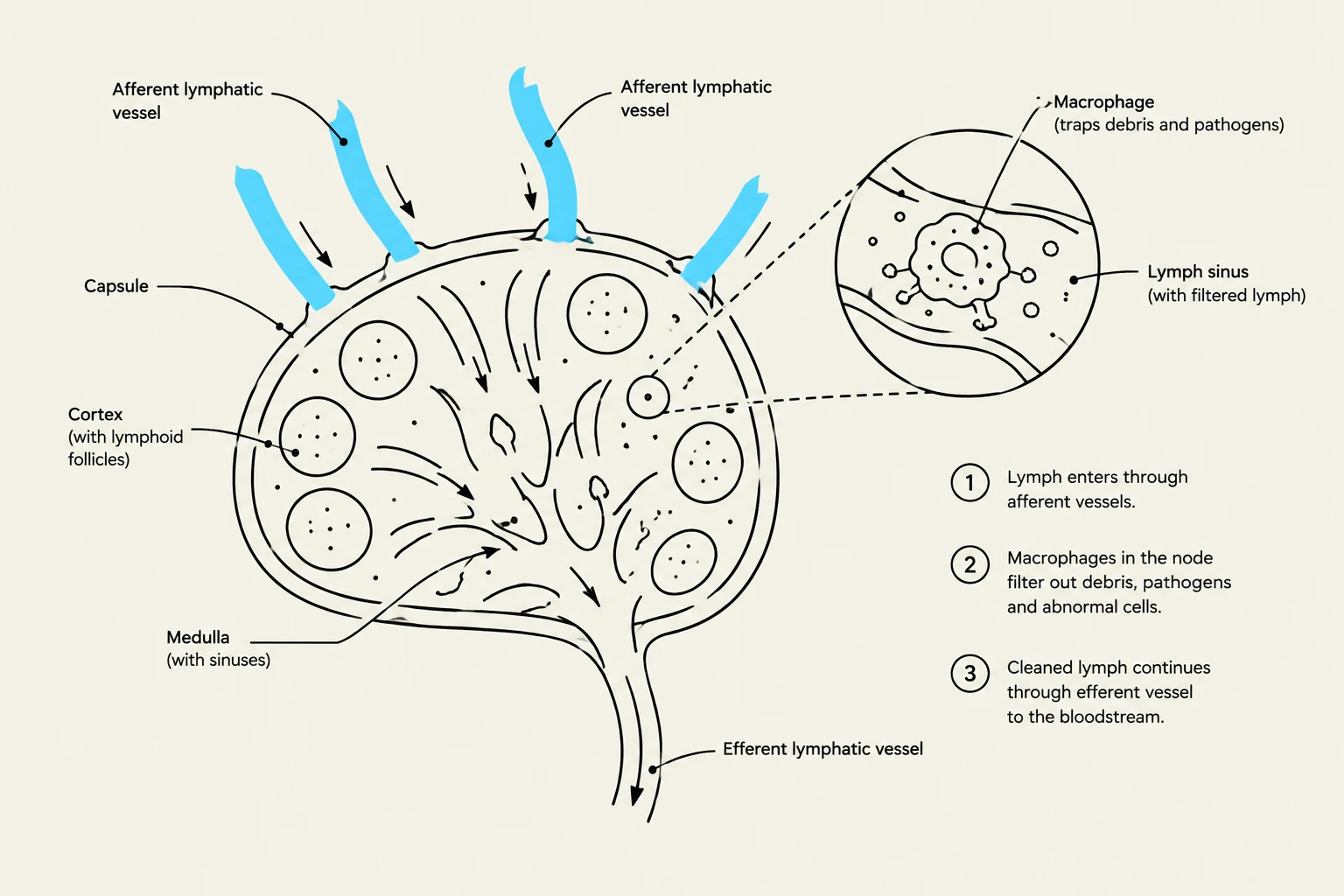
The movement of lymph begins through afferent lymphatic vessels. These vessels act as the "inbound" lanes of the system, carrying lymph from the peripheral tissues toward the lymph nodes.
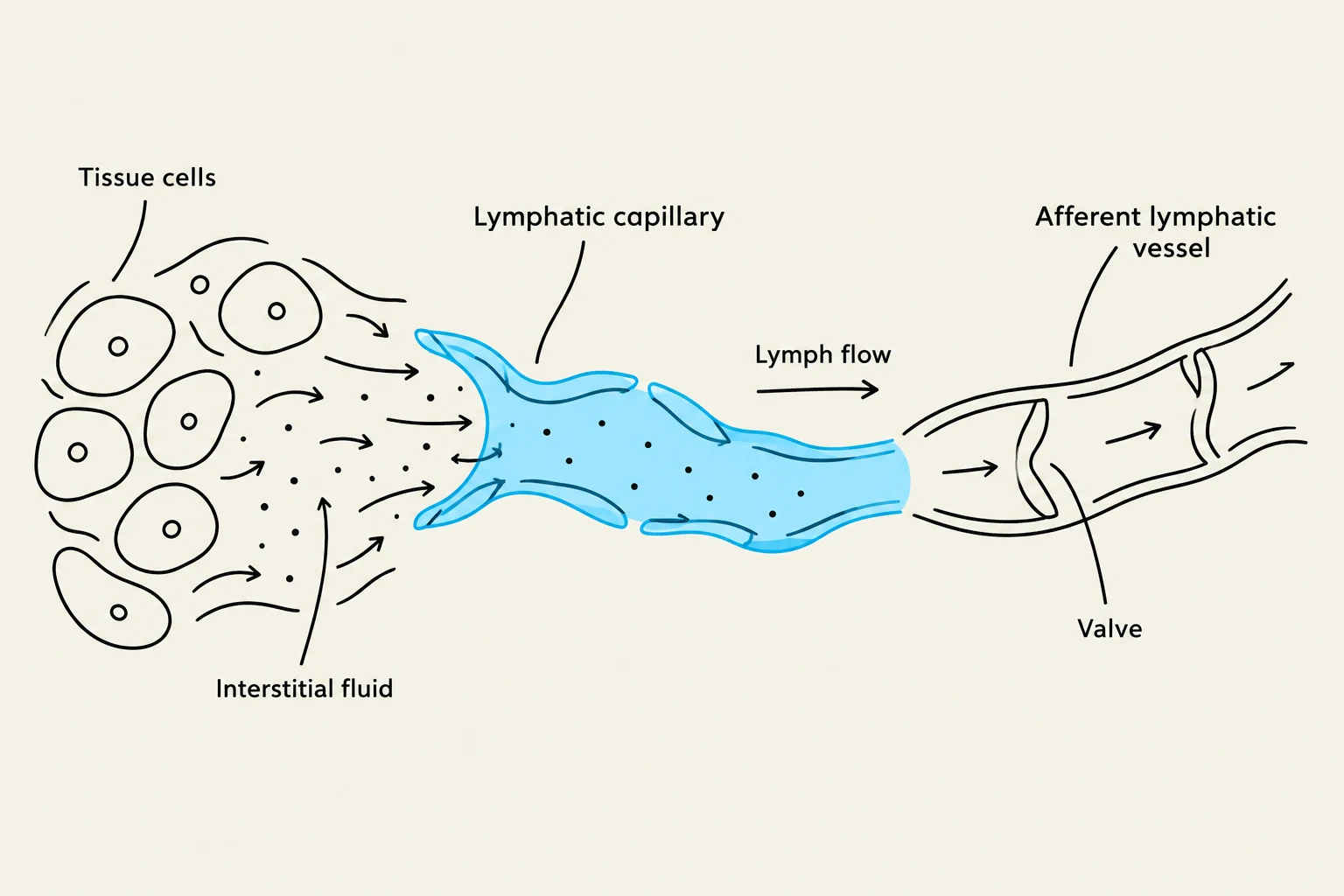
Exam Tip: Remember that lymphatic capillaries are "blind-ended." Unlike blood capillaries, which form a continuous loop, lymphatic capillaries start abruptly in the tissue, ensuring they can pick up fluid from any direction.
Keep reading for free.
Create an account to finish this reading and make it part of your study routine.
Continue reading freeAlready have an account? Log in
Updated