


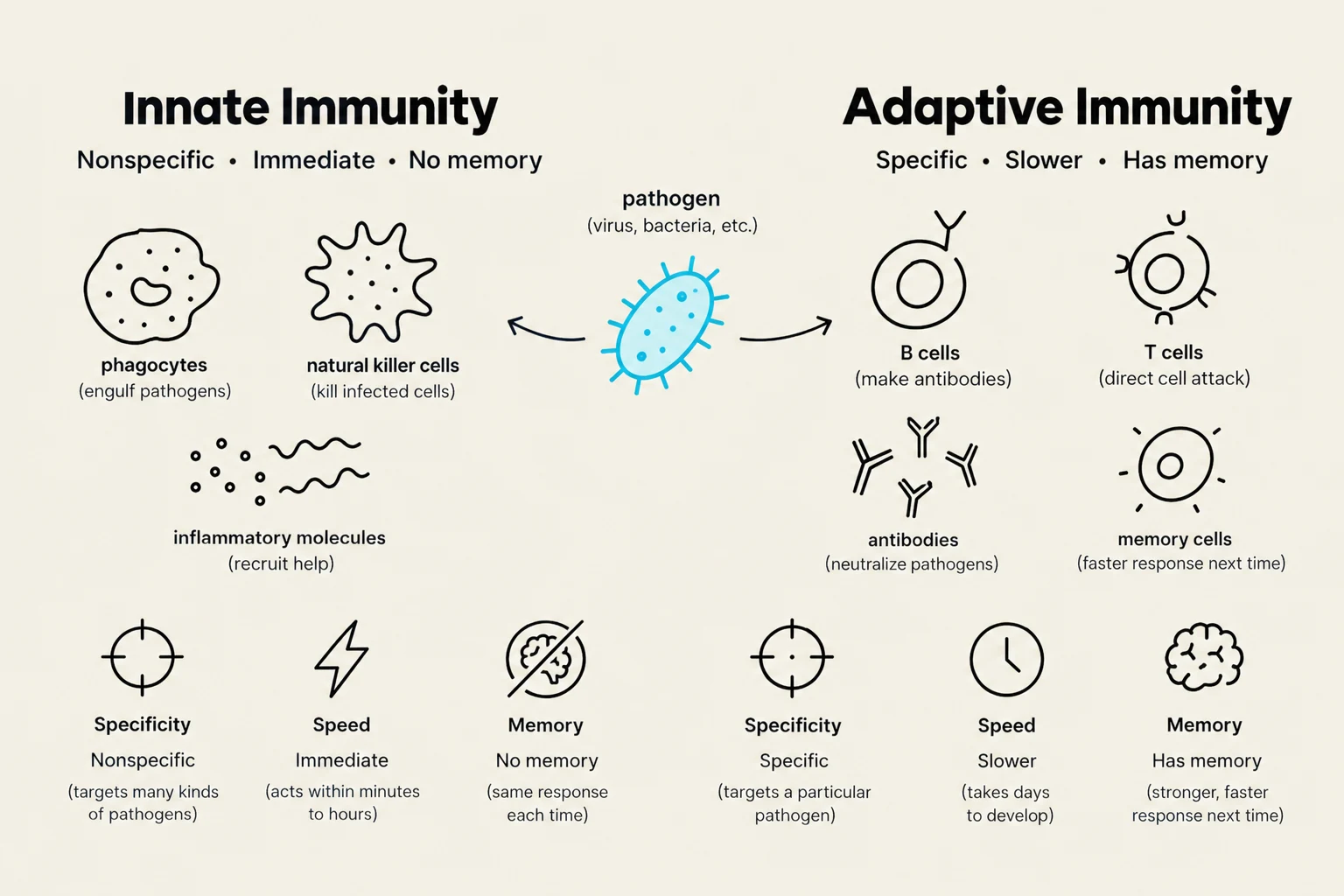
The human body is a complex ecosystem, harboring at least ten times as many bacterial cells as human cells. While many of these microbes are beneficial, others are pathogens—agents such as viruses, bacteria, and fungi capable of producing disease. To combat these threats, the body relies on a sophisticated immune system, which is particularly concentrated within the lymphatic system. This system consists of a network of organs and vessels that recover fluid, inspect it for disease agents, and activate protective immune responses.
Lymphatic Tissues and Specialized Cells
Lymphatic tissue is not a single solid structure but rather an aggregation of lymphocytes scattered throughout the connective tissues of various organs and mucous membranes. This tissue can take several forms depending on its density and location.
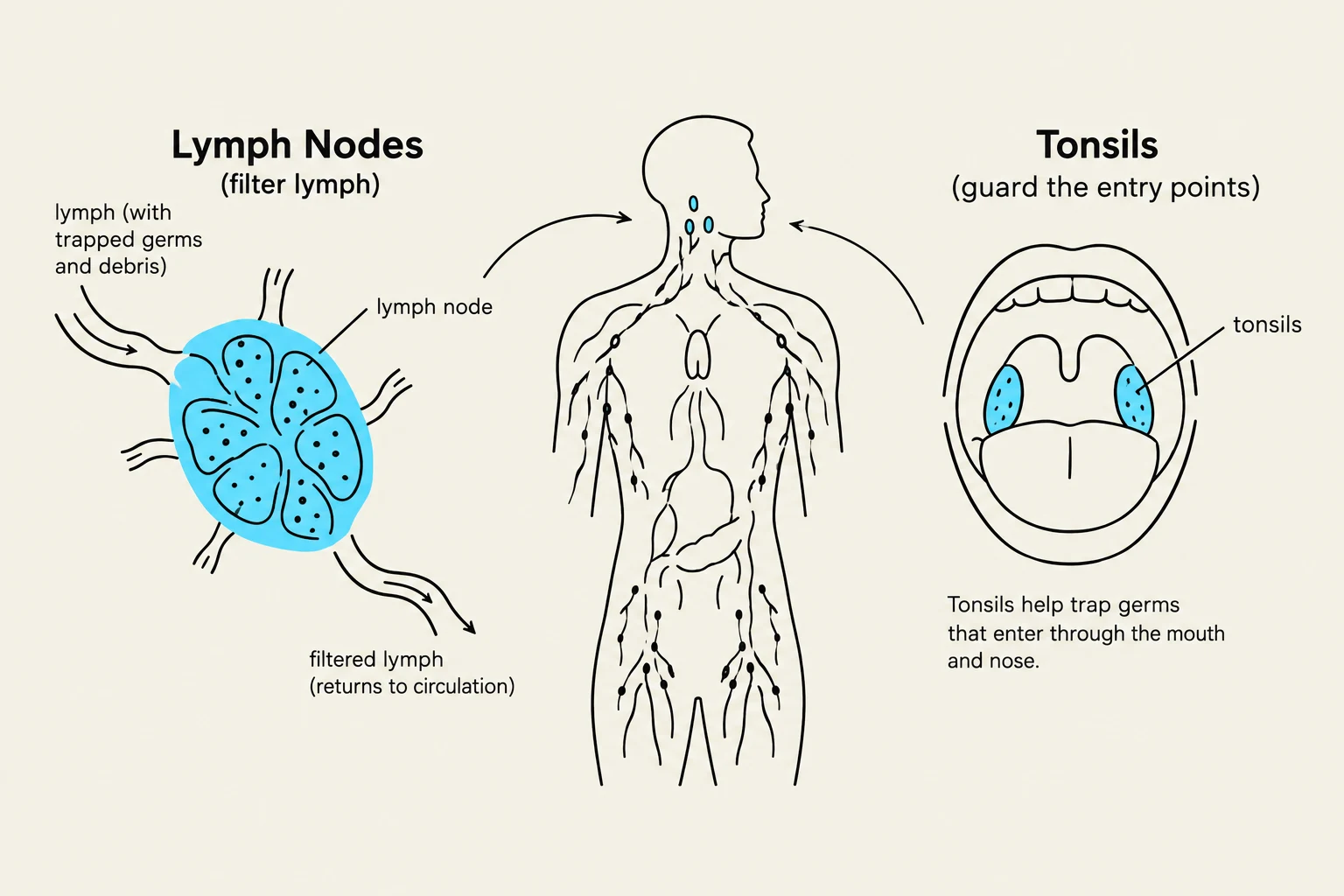
The simplest form is diffuse lymphatic tissue, where lymphocytes are scattered rather than clustered. This is particularly prevalent in body passages open to the exterior, such as the respiratory, digestive, urinary, and reproductive tracts. A key component of this is Mucosa-associated lymphatic tissue (MALT), which protects these vulnerable entry points. In contrast, lymphatic nodules (or follicles) are dense, organized masses of lymphocytes and macrophages that congregate specifically in response to pathogens. These nodules are a constant feature of the tonsils, lymph nodes, and the appendix.
Within these tissues, several specialized cells perform critical roles in defense:
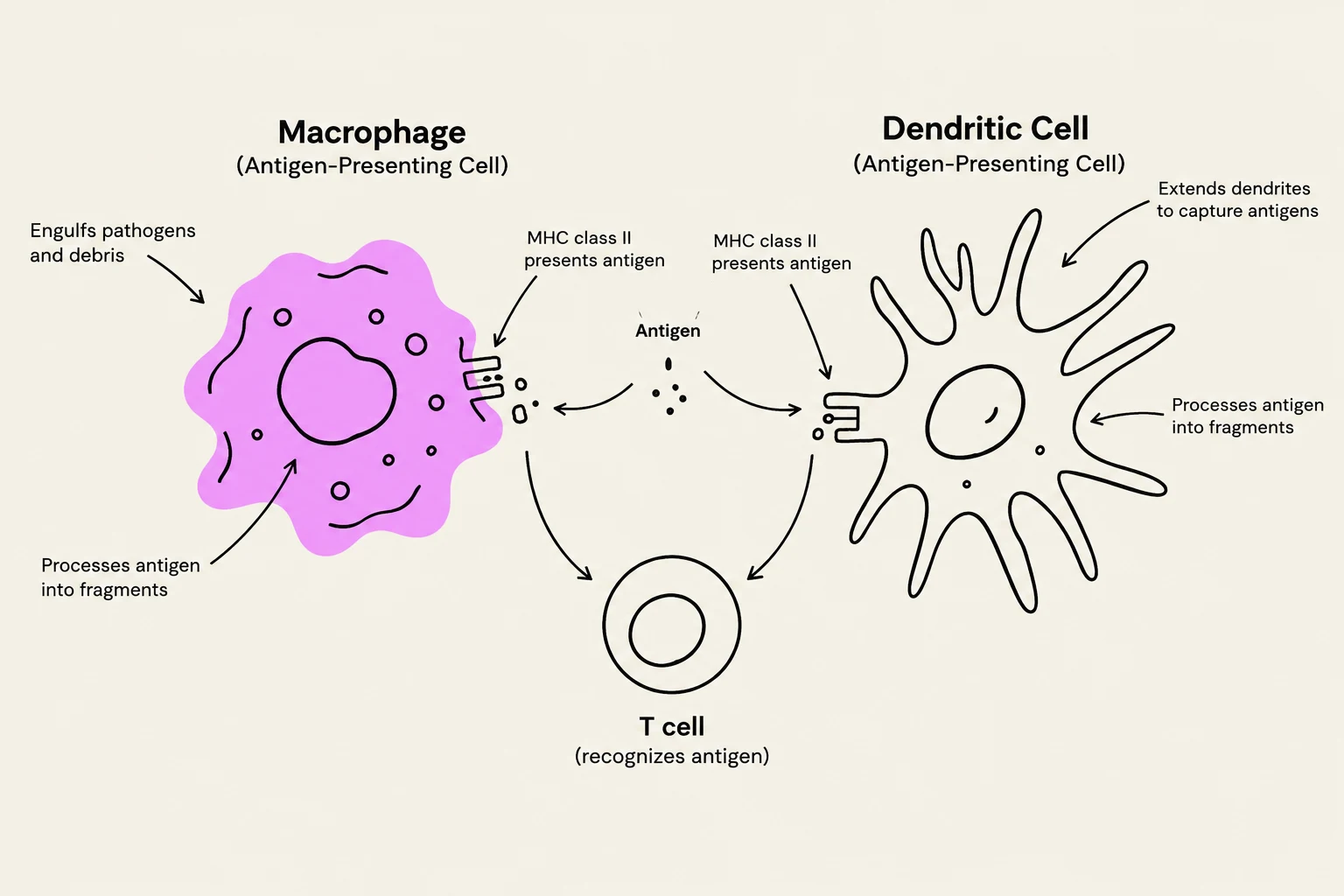
- Macrophages: These are large, avidly phagocytic cells derived from monocytes. They engulf tissue debris, dead neutrophils, and bacteria. Crucially, they function as antigen-presenting cells (APCs) by processing foreign matter and displaying antigenic fragments to T cells, effectively alerting the immune system to an invasion.
- Dendritic cells: These are branched, mobile APCs found in the epidermis, mucous membranes, and lymphatic organs. They act as sentinels, alerting the immune system to pathogens that have breached the body's surface.
- Reticular cells: Unlike the mobile immune cells, reticular cells are branched, stationary cells that form the structural stroma (the internal framework) of a lymphatic organ.
Keep reading for free.
Create an account to finish this reading and make it part of your study routine.
Continue reading freeAlready have an account? Log in
Updated