An explanation of the light-dependent reactions of photosynthesis, detailing the roles of photosystems, the electron transport chain, photolysis, and the synthesis of ATP and NADPH.
Photosynthesis is the fundamental process by which plants convert solar energy into chemical energy. This process is divided into two main stages: the light-independent reactions (the Calvin Cycle), which produce sugar, and the light-dependent reactions. The light-dependent reactions take place within the thylakoid membranes of the chloroplast. The primary goal of this stage is to capture solar energy and transfer it into two high-energy molecules: ATP and NADPH.
The Role of Photosystems and Photolysis
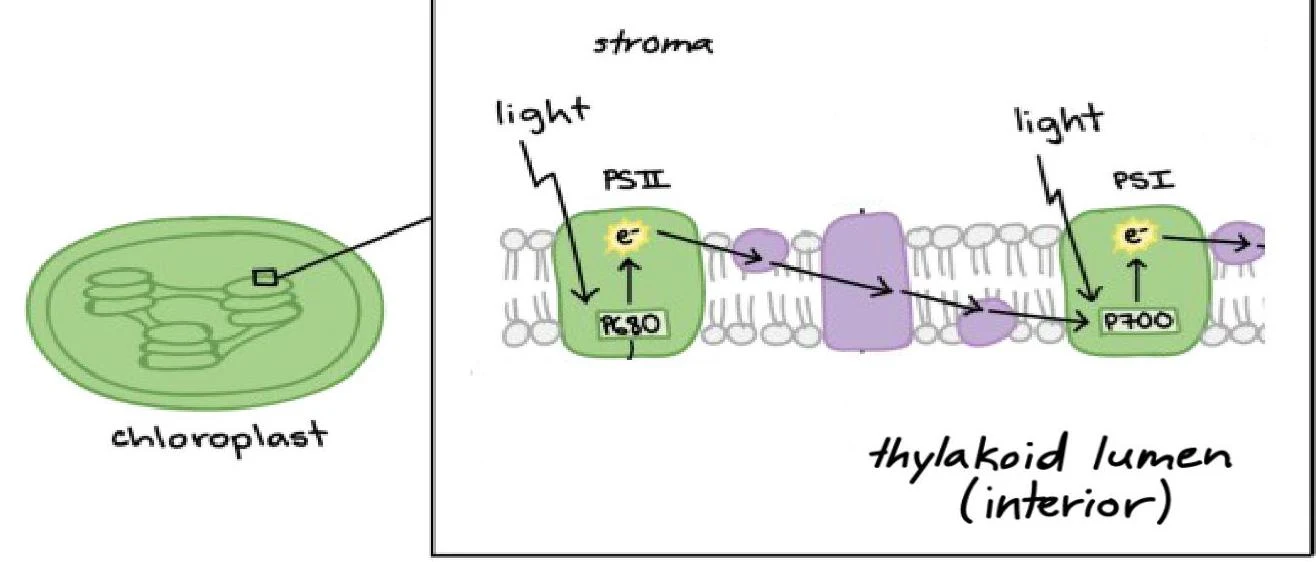
The light-dependent reactions begin when pigments, such as chlorophyll, absorb photons of light. These pigments are organized into functional units called photosystems, which are clusters of chlorophyll and other accessory pigments packed into the thylakoid membranes. There are two distinct types of photosystems involved in the process: Photosystem II (PSII) and Photosystem I (PSI).
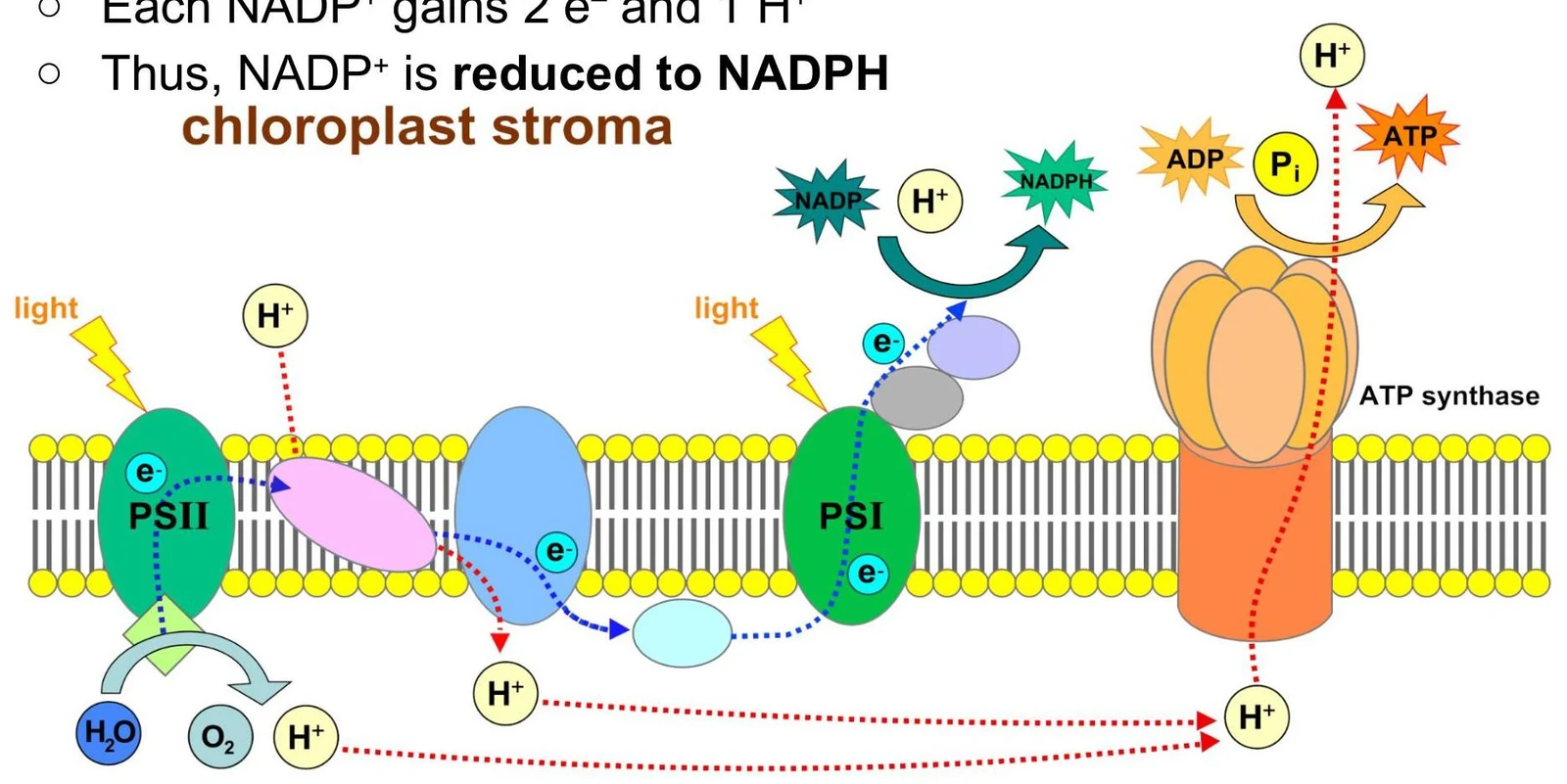
Diagram illustrating the light-dependent reactions of photosynthesis within a chloroplast, showing Photosystem II (PSII) and Photosystem I (PSI) embedded in the thylakoid membrane.
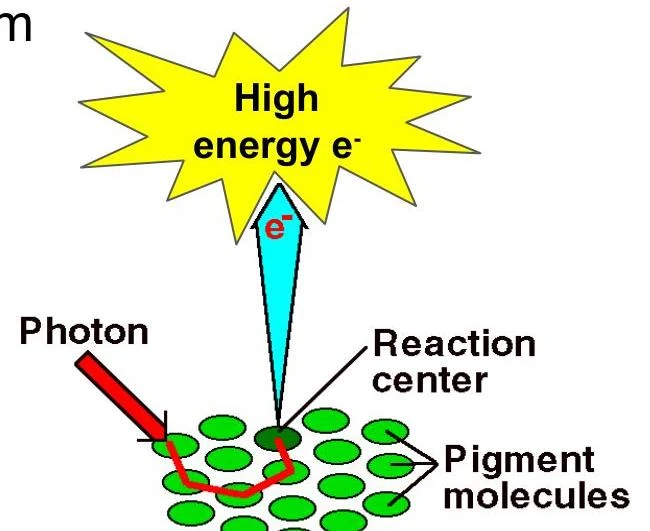
Within each photosystem, "antenna pigments" gather light energy and transfer it toward the reaction center, which contains a special pair of chlorophyll molecules. When the reaction center receives enough energy, it undergoes photoactivation, causing it to donate high-energy electrons to a primary electron acceptor.
Diagram illustrating the absorption of a photon by pigment molecules, leading to the excitation of an electron in the reaction center.
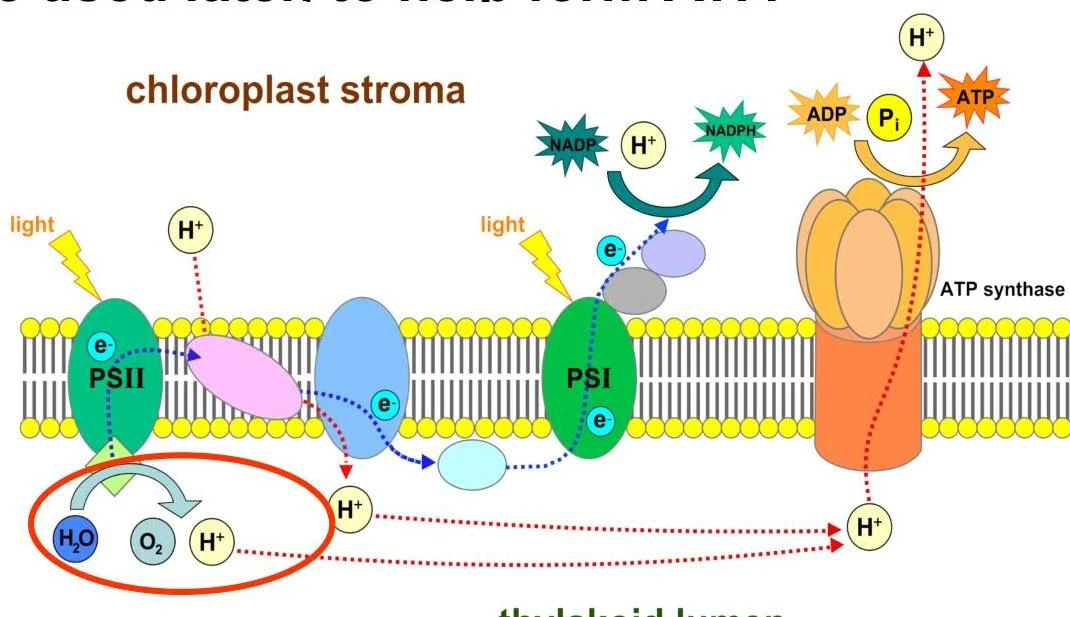
To replace the electrons lost by Photosystem II, the plant performs photolysis—the splitting of water molecules. The reaction can be summarized as follows:
2H2O→4H++4e−+O2(g)
This process provides electrons to PSII, releases oxygen gas (O2) as a byproduct (which exits through the stomata), and contributes hydrogen ions (H+) to the thylakoid lumen.
The Electron Transport Chain (ETC)
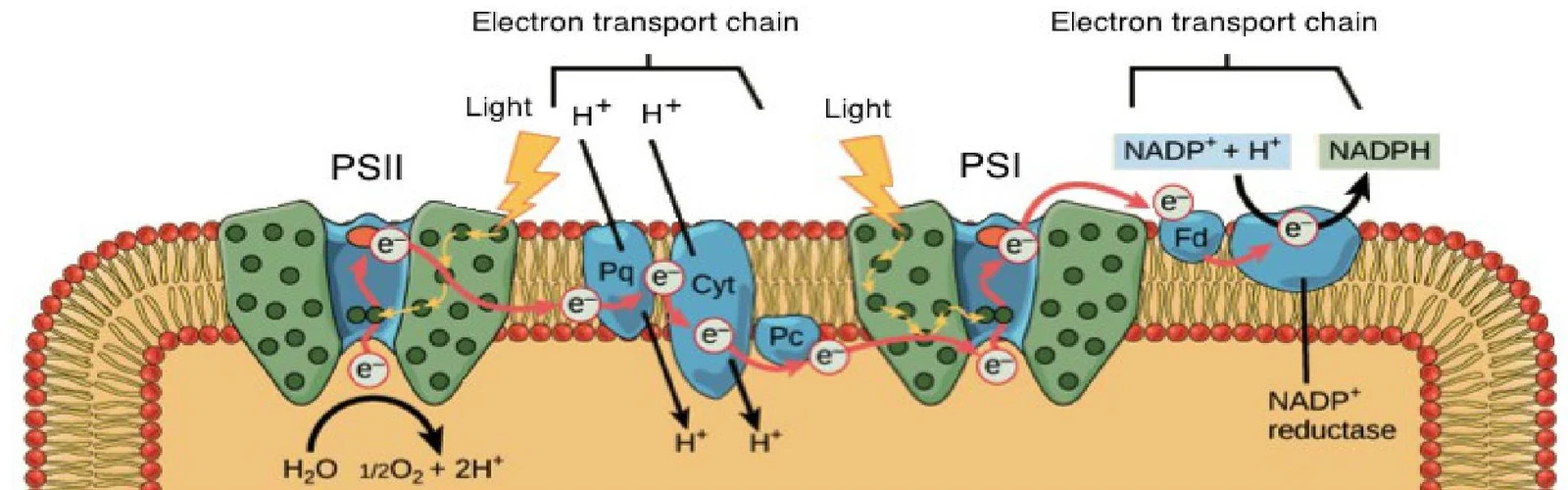
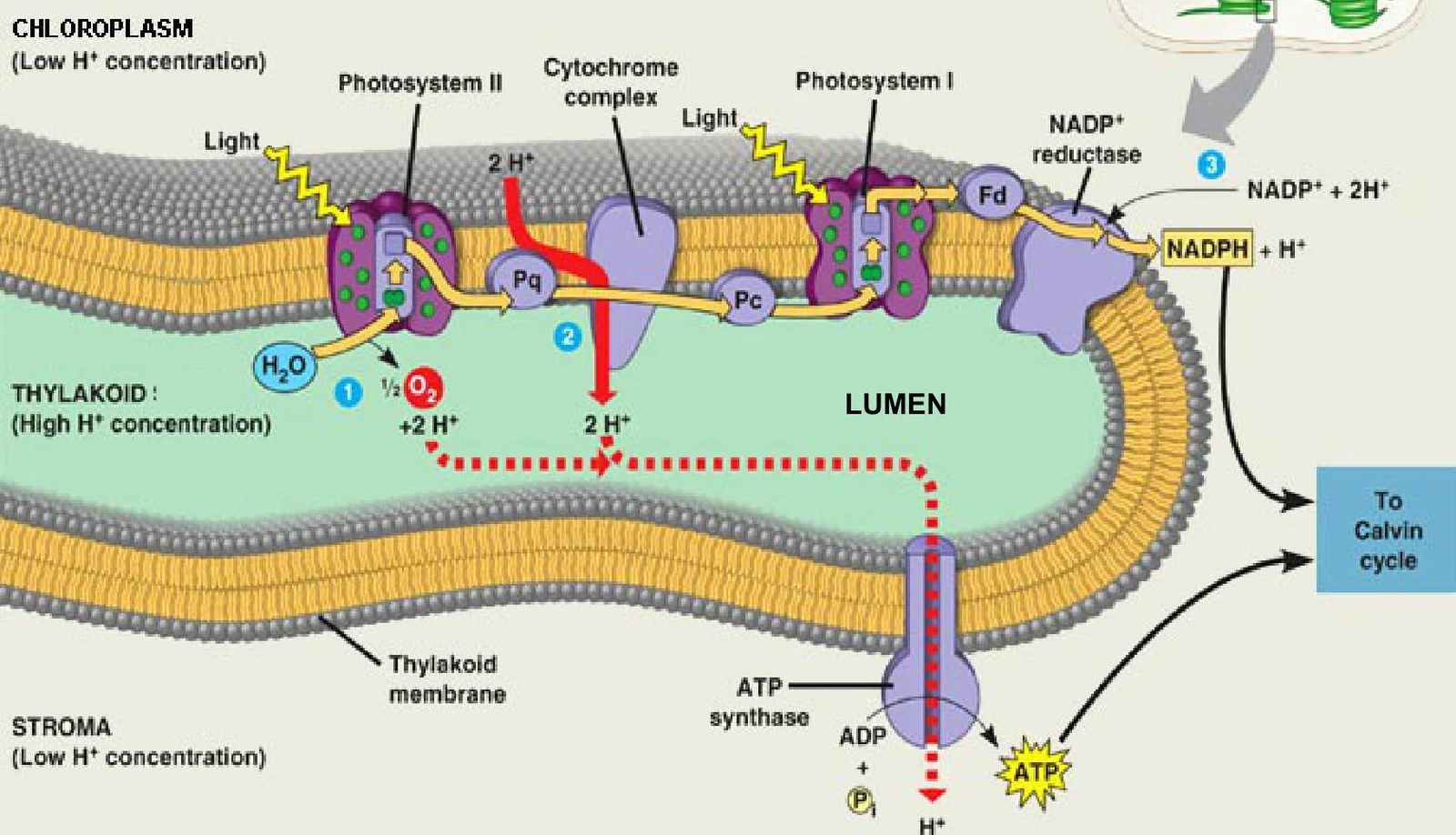
Once the electrons are energized in Photosystem II, they are passed along an Electron Transport Chain (ETC). As these electrons move through the chain, they release energy. This energy is not wasted; instead, it is used by proteins in the membrane to pump H+ ions from the chloroplast stroma into the lumen (the interior space of the thylakoid).
Diagram illustrating the process of ATP synthesis during photosynthesis, showing the roles of Photosystem II (PSII), Photosystem I (PSI), and ATP synthase in converting light energy into chemical energy.
This active transport creates a high H+ ion concentration gradient inside the lumen, resulting in a buildup of positive charge.
Diagram illustrating the electron transport chain in photosynthesis, showing the roles of Photosystem II (PSII) and Photosystem I (PSI) in converting light energy into chemical energy, and the production of NADPH.
After passing through the first part of the chain, the electrons arrive at Photosystem I. Here, they are re-energized by more sunlight to prepare them for the final stage of the electron transfer.
Reduction Reactions: NADPH Production
The final destination for the energized electrons is NADP+, which acts as the final electron acceptor. Through a reduction reaction, NADP+ accepts two electrons and one H+ ion to become NADPH.
Diagram illustrating the light-dependent reactions of photosynthesis, showing the electron transport chain, water splitting, oxygen production, and ATP synthesis.
This NADPH is a high-energy molecule that will be used later in the stroma during the Calvin Cycle to help build glucose.
Chemiosmosis and ATP Synthesis
While the ETC is busy moving electrons, the buildup of H+ ions in the lumen creates a significant electrochemical gradient. This gradient represents potential energy, much like water held behind a dam.
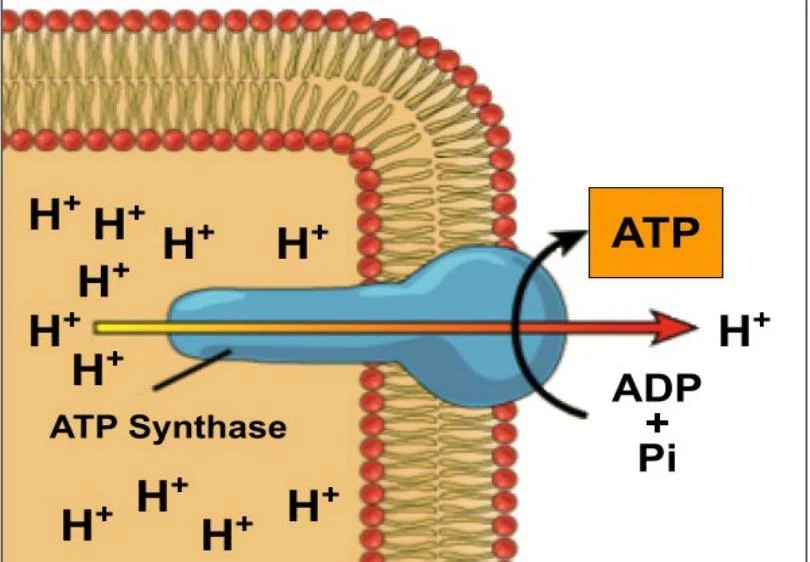
The only way for these H+ ions to move back down their concentration gradient (from the lumen to the stroma) is through a specialized enzyme called ATP synthase. As the H+ ions rush through the ATP synthase complex, they release energy that the enzyme uses to attach a phosphate group to ADP, forming ATP. This process is known as chemiosmosis.
Diagram illustrating the function of ATP synthase, an enzyme that synthesizes ATP from ADP and inorganic phosphate, driven by the flow of protons (H+) across a membrane.
Exam Tip: Remember that the energy used to create ATP in this process comes directly from the sun! The movement of electrons (driven by light) is what powers the proton pumps that create the gradient.
Summary of the Light-Dependent Reactions
To visualize the entire process, consider the flow of energy and matter:
Light Absorption: Photosystems capture solar energy.
Photolysis: Water is split to provide electrons, releasing O2 and H+.
Electron Transport: Electrons move through the ETC, pumping H+ into the lumen.
NADPH Production:NADP+ is reduced to NADPH in the stroma.
Chemiosmosis:H+ flows through ATP synthase to generate ATP.
Important Note: While these reactions produce the energy (ATP) and the reducing power (NADPH) needed for sugar production, no sugar is produced during the light-dependent reactions themselves.
Diagram illustrating the light-dependent reactions of photosynthesis within a chloroplast, showing the electron transport chain, water splitting, oxygen release, and ATP and NADPH production.
Keep reading for free.
Create an account to finish this reading and make it part of your study routine.