


When companies expand across borders, they move from a single, familiar regulatory landscape into a complex web of differing rules, traditions, and enforcement mechanisms. Navigating this environment is a critical component of international strategy; a failure to understand local laws can lead to significant legal risks, financial penalties, and reputational damage. To succeed, managers must distinguish between what is merely "unethical" and what is strictly "illegal" in a specific host country.
Foundations of Governance: Rule of Law vs. Rule of the Individual
At the most fundamental level, the legal environment of a country is defined by how power is exercised and how laws are applied.
The Rule of Law is a system of governing where all individuals, including government officials, are accountable to well-defined, established, and fairly enforced laws. This system is a cornerstone of economic prosperity because it protects property rights and builds reliable institutions like courts and patent offices.
Figure 4.1 Justice
In contrast, the Rule of the Individual describes a system where one person or a small group holds ultimate authority and has the discretion to set and enforce laws at will. In such environments, the lack of predictable legal frameworks can increase "political risk"—the danger that changing political conditions will negatively affect a foreign business.
Exam Tip: When analyzing a country's stability, look at the "Rule of Law Index." High scores in regulatory enforcement and civil justice typically correlate with lower business risk.
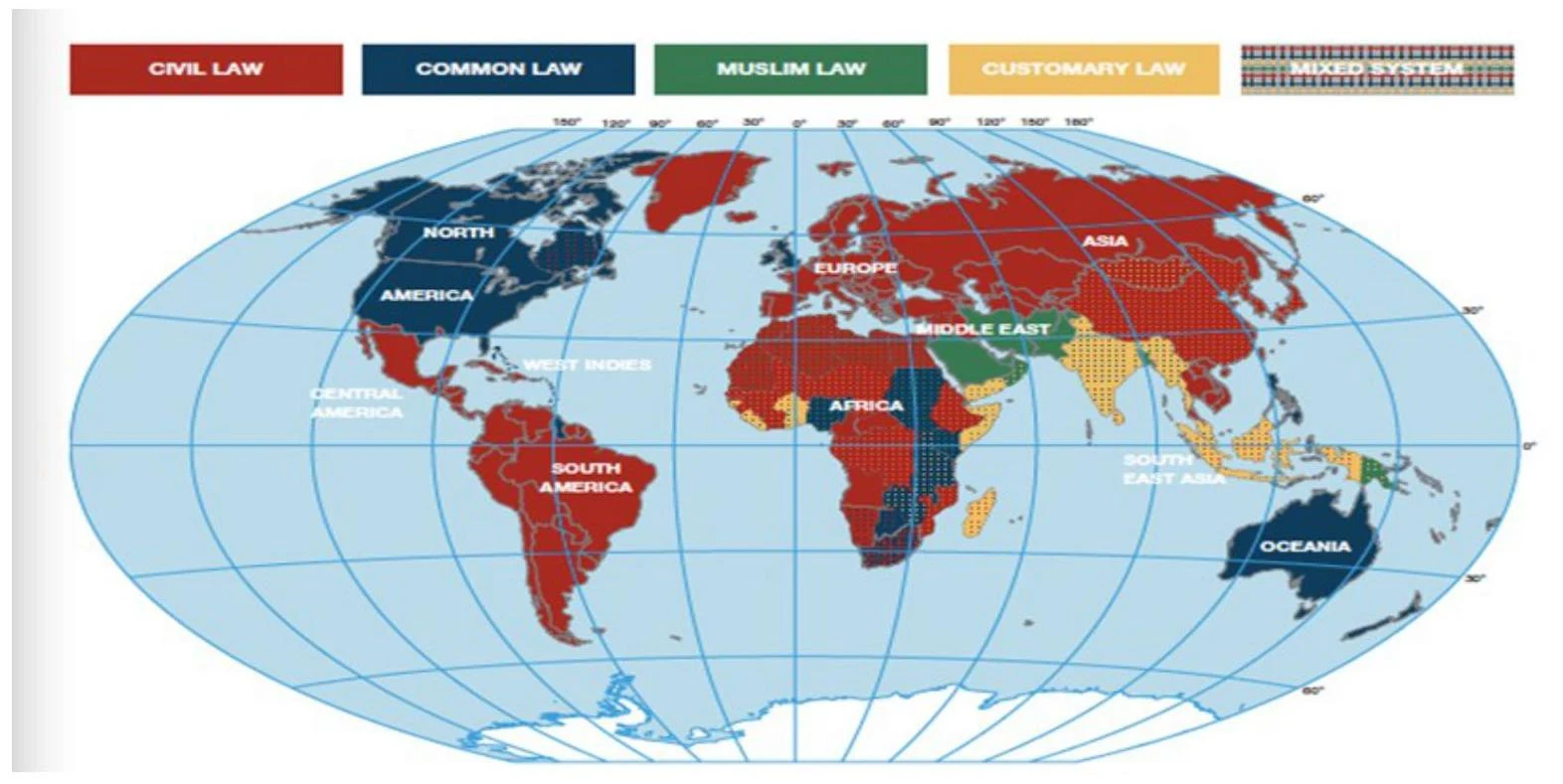
Major Legal Systems of the World
Legal systems are not uniform; they are shaped by history, culture, and religion. Most countries fall into one of several categories:
Keep reading for free.
Create an account to finish this reading and make it part of your study routine.
Continue reading freeAlready have an account? Log in
Updated