


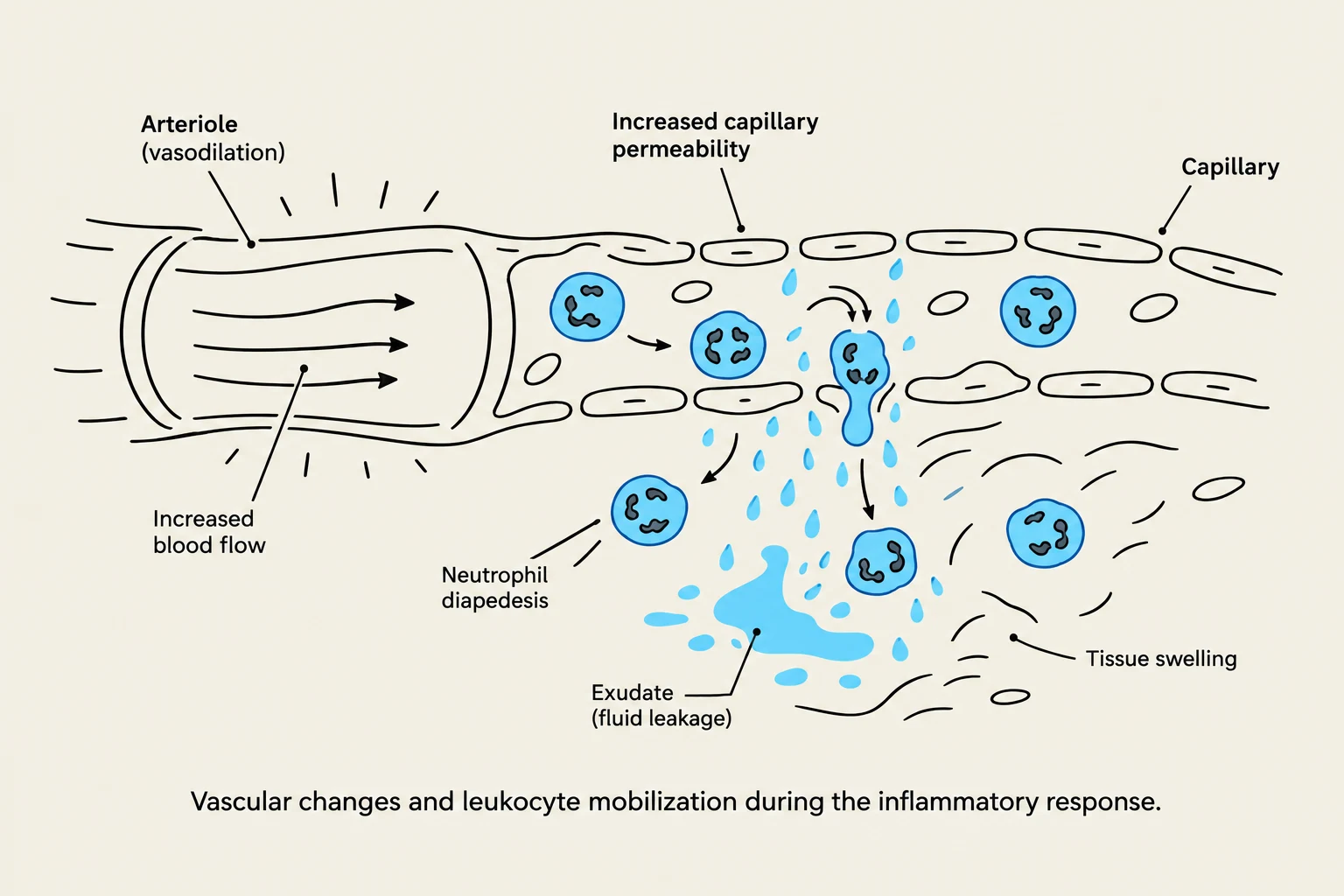
When the body's first line of defense—the skin and mucous membranes—is breached, the immune system must act quickly to prevent microorganisms from spreading deeper into the tissues. This is where the innate immune system's second line of defense takes over. Unlike the adaptive immune system, which takes time to recognize specific pathogens, the second line of defense is non-specific and ready to respond immediately through a combination of specialized cells, antimicrobial proteins, and systemic responses like inflammation and fever.
Cellular Defenses: The Body's Internal Patrol
The second line of defense relies heavily on specialized white blood cells to identify and destroy invaders. These are categorized primarily into phagocytes and natural killer cells.
Phagocytes: The Engulfers
- Neutrophils: These are the most abundant phagocytes in the body. They are often the first to arrive at an infection site, but they are short-lived and typically die after fighting pathogens.
- Macrophages: These are the most robust and "chief" phagocytic cells. They develop from monocytes and can exist in two forms: free macrophages, which wander through tissue spaces (such as alveolar macrophages in the lungs), and fixed macrophages, which are permanent residents of specific organs (such as microglia in the brain).
The Process of Phagocytosis
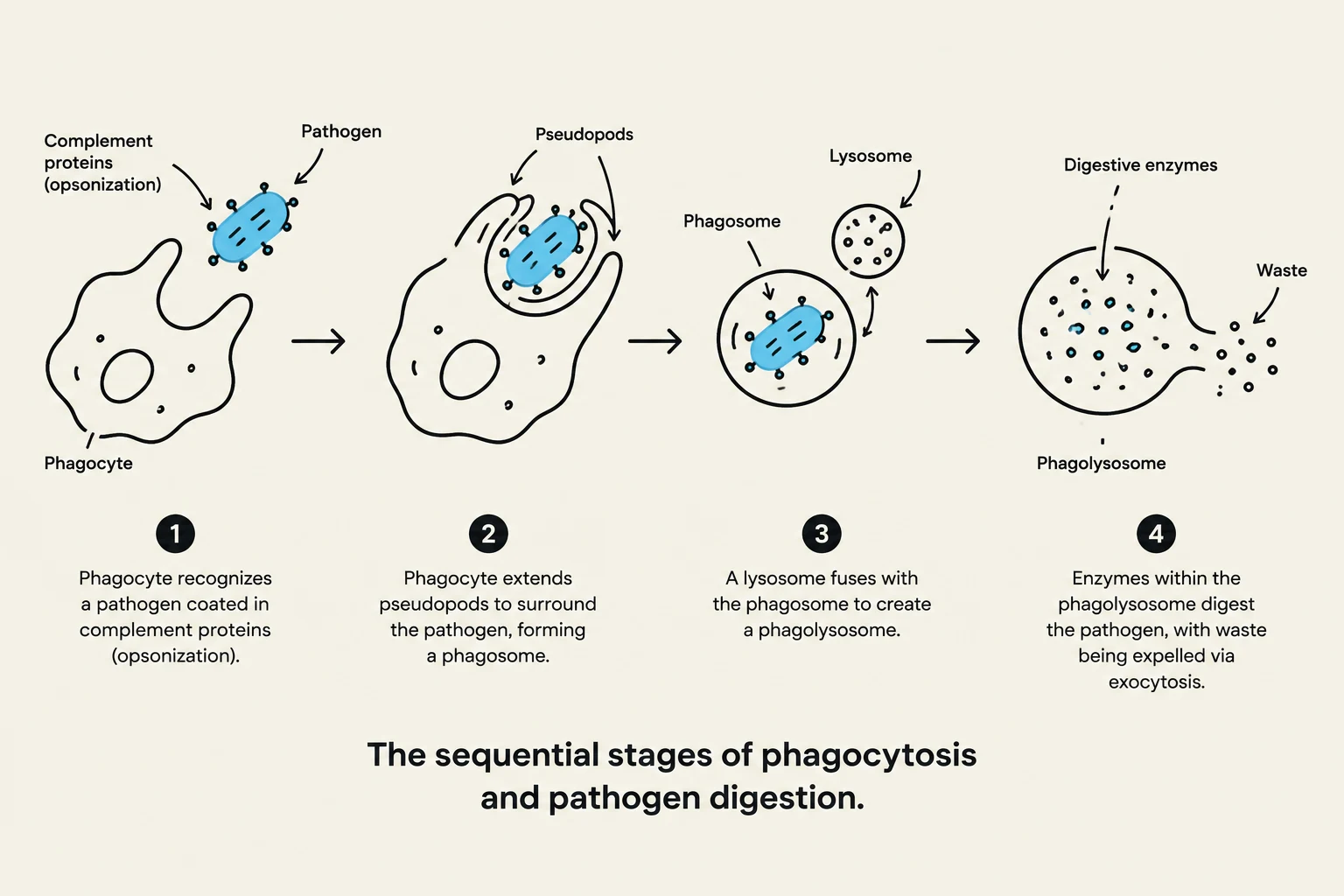
Phagocytosis is the actual mechanism of "eating" a pathogen. The process follows a specific sequence:
- Recognition and Adherence: The phagocyte recognizes a specific carbohydrate "signature" on the pathogen. This process is significantly enhanced by opsonization, where antibodies or complement proteins coat the pathogen, acting like "handles" that make it easier for the phagocyte to grab onto.
- Engulfment: The phagocyte extends cytoplasmic projections called pseudopods to surround the particle, enclosing it in a vesicle known as a phagosome.
- Digestion: The phagosome fuses with a lysosome to form a phagolysosome. Inside this structure, the environment is acidified, and lysosomal enzymes digest the invader. Any indigestible waste is then expelled via exocytosis.
Keep reading for free.
Create an account to finish this reading and make it part of your study routine.
Continue reading freeAlready have an account? Log in
Updated