The Impact of the Digital Age on Communication and Culture
Explore how the Digital Age has transformed communication through speed, accessibility, global reach, multiple platforms, and interactive engagement, while also shaping identity and culture.
The Digital Age has fundamentally transformed the landscape of human existence. It is no longer just a period of technological advancement; it is a paradigm shift that shapes how we live, work, learn, and connect with one another. Through rapid access to information, unprecedented speed, and global reach, the digital era has redefined the boundaries of interaction. For students and professionals alike, understanding these shifts is essential for navigating a world where communication is increasingly mediated by screens, algorithms, and instant connectivity.
Speed, Accessibility, and Global Reach
One of the most immediate impacts of the digital age is the collapse of time and space. In previous eras, communication was often delayed by physical distance or the limitations of postal services. Today, messages are sent and received almost instantly. Whether it is a professional update via Microsoft Teams or a casual text message to a friend, the expectation of immediacy has become the norm.
This speed is coupled with high accessibility. We can communicate across different time zones with ease, ensuring that the flow of information never truly stops. Furthermore, the internet has effectively removed geographical barriers, granting us a "global reach". This allows for phenomena such as online educational programs that connect students from different continents or the ability to use video calls like FaceTime to maintain family bonds across oceans.
Study Tip: When discussing the digital age in an exam, distinguish between speed (how fast a message travels) and accessibility (how easily a person can reach the information or the sender).
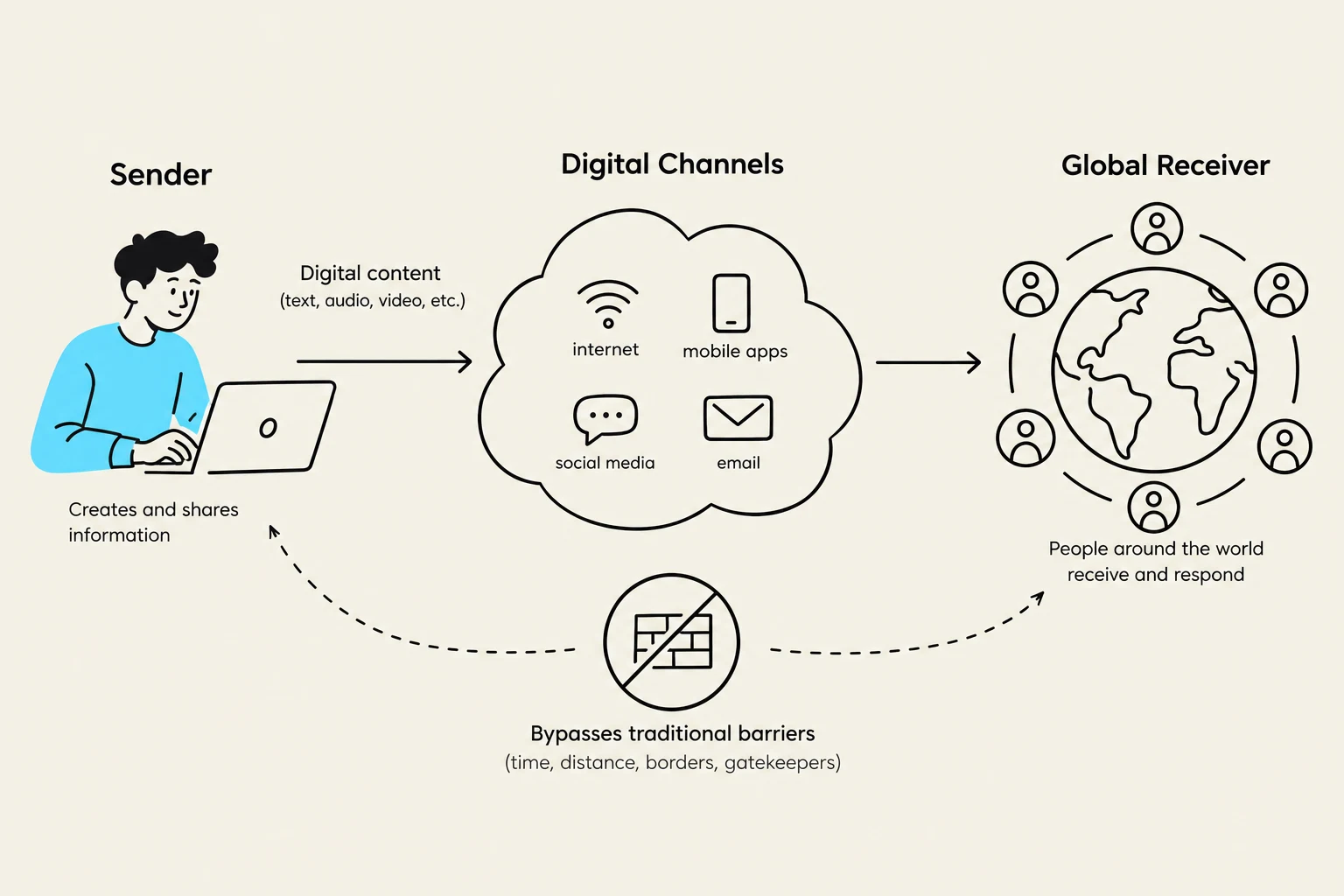
This diagram illustrates the process of digital communication, showing how a sender creates and shares digital content through various channels like the internet, mobile apps, social media, and email, to a global receiver. It also highlights how digital communication bypasses traditional barriers.
Multiple Platforms and Modes of Communication
In the digital age, we are no longer limited to face-to-face conversations or simple phone calls. We now operate within a complex ecosystem of multiple platforms and modes. The key to effective communication in this environment is selecting the most appropriate medium for a specific purpose.
For example, a business might utilize LinkedIn for professional networking and Zoom for virtual meetings, while an individual might use various social media apps for daily connection. Communication can be categorized into several channels:
Verbal: In-person speech, phone conversations, or VoIP.
Written: Emails, texts, instant messages, or blogs.
Visual: Photos, graphic designs, or even architecture.
Understanding these channels is vital because the quality of your communication often represents the quality of your work and your organization.
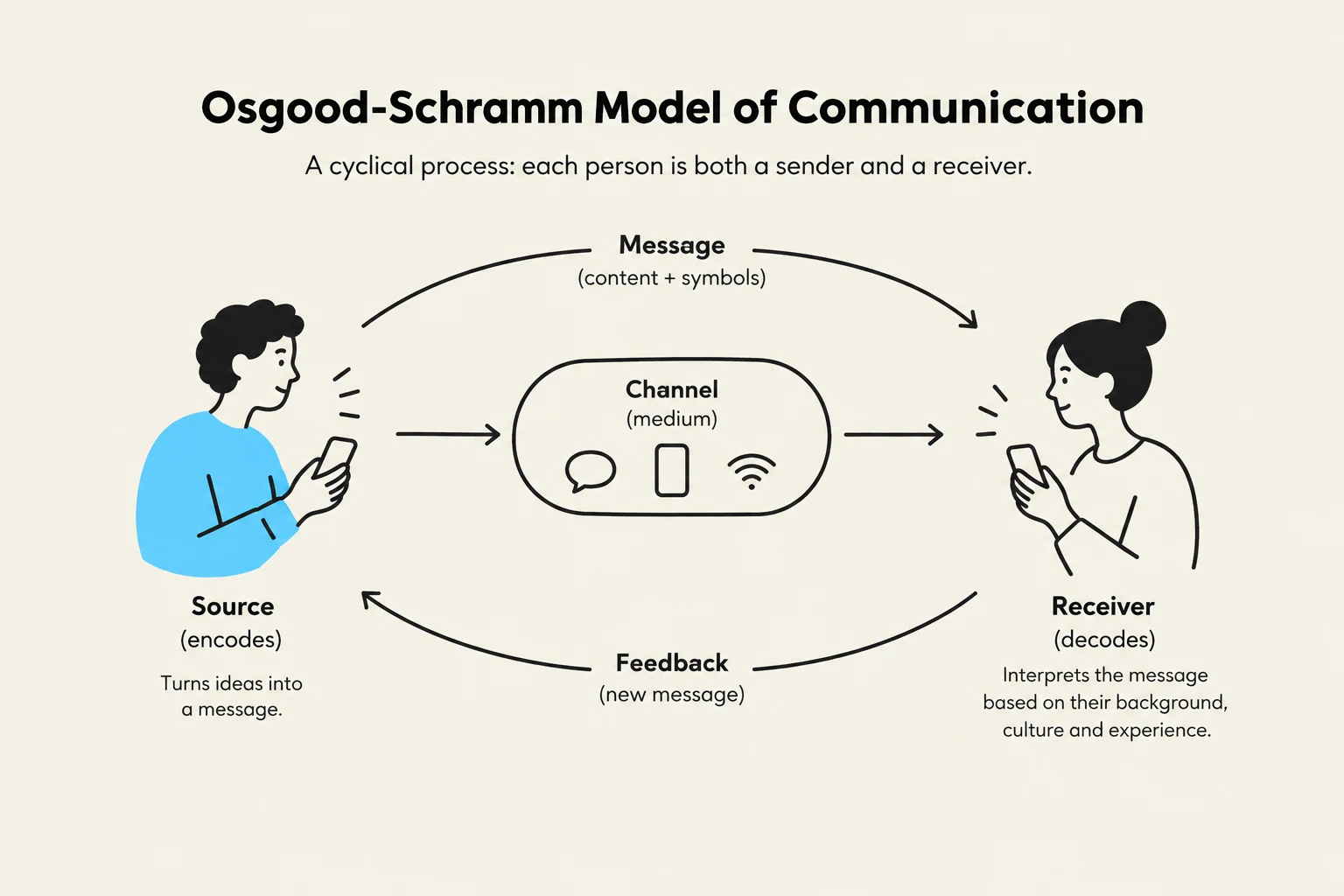
The Osgood-Schramm Model of Communication illustrates a cyclical process where individuals act as both senders and receivers, encoding and decoding messages through various channels and feedback loops.
Interactive and Participatory Communication
Traditional media, such as television or newspapers, were largely "one-way" streets where the audience passively consumed information. The digital age has flipped this model, making communication interactive and participatory.
In the modern landscape, audiences are active participants rather than passive observers. When a news outlet posts a story online, readers can immediately comment, share, or debate the content. This shift from "passive" to "active" engagement means that information is constantly being reshaped by the people consuming it.
Shaping Identity and Culture
Beyond mere information exchange, digital tools are actively shaping human identity and global culture. The digital space provides a platform for the expression of individuals, the building of personal brands, and the formation of communities around shared interests.
We see this in several ways:
Influencer Culture: Individuals use digital platforms to build massive followings and shape trends.
Niche Communities: People can join specialized groups, such as online gaming communities, to find belonging.
Movement Spreading: News, trends, and social movements can spread globally at lightning speed, altering the cultural landscape.
Brands like Nike utilize these digital shifts to communicate their identity, using high-impact visual storytelling on platforms like TikTok or Instagram to connect with athletes and consumers worldwide.
Challenges and the Human Element
Despite the advantages, the digital age presents significant challenges. One major concern is the rise of Artificial Intelligence (AI). While AI can increase efficiency by helping with writing support, summarizing information, and translation, there is growing concern regarding job displacement. It is estimated that 42% of low-paying jobs could be at risk of automation by the mid-2020s to 2030s.
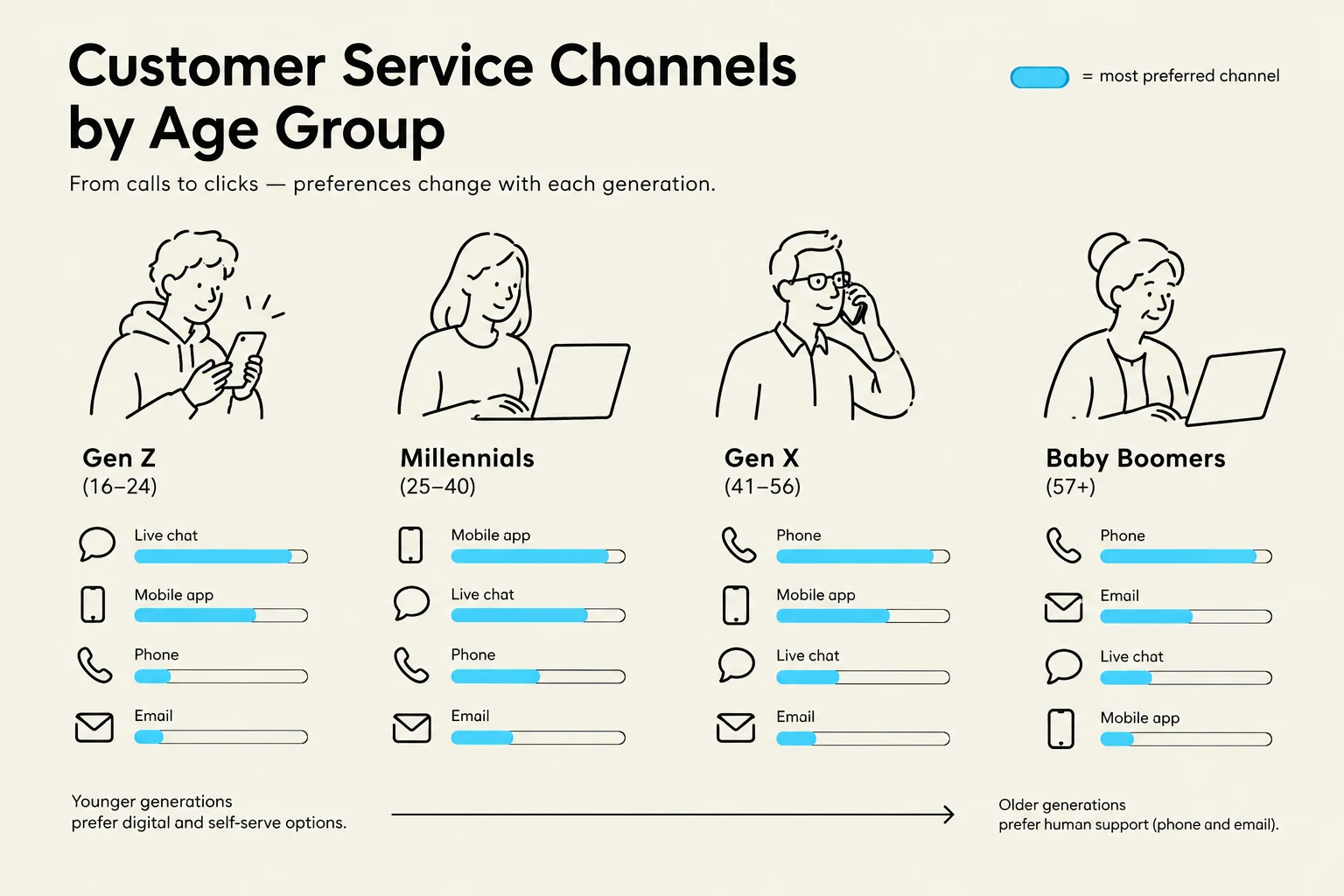
Furthermore, there is a generational divide in how technology is used. While younger generations (18–24) heavily favor messaging and web-based live chat, older demographics still place a higher value on telephone and face-to-face communication.
Professional Insight: Knowing how to use technology is a competitive advantage, but knowing when to put it away in favor of in-person communication is an essential professional skill.
This chart illustrates customer service channel preferences across different age groups, from Gen Z to Baby Boomers, highlighting a generational shift towards digital and self-serve options for younger demographics and a preference for human support for older ones.
To succeed in this era, one must master "adaptability"—a key predictor of success identified by recruiters. As the tools of communication continue to evolve, the ability to remain clear, coherent, and professional across all digital channels will remain the hallmark of a successful professional.
Keep reading for free.
Create an account to finish this reading and make it part of your study routine.