This article explains how organizational size influences structure, focusing on formalization and decentralization as key dependent variables. It details the relationship between independent and dependent variables in organizational change and provides a framework for analyzing and bridging the gap between current and
In the field of organizational design, one of the most critical tasks for a consultant or manager is determining the optimal way to arrange people, tasks, and authority to achieve strategic goals. This process is often framed as moving from the IST (the current state) to the SOLL (the desired state).
Understanding how to bridge this gap requires a deep dive into organizational structure and the specific variables that force a structure to evolve. This article explores how "Size" acts as a primary driver of change, influencing key structural dimensions like formalization and decentralization.
Understanding Organizational Structure
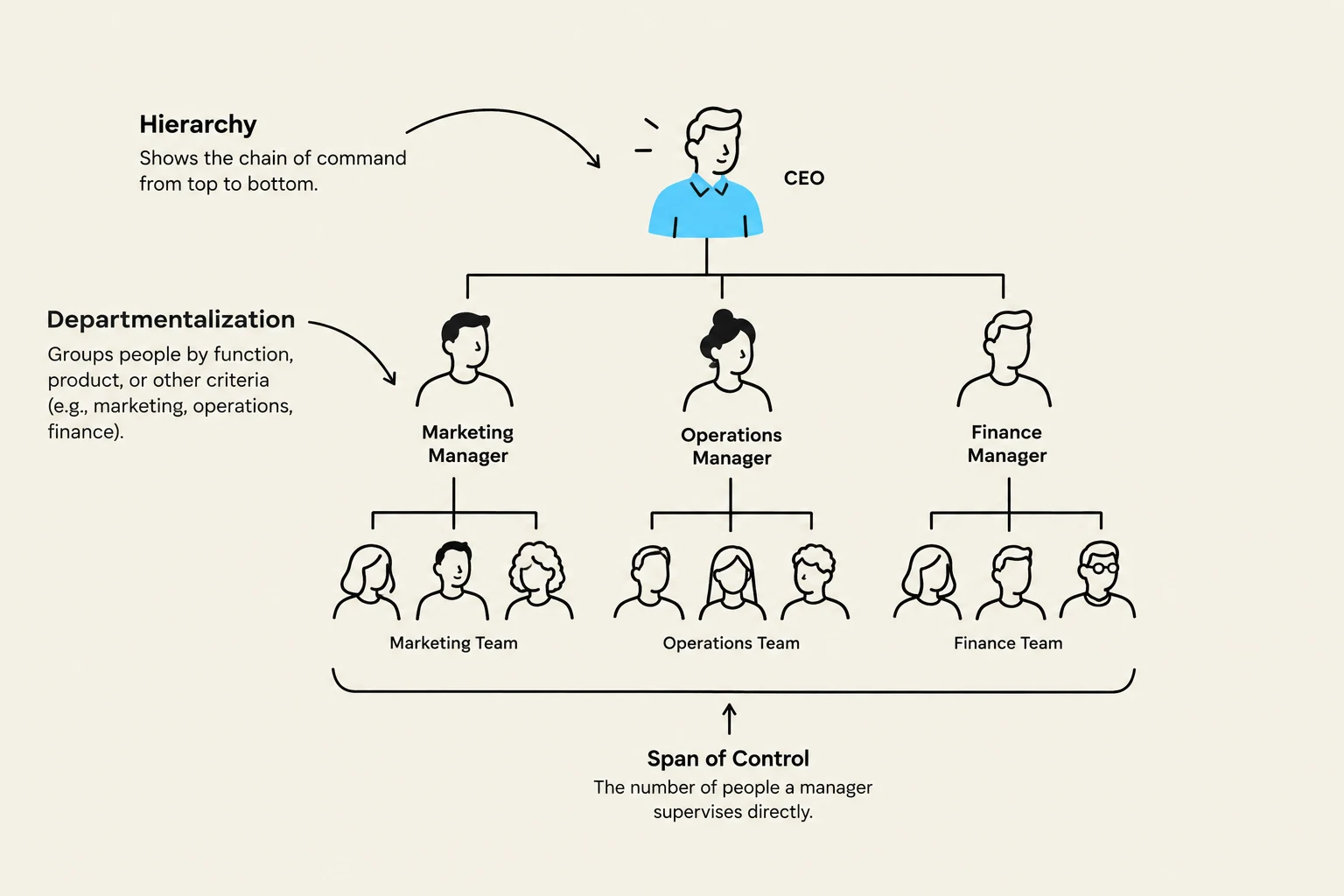
Before we can decide on a "SOLL" structure, we must first define what we are actually looking at. Structure refers to the framework of an organization—the way it is organized to define how activities such as task allocation, coordination, and supervision are directed toward the achievement of organizational aims.
When analyzing a structure, you cannot simply look at an organizational chart. You must examine its key elements, including how decisions are made and how much "rule-following" is required to get work done.
Exam Tip: When asked to describe a structure, do not just list departments. Focus on the mechanisms of coordination and the distribution of authority.
This is an organizational chart illustrating hierarchy, departmentalization, and span of control within a company structure.
The Mechanics of Change: Independent vs. Dependent Variables
To provide professional advice on structure, you must understand the relationship between different organizational factors. In scientific and analytical terms, we distinguish between independent variables (the causes) and dependent variables (the effects).
When we look at "Organization and Change," we are essentially looking at how certain factors force the structure to shift. For instance, if a company grows, its structure must change to remain efficient. In this relationship, the factor causing the change is the independent variable, and the resulting structural shift is the dependent variable.
The Influence of Size on Formalization and Decentralization
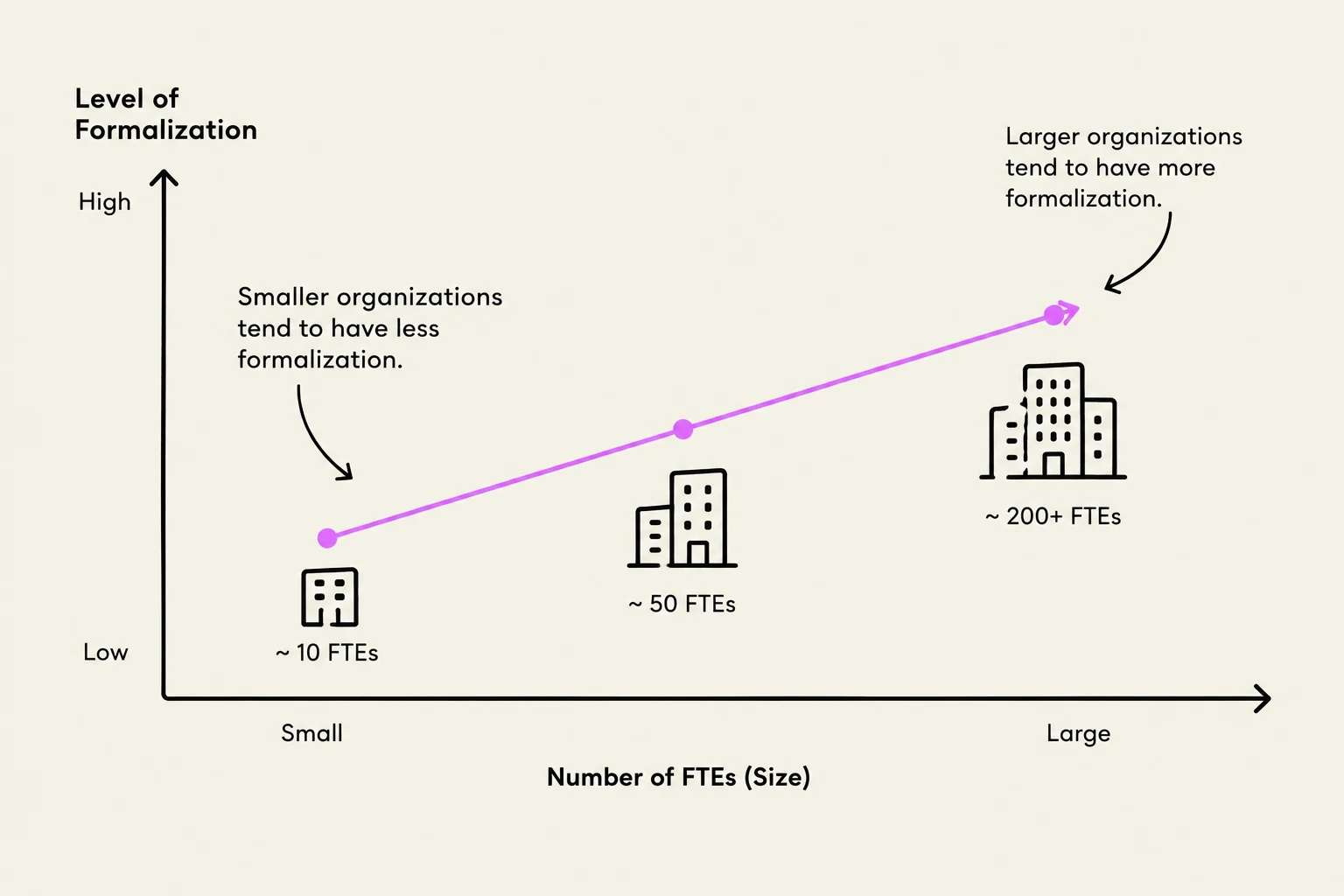
One of the most consistent findings in organizational literature is the impact of size—typically measured by the number of Full-Time Equivalents (FTEs)—on structure.
In this specific analytical model:
Size is the independent variable.
Formalization and Decentralization are the dependent variables.
Formalization
Formalization refers to the extent to which rules, procedures, and communications are written down and standardized. As an organization increases in size (more FTEs), there is a natural tendency toward a "big amount of formalization". With more people, informal "handshake" agreements become impossible to track, necessitating documented processes to ensure consistency.
Decentralization
Decentralization refers to the level at which decision-making authority is distributed. While size often drives formalization up, it also impacts how authority is spread. In smaller organizations, decision-making is often centralized in a few hands; as size increases, the complexity often requires moving toward different patterns of authority to maintain agility.
This graph illustrates the relationship between the size of an organization (measured by the number of FTEs) and its level of formalization. Smaller organizations tend to have less formalization, while larger organizations tend to have more.
Navigating Conflicting Variables
In a perfect textbook world, variables move in predictable directions. However, in real-world organizational consulting, "the facts don't always add up". You may encounter a situation where different independent variables pull the structure in opposite directions.
Consider this scenario:
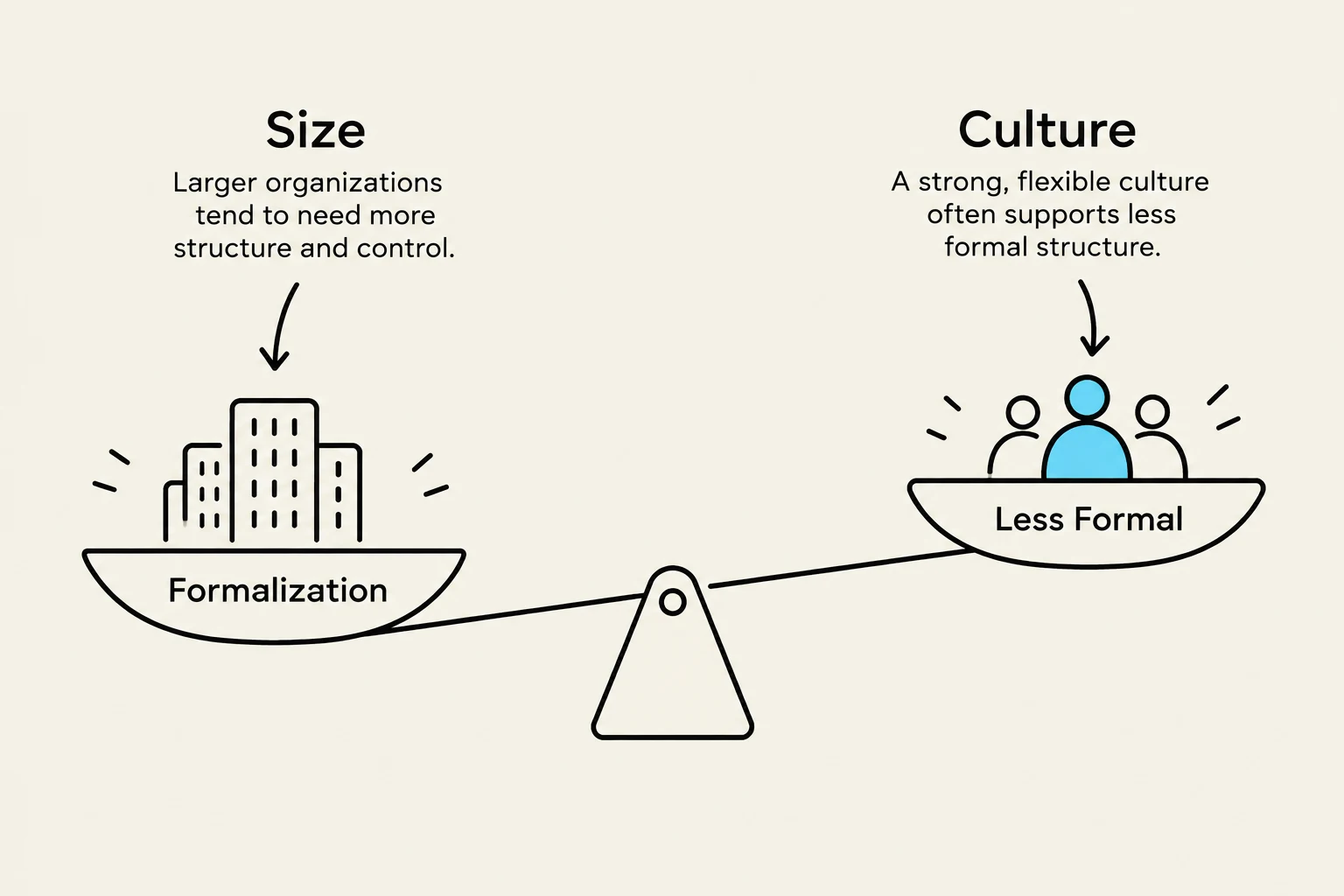
Size: The company is very large, which suggests a need for more formalization.
Culture: The company has a highly entrepreneurial, "start-up" culture, which suggests a need for less formalization.
When these variables conflict, you cannot simply pick one. You must:
Substantiate your advice: Use logic and evidence to explain why one factor takes precedence.
Weigh the influence: Determine which factor is more critical to the current strategic goal.
Apply nuanced solutions: You might advise formalization for specific departments (like Finance or Legal) while keeping other departments (like R&D) informal.
This illustration depicts the relationship between organizational size and formalization, and organizational culture and less formal structure, using a balance scale metaphor.
From Analysis to Action: Bridging the Gap
The ultimate goal of analyzing these variables is to move from the IST (how the structure is currently functioning) to the SOLL (how it should be functioning to be effective).
Once you have identified the gap—for example, realizing that a company has grown too large to operate without formalizing its processes—your job is not finished. The final step in the "Organization and Change" process is providing actionable advice on how to close those gaps. This might involve implementing new software, hiring middle management, or drafting new standard operating procedures (SOPs).
Summary Checklist for Structural Advice:
Define the current structure (IST).
Identify the independent variables (e.g., Size).
Determine the impact on dependent variables (Formalization/Decentralization).
Identify the gaps between IST and SOLL.
Propose a plan to close the gap.
Keep reading for free.
Create an account to finish this reading and make it part of your study routine.