


When clinicians assess a child with a Speech Sound Disorder (SSD), the natural instinct is to focus on the "error patterns"—the specific sounds the child is missing or distorting. However, focusing solely on these errors provides an incomplete picture of the child's life. To truly understand the impact of a communication disorder, we must look at the individual within the context of their entire world. This is where the International Classification of Functioning, Disability, and Health (ICF) model becomes an essential tool.
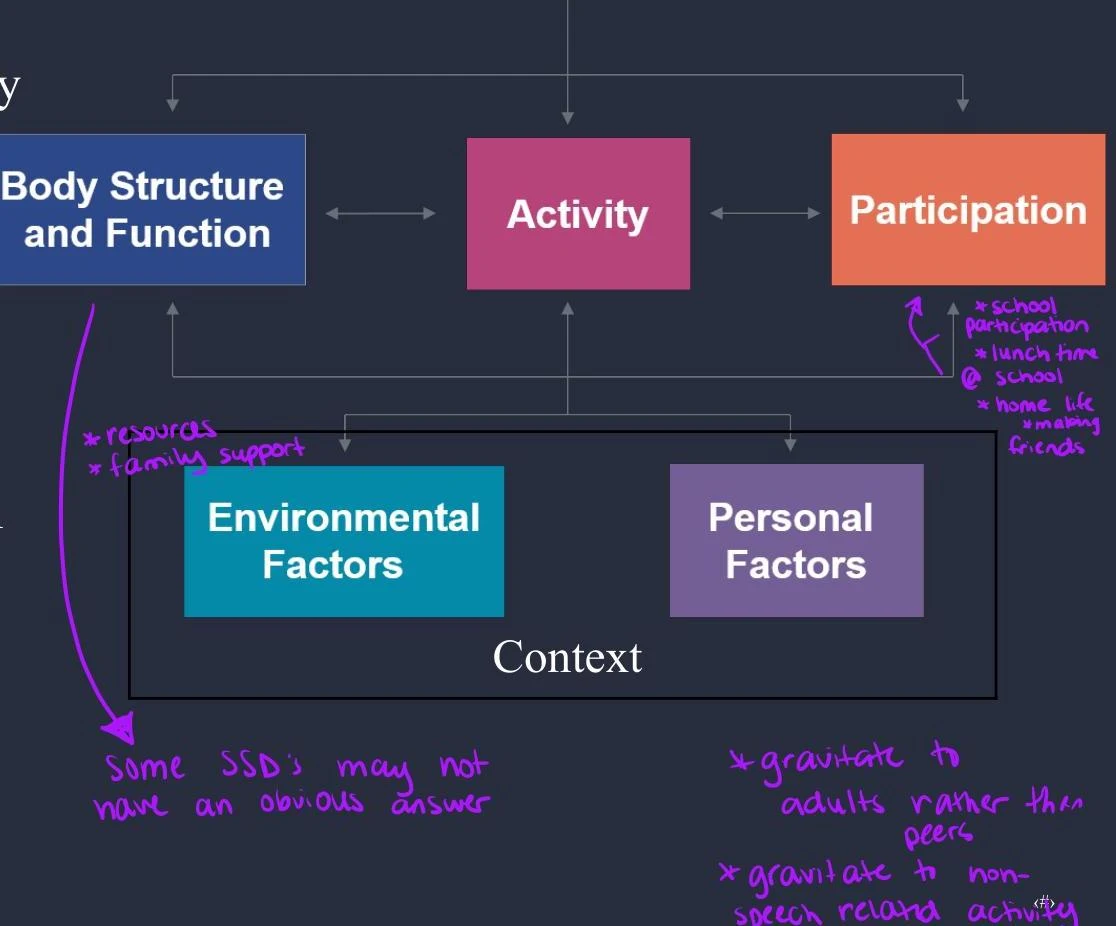
Created by the World Health Organization in 2001, the ICF model serves as a multidimensional and interactive framework for understanding functioning, disability, and health. Rather than viewing disability as a static medical diagnosis, the ICF model posits that various components of a person's life interact dynamically. A change in one area—such as a child's ability to speak clearly—can trigger changes in many other areas, including their social participation and emotional well-being.
Core Components: The Biological and Functional Levels
The ICF model breaks down human functioning into several distinct but interconnected levels. The first level focuses on the biological aspects of the individual.
Body Structure and Function
This component refers to the physiological functions of body systems and the anatomical parts of the body, such as organs, limbs, and sensory components. In the context of speech, this might involve the physical structures used for articulation or the neurological pathways required for motor production.
When there is a significant deviation, loss, or abnormality in these physiological functions or anatomical structures, it is classified as an impairment. For example, a structural difference in the palate or a neurological impairment affecting motor control would be considered an impairment.
Keep reading for free.
Create an account to finish this reading and make it part of your study routine.
Continue reading freeAlready have an account? Log in
Updated